
by admin | Jul 18, 2026 | Uncategorized
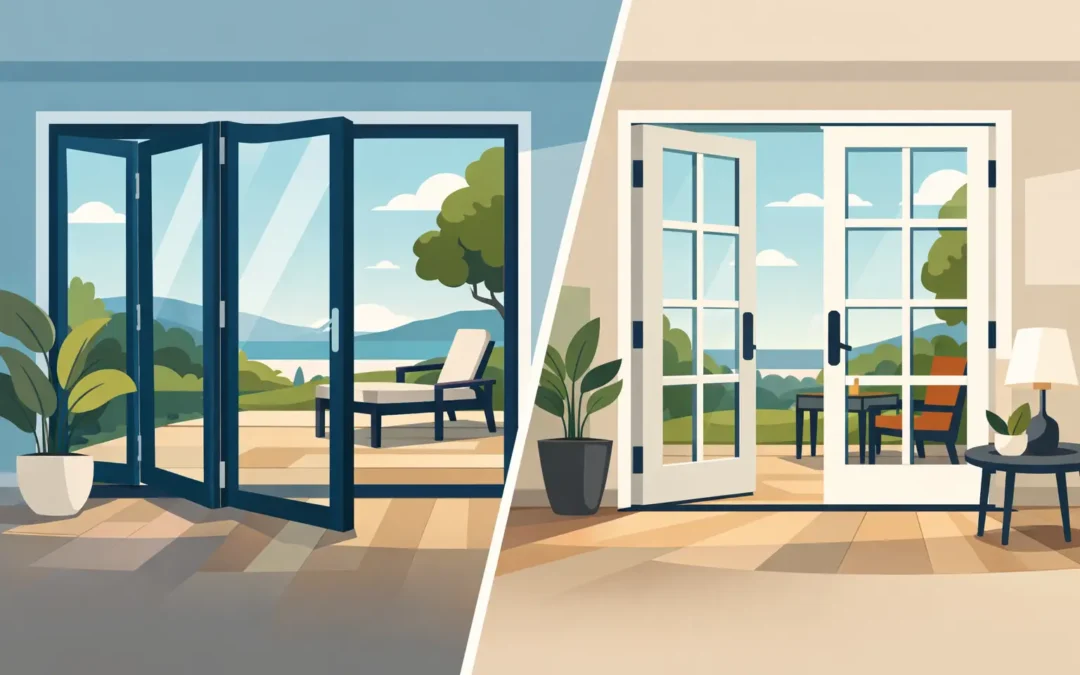
The choice between Bi-fold vs French doors often comes down to one practical question: how do you want your home and garden to work together? Both can bring in more natural light, improve access to the outside and give a tired rear elevation a welcome lift. But they open differently, suit different room layouts and can lead to very different results in daily life.
There is no single right answer. A wide kitchen extension with uninterrupted garden views may suit bi-fold doors beautifully, while a smaller dining room may feel more balanced, more practical and better value with French doors. Looking at the opening, your available space and how you use the room will give you a clearer answer than choosing on appearance alone.
Bi-fold vs French Doors at a Glance
Bi-fold doors use a series of glazed panels that fold and slide to one or both sides of an opening. When fully open, they can create a wide, open connection between the house and garden. They are commonly chosen for extensions, larger kitchens and properties where opening up a broad section of wall is part of the plan.
French doors are a pair of glazed doors that open from the centre. One door is usually used as the everyday access door, while both can be opened when you need a wider route outside. They offer a classic look and are a strong choice for standard-sized openings, patios, balconies and conservatories.
The biggest difference is the opening itself. Bi-folds are designed to make the most of a wide aperture. French doors provide a generous, straightforward opening without requiring a large span or a folding panel system.
When Bi-Fold Doors Are the Better Fit
Bi-fold doors are a good option when your priority is creating an open-plan feel. With the panels folded back, the boundary between indoors and outdoors feels far less defined. This can work particularly well for summer entertaining, family kitchens and ground-floor extensions that lead directly onto a patio or garden.
They can also make excellent use of a wide opening. Where a property has a large rear wall, bi-fold doors can be made with several panels to suit the size and configuration of the space. Rather than having a fixed central section, you can open most of the width when the weather and occasion allow.
Modern aluminium bi-fold doors are especially popular for their slim frames and strength. The frames support larger areas of glass, helping to maximise the view even when the doors are closed. uPVC bi-folds can be a more budget-conscious route in some situations, although the frame sightlines are usually broader.
There are a few practical points to consider. When open, folded panels need somewhere to stack, either inside or outside. That can affect furniture placement, kitchen units, blinds and patio space. On a cold or wet day, most people use just the traffic door rather than folding the entire set away, so it is worth checking that the everyday opening is positioned where it will be most useful.
Why French Doors Remain a Popular Choice
French doors have stayed popular because they are simple, attractive and versatile. They suit both traditional and contemporary homes, and their symmetrical design can bring a pleasing sense of proportion to a rear room, conservatory or dining area.
For many households, the everyday experience is also hard to beat. Open one door for quick access to the garden, let the dog out or bring in the washing. Open both for guests, garden furniture or larger items. There are no panels to fold and stack, and the door arrangement is easy to understand and use.
French doors are often the more sensible choice where the existing opening is modest. Installing bi-folds may require a wider opening and, in some cases, structural work such as a new lintel or steel support. If your current opening already suits a pair of doors, replacing it with well-specified French doors can provide a major improvement without turning the project into a larger building job.
They can also offer more uninterrupted glass when closed. Bi-fold systems have vertical frame lines between every panel. French doors have a central meeting point, but typically fewer divisions across the full view. If you are mainly looking out at a carefully maintained garden rather than regularly opening up the whole wall, that distinction matters.
Space, Layout and Day-to-Day Use
Before focusing on styles and finishes, stand in the room and think about movement. Which way do people walk to the garden? Where will dining chairs, a sofa or kitchen island sit? Is there enough patio space for outward-opening French doors, or would inward opening work better for the room?
French doors can open inwards or outwards, subject to the layout and safety requirements. Outward-opening doors preserve internal floor space, while inward-opening doors can be useful where outdoor space is restricted. Either way, the swing of the doors needs to be planned properly.
Bi-fold doors do not have the same wide swinging arc, but the stacked panels still occupy space. If they fold externally, they may reduce the usable patio area at the side of the opening. If they fold internally, they can affect the room when fully open. A good survey considers these details before the doors are ordered, not once installation day arrives.
Threshold choice is important too. A low threshold gives a neater transition to the garden and can make access easier for pushchairs, wheelchairs or anyone with reduced mobility. The correct detail depends on exposure to weather, floor levels and the door system, so it should be agreed as part of the survey.
Light, Views and Ventilation
Both options can brighten a room dramatically, particularly if they replace older doors with smaller glazed areas. The difference is in how the framing is arranged.
French doors tend to create a more traditional framed view, with two large glazed sections. They are often a strong match for period homes or properties where you want to retain a familiar look. Adding side panels or a glazed fanlight can bring in more light without changing the essential style.
Bi-folds are more architectural and suit large glazed openings. Even though there are more vertical frames, the overall effect can be striking when several panels span a full wall. They are particularly effective when the doors open onto a level patio and the inside floor line continues towards the garden.
For ventilation, French doors are easy to use in small increments. With bi-folds, a traffic door provides the same convenient option, while opening multiple panels gives far greater airflow when wanted. Neither is automatically better – it depends on whether you value controlled everyday ventilation or the ability to open up a whole elevation.
Cost and Installation Considerations
All doors should be priced against the exact opening, material, glazing specification, hardware and installation work required. As a general rule, French doors cost less than bi-fold doors of a similar quality because they use fewer moving panels and simpler hardware.
Bi-fold doors become more expensive as the opening gets wider and the panel count rises. Aluminium frames, premium handles, upgraded glass, integral blinds and structural alterations can all add to the final cost. That does not mean bi-folds are poor value. If a wide, flexible opening is central to your extension, they may be the right investment. But it is sensible to compare like for like rather than judging only by a starting price.
The quality of fitting matters just as much as the product. Doors need to be measured accurately, packed correctly and adjusted so that they open, close and lock as intended. This is particularly important with bi-fold systems, where panel alignment and running gear need careful setup. At Pearson Glazing, fitters also survey projects, helping to keep the advice practical from the first visit through to installation.
Security, Energy Efficiency and Maintenance
Well-made modern bi-fold and French doors can both provide strong security and thermal performance. Look for multipoint locking, toughened safety glass where required, quality cylinders and hardware that is suited to the door system. A professional installer can explain the available security options clearly without pushing unnecessary upgrades.
Energy efficiency depends on the full specification, not just whether you choose French or bi-fold doors. Frame material, glass units, seals, the size of the glazed area and the quality of installation all play a part. Large glass areas can still be comfortable and efficient when the correct system and glazing are chosen for the property.
French doors have fewer moving parts, so maintenance is generally straightforward. Routine cleaning, keeping the tracks and drainage areas clear, and occasional checks to hinges and handles will usually keep them working well. Bi-folds need similar care, with a little more attention to the tracks, rollers and panel alignment. Neither should feel difficult to own, but bi-folds are the more complex mechanism.
Choosing With Confidence
Choose bi-fold doors if you have a wide opening and genuinely want the option of opening up most of the wall to the garden. They make a strong feature in a modern extension and can transform the way a larger living space feels in warmer months.
Choose French doors if you want a timeless design, simple everyday garden access and a practical solution for a smaller or standard-sized opening. They are often better value, easier to accommodate and every bit as effective at bringing light into the room.
The best door is the one that suits the building, the way you live and the budget you are comfortable with. A straightforward on-site survey should leave you clear on the options, the work involved and what will look right in your home – without any pressure to choose more than you need.
by admin | Jul 16, 2026 | Uncategorized
A wet window on a cold morning can be frustrating, particularly when it keeps returning after you have wiped it away. Window condensation causes are not always a sign that your windows need replacing. Often, they point to warm, moisture-heavy air inside the house meeting a colder glass surface. Where the moisture appears matters, though, because it tells you whether the issue is ventilation, the glazing unit itself, or simply the weather.
What condensation on windows actually means
Condensation is water vapour turning back into liquid. Your home naturally produces moisture every day through cooking, showering, drying clothes indoors and even breathing. When that warm air reaches a cold surface, such as a windowpane, it cools quickly and releases water droplets.
Modern homes are generally better insulated and more airtight than older properties. That is good for warmth and energy bills, but it also means moisture has fewer ways to escape. The aim is not to make a home draughty. It is to manage humidity while keeping the property comfortable.
There are three main places condensation can form: on the room side of the glass, on the outside of the window, or between the panes of double glazing. Each has a different cause and calls for a different response.
Window condensation causes inside the home
Condensation on the inside face of the glass is the type most homeowners notice. It is usually caused by high indoor humidity combined with cold glass. Bedrooms, kitchens, bathrooms and conservatories are common problem areas because they either produce more moisture or receive less regular airflow.
A single shower can release a surprising amount of water vapour. Cooking without a lid, boiling a kettle repeatedly and drying washing on radiators can all add to it. If that humid air travels through the home and settles on the coldest surfaces overnight, windows are often the first place you will see it.
Older single glazing is particularly prone to this because its inner pane gets cold quickly. However, even double-glazed windows can show some internal condensation during a cold snap if indoor moisture levels are high. The presence of condensation does not automatically mean the window has failed.
Everyday habits can make a difference
Small changes often help reduce internal condensation. Use extractor fans while cooking and bathing, and leave them running for a short time afterwards. Keep kitchen lids on pans where practical, avoid drying clothes indoors when you can, and make sure any tumble dryer is properly vented or condenser-based.
In the morning, open trickle vents if your windows have them and allow a little fresh air through the house. Opening windows for a short period can be more effective than leaving one barely open all day. It refreshes the air without cooling the building fabric too much.
Try to keep rooms at a steady temperature as well. A house that is heated briefly then allowed to become very cold is more likely to have cold surfaces where moisture can settle. This does not mean turning the heating up unnecessarily. Consistent, sensible heating and controlled ventilation work better together.
Check for restricted airflow
Heavy curtains fitted tightly across a window can trap warm, humid air against the glass. Blinds can have a similar effect, especially when closed overnight. Leave a small gap where possible so air can circulate around the window.
Furniture placed directly in front of radiators or against external walls can also limit airflow. If condensation is appearing on windows alongside mould on walls, corners or behind wardrobes, the wider ventilation and heating pattern in the room needs attention.
Condensation between double-glazed panes
Moisture trapped between the panes is different. A double-glazed unit is sealed around its edge and contains a spacer bar between the sheets of glass. If that perimeter seal breaks down, outside air and moisture can enter the gap. The result is misting, droplets or a cloudy appearance that cannot be wiped from either side.
This type of condensation is a sign that the sealed unit has failed. It reduces the insulating performance of the glass and affects the clarity of the window. It is not something that extractor fans or opening a window will resolve.
The good news is that failed double glazing does not always mean replacing the full frame. If the existing frame is sound and suitable, it may be possible to replace the glass unit only. A professional survey can confirm the cause and advise whether replacement glass, repairs to the window, or a full upgrade offers the best value.
Be cautious of quick-fix offers to drill into the glass and clear the moisture. Even where the appearance improves temporarily, the insulation and sealed performance of the original unit have already been compromised. A properly made replacement unit is generally the more dependable solution.
Why outside condensation is usually good news
Condensation on the outside of a double-glazed window can look alarming, but it is often a positive sign. It happens when the outer pane becomes colder than the outside air’s dew point, often on clear, cool mornings.
Efficient glazing keeps heat inside the house, so less warmth reaches the outer pane. That colder outer surface can collect moisture from the outside air, much like dew on a car windscreen. It should clear as the day warms up and is not evidence of a failed window.
Outside condensation can be more noticeable on newly fitted, energy-efficient windows than on older units. It is a short-lived trade-off of better insulation, not a defect.
When condensation suggests a bigger problem
Persistent water on the inside of windows can damage timber finishes, encourage mould around frames and leave staining on plaster. If it is limited to very cold mornings and clears after ventilation, it is usually a manageable humidity issue. If it is heavy every day, runs onto the sill, or appears alongside mould and a musty smell, it is worth investigating further.
Start by checking that extractor fans work properly and are used consistently. Bathroom fans should continue running after a shower, while kitchen extractors need to vent effectively rather than simply recirculate air. Also check that trickle vents have not been closed or painted shut.
If these practical steps make little difference, the property may need a closer look. Cold spots caused by poor insulation, gaps around frames, damaged seals or an incorrectly fitted window can all make condensation more likely. These issues are not always obvious from indoors, which is why an experienced survey is useful.
How to reduce condensation without creating draughts
The best approach is to balance warmth, ventilation and moisture control. Do not rely on wiping windows alone. It removes the visible water but does not address the humid air that caused it.
A dehumidifier can be useful in rooms where laundry is dried or where condensation is difficult to control, particularly during winter. Choose an appropriately sized unit and use it alongside ventilation rather than as a substitute for it. If you are seeing regular surface water, wipe it from the glass, frame and sill to prevent damage while you deal with the source.
For many homes, improving the performance of old or damaged glazing also helps. Modern double glazing, correctly installed with suitable ventilation, raises the temperature of the inner glass pane. A warmer internal surface is less likely to reach the point where water vapour condenses.
That said, replacement windows are not a cure for every moisture issue. A well-sealed new window in a poorly ventilated home can still experience condensation. The right solution depends on where the water is appearing, how often it happens and the condition of the existing frames and glazing.
When to ask a glazing specialist
Call for advice if condensation is trapped inside a double-glazed unit, if you can feel noticeable draughts around a closed window, or if the frames show damage, leaks or deterioration. These are signs that repair or replacement may be needed rather than a change in household routine.
For homeowners in South East London and Kent, Pearson Glazing can assess existing windows without the pressure often associated with double glazing sales. A clear survey of the glass, frames and fittings can separate a simple ventilation issue from a failed unit or a problem that needs repair.
A clear pane is the goal, but a healthier, more comfortable home is the real benefit. Watch where the condensation forms, tackle excess moisture first, and get the glazing checked when the signs point beyond everyday humidity.
by admin | Jul 14, 2026 | Uncategorized
A cold patch beside the sofa, traffic noise through the front room or condensation gathering inside a window can all make a house feel less comfortable than it should. Double glazing is often the answer, but choosing new windows or doors should not mean being pushed into a decision you are not ready to make. A clear survey, sensible options and a well-fitted product matter far more than a rushed sales pitch.
For most homeowners, the aim is straightforward: keep more warmth indoors, reduce outside noise, improve security and give the property a smarter finish. The right solution depends on the condition of your existing frames, the style of your home and whether a repair could still do the job.
How double glazing works
A double-glazed unit contains two panes of glass separated by a sealed gap. That gap is normally filled with air or an insulating gas and slows the transfer of heat between the inside and outside of your home. Modern units may also use low-emissivity glass, often called Low-E glass, which helps reflect warmth back into the room.
The glass unit is only one part of the result. Frames, seals, hinges, locks and the quality of installation all affect how a window or door performs. A high-specification unit fitted poorly can still let in draughts and water. Equally, replacing only failed glass in sound frames can be a practical, cost-effective improvement.
Double glazing does not make a home completely silent or remove every cold spot. Solid walls, ventilation, roof insulation and gaps around other parts of the building also play a part. It does, however, make a noticeable difference in many homes, particularly where single glazing, worn seals or older frames are currently in place.
The benefits homeowners notice first
The immediate benefit is usually comfort. Rooms tend to hold their temperature better, so they feel less chilly near windows during colder months. Reduced heat loss can also help your heating work more efficiently, although the saving will vary with the size of the property, existing insulation and how the household uses its heating.
Noise reduction is another common reason to upgrade. Double glazing can soften general road noise, conversations outside and everyday neighbourhood sounds. If you live near a busy route, railway or school, ask about acoustic glass rather than assuming any standard unit will deliver the same result. Thicker panes and different glass combinations can improve sound reduction, but the best choice depends on the type of noise and the window design.
Security deserves equal attention. Modern windows and doors can include multi-point locking, toughened or laminated glass where appropriate, secure hinges and reinforced frames. These features should suit the opening and location. For example, ground-floor windows and accessible rear doors may need a different level of consideration from an upstairs bathroom window.
There is also the visual side. Fresh frames can sharpen the appearance of a property, while replacement glass can remove the misted look caused by a failed sealed unit. uPVC remains popular for its value and low maintenance, while aluminium can offer slim sightlines and a more contemporary look. Vertical sliders, French doors, patio doors and bi-fold doors each bring their own character and practical considerations.
Repair or replace: making the sensible choice
Not every problem calls for entirely new windows. If condensation is trapped between the panes, the sealed glass unit has failed, but the surrounding frame may still be in good order. In many cases, replacing the glass unit restores clarity and performance without the cost of a full replacement.
Stiff handles, faulty locks, damaged hinges and worn window seals can often be repaired too. This is particularly useful when the frames are structurally sound, match the rest of the house and still close properly. A repair-led assessment should identify the fault rather than treating a replacement as the only option.
Full replacement is more likely to make sense when frames are warped, rotten, cracked, draughty or no longer secure. It may also be the better long-term choice if several units have failed, windows are difficult to operate or you want to change the style of the property. Old timber windows can sometimes be repaired successfully, but extensive decay may make replacement the more reliable route.
A proper survey is where this decision becomes clearer. The person assessing the work should inspect the frame condition, openings, drainage, ventilation, locks and surrounding brickwork. They should also ask what you want to improve. A warmer bedroom requires a different conversation from a wider opening for garden doors.
Choosing frames, glass and openings
There is no single best material for every home. uPVC is durable, straightforward to maintain and available in a wide range of finishes, including wood-effect options. It suits many properties and can offer strong thermal performance at a sensible price point.
Aluminium is a good option where slim frames, large glazed areas or a modern appearance are priorities. It is often chosen for bi-fold doors and wide openings, though it can cost more than uPVC. The right comparison is not simply material against material. Look at the full specification, including glass, hardware, finish, guarantees and installation.
The way a window opens matters in everyday life. Casement windows are versatile and familiar. Tilt-and-turn windows can make cleaning and controlled ventilation easier. Vertical sliders are well suited to properties where a traditional sash appearance is wanted. For doors, consider how furniture, walkways and garden use will affect the practical choice between French, patio and bi-fold designs.
Ventilation should not be overlooked in the search for a warmer home. Modern replacement windows may include trickle vents where required or appropriate. They provide background airflow without needing to leave the window open, helping manage moisture and indoor air quality. Your installer should explain what is proposed and why.
What good installation looks like
The fitting itself has a major effect on the finished result. Before work starts, measurements need to be accurate and the specification agreed. During installation, old frames should be removed carefully, openings checked, new units fixed securely and gaps insulated and sealed correctly.
The finishing details are worth checking. Internal trims should be neat, external seals should protect against weather, and opening sashes or doors should operate smoothly. Your installer should test locks and handles, explain how to use any trickle vents, and leave the area tidy. If glass has decorative bars, patterned sections or special finishes, confirm these details before manufacture.
It is reasonable to ask who will carry out the survey and fitting, how long the work is expected to take, and what happens if an issue is found once the old frame is removed. Clear answers early on help prevent unwelcome surprises later.
For homeowners in South East London and Kent, Pearson Glazing takes a practical approach by using fitters who also survey. That can make the process more straightforward, because the person assessing the work understands the realities of fitting it.
Getting a quote without the pressure
A useful quote should describe the proposed products and work clearly. It should set out the number and type of windows or doors, frame colour and finish, glass specification, hardware, ventilation, removal of old materials and any making-good work included. If something is not included, it should be stated plainly.
Price matters, but the lowest figure is not always the best value. A cheaper quote may use a different glass specification, omit repairs to reveals, provide less suitable hardware or leave important details vague. Compare like for like before deciding.
You should have time to consider the proposal, ask questions and check that it meets your priorities. Be wary of artificial deadlines, large discounts that disappear if you do not sign immediately, or claims that one product is right for every property. Good advice is specific to the home in front of the surveyor.
Looking after your new glazing
Most modern windows and doors need only basic care. Clean glass and frames with mild soapy water, keep drainage channels clear, and avoid abrasive cleaners that could mark the finish. Check that handles, hinges and locks continue to operate smoothly, especially on frequently used doors.
If you notice draughts, difficulty closing a sash, water ingress or condensation between panes, arrange an inspection rather than waiting for the issue to worsen. Small adjustments and replacement parts can often extend the life of existing glazing.
The best double glazing is the kind that quietly makes daily life easier: a warmer room, a calmer home and windows or doors that work properly every time you use them. Start with an honest assessment of what needs attention, then choose a solution that suits your property rather than a sales script.
by admin | Jul 12, 2026 | Uncategorized
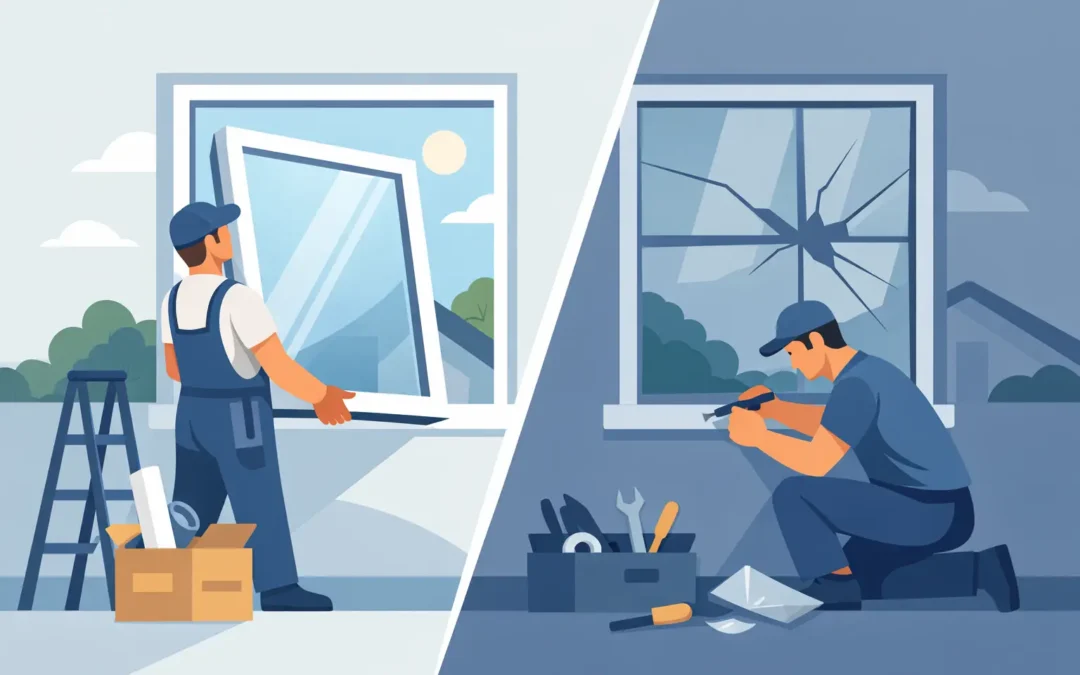
A misted pane, a stiff handle or a cold draught can quickly raise the same question: repair vs replace windows? The right answer is rarely about choosing the cheapest option on the day. It is about finding the work that properly solves the problem, protects your home and makes good use of your budget.
Some faults can be put right cleanly with a replacement sealed unit or new hardware. Others point to a window that has reached the end of its useful life. A straightforward inspection is the best starting point, particularly when the issue affects warmth, security or everyday use.
When window repair is the sensible choice
Repair is often the best value where the frame is sound and the fault is limited to one component. Modern double-glazed windows are made up of several parts, and not every problem means the whole window needs to come out.
Misted or cloudy double glazing
Condensation between the two panes means the sealed unit has failed. The insulating seal around the edge has broken down, allowing moisture to enter. It can look unsightly and reduce the glass unit’s thermal performance, but it does not automatically mean the frame needs replacing.
If the uPVC, aluminium or timber frame is in good condition, a replacement glass unit can often restore a clear view and improve insulation without the cost and disruption of fitting a complete new window. This is a particularly practical option where only one or two units have failed.
Do not confuse moisture inside the glass with condensation on the room-facing surface. Internal condensation is usually caused by humid air in the home meeting a cold pane. Better ventilation, sensible heating and extractor fans in kitchens and bathrooms can help with that issue.
Faulty handles, hinges, locks and catches
A handle that turns without opening the window, a hinge that has dropped, or a lock that no longer engages can often be repaired with the correct replacement part and adjustment. These faults are common on older uPVC windows that have otherwise performed well.
A window that will not lock should be dealt with promptly. Security should not wait, and forcing a stiff mechanism can turn a small repair into a larger one. In many cases, changing the handle, gearbox, hinge or locking component brings the window back into safe working order.
Draughts caused by seals or alignment
Feeling cold air around a closed window does not always mean the glazing has failed. Worn gaskets, compressed seals and misaligned sashes can leave small gaps that let in draughts and road noise.
Replacing seals or adjusting hinges may improve the fit significantly. This is especially worthwhile where windows are not particularly old, open and close smoothly once adjusted, and show no signs of frame damage or major distortion.
Localised glass damage
A cracked pane, failed toughened unit or damaged decorative glass can usually be replaced on its own, provided the surrounding frame remains stable. The new unit should be correctly specified for the location, whether that means safety glass, obscured glass for a bathroom or a matching pattern for the rest of the property.
Signs it is time to replace your windows
Replacement becomes the stronger option when there is more than one fault, the structure of the window is compromised, or repairs would only postpone an inevitable upgrade. It may cost more upfront, but it can prevent repeated call-outs and improve comfort across the home.
The frames are damaged or deteriorating
Cracked, warped or badly discoloured uPVC frames may no longer provide a reliable seal. Aluminium frames can also suffer from damage, and timber windows may show rot, swelling or persistent paint failure if moisture has got into the material.
Once a frame has deteriorated, replacing the glass alone will not resolve the underlying problem. New windows give you a complete system designed to work together: frames, sealed units, locks, hinges, weather seals and ventilation features.
Several units have failed
One misted unit can be a repair. If numerous windows are cloudy, difficult to operate or losing their seals, the cost of individual repairs can soon add up. It is worth comparing that total with a full replacement quotation, particularly if the windows are older and have limited energy efficiency.
This is where the repair vs replace windows decision should look beyond the immediate fault. A planned replacement can provide consistent appearance, improved performance and one clear installation programme rather than a series of separate repairs over several years.
Your home feels cold, noisy or hard to secure
Older single glazing, early double glazing and poorly fitted windows can make rooms uncomfortable even when nothing is visibly broken. Cold spots, noticeable traffic noise, persistent draughts and locks that feel weak all affect how a home feels day to day.
New double glazing can improve thermal comfort, reduce outside noise and offer more up-to-date locking systems. The exact benefit depends on the window style, glass specification, installation quality and the condition of the surrounding opening. There is no benefit in paying for a high-performing window if it is not surveyed and fitted properly.
You are improving the property anyway
If you are renovating, changing the appearance of the house or adding an extension or conservatory, replacement windows may make more sense than patch repairs. It gives you the chance to choose a style that suits the property, from practical uPVC casements to slim aluminium frames or traditional-looking vertical sliders.
Replacing windows during planned building work can also reduce disruption. Access, decorating and internal finishing can be organised around one project rather than revisited later.
How to compare the real cost
The cheapest quote is not always the lowest-cost decision. A repair may be excellent value when it extends the life of a sound window by years. It is less good value if the same window needs further parts, glass and seal work in quick succession.
When weighing up costs, consider the age and overall condition of the windows, how many have faults, whether the problem affects security, and whether your heating bills or comfort are already a concern. Also consider appearance. A single replacement pane may be a close match, but older glass and frames can weather differently over time.
For a replacement project, ask what is included in the price: survey, removal of old windows, installation, finishing, waste disposal and guarantees. Clear information matters more than a rushed sales pitch. You should have time to understand the options and decide what works for your home.
Why a proper survey matters
Windows can look similar from a distance while needing very different solutions. A survey should establish whether the issue lies with the glass, hardware, seals, frame or installation. It should also check that replacement parts are suitable and that any new glazing meets the needs of the opening.
At Pearson Glazing, fitters also survey, helping to keep advice practical and focused on what can genuinely be repaired or what should be replaced. That means you can discuss the fault with someone who understands how the work will be carried out, without pressure to choose a bigger job than necessary.
Make the decision based on the window, not the sales pitch
Repair is usually right for an isolated fault in a sound window. Replacement is usually right where the frames, glazing and mechanisms are all showing their age, or where better warmth, security and appearance are part of the goal.
If you are unsure, start by having the problem assessed and asking for the repair option where one exists. A clear, no-pressure recommendation gives you the information to act when it suits you – and the confidence that your windows will do their job properly.
by admin | Jul 10, 2026 | Uncategorized
A stiff handle, a misted pane or a draught by the sofa can make a simple question feel bigger than it should. Do you replace windows or repair windows and move on? For most homeowners, the right answer is not about chasing the biggest job. It is about fixing the actual problem, spending wisely and knowing when a repair will do the job properly.
That is where a straightforward approach matters. Some window issues look worse than they are. Others seem minor but point to a frame or unit that is past its best. If you know what to look for, the decision becomes much easier.
When to repair windows instead of replacing them
Repairs make sense when the main structure of the window is still sound. If the frame is in good condition, the window opens and closes as it should, and the issue is limited to one component, a repair is often the sensible choice.
A failed double glazed unit is a good example. If the glass has condensation trapped between the panes, the sealed unit may need replacing, but not necessarily the whole frame. The same goes for worn hinges, broken handles, damaged locks or tired seals. These faults can affect comfort and security, but they are often straightforward to put right.
Repairing can also be the better option if you want to extend the life of relatively modern windows. If they were installed well in the first place and the overall condition is still decent, replacing individual parts can restore performance without the cost of a full upgrade.
This route is usually quicker, less disruptive and easier on the budget. It can be especially worthwhile if only one or two windows are causing trouble rather than the whole house.
Signs a repair is likely enough
If the problem is isolated, repair is usually the first thing to consider. Common examples include one misted pane, a handle that has worked loose, a lock that no longer engages properly, or a window that has dropped slightly and catches when you close it.
Small draughts can sometimes be traced to gaskets or hinges rather than a complete window failure. In those cases, replacing the right parts can make a noticeable difference to warmth and ease of use.
Older windows can also respond well to repair, but this depends on their condition. Age alone is not the deciding factor. The better question is whether the frame and overall unit still have enough life left in them to justify the work.
When it is better to replace windows
Sometimes a repair just delays the inevitable. If several parts are failing at once, or the frame itself is warped, cracked, rotten or no longer secure, replacement is usually the smarter long-term choice.
This is often the case with older glazing that no longer meets modern expectations for warmth, noise reduction or security. You might be able to repair one issue today, then another six months later, then another after that. At a certain point, repeated call-outs stop being good value.
If your home still has very dated double glazing, or single glazing in some areas, new windows can bring a more meaningful improvement. Better thermal performance can help reduce heat loss. New locking systems can improve security. A full replacement can also improve the look of the property if frames are tired, discoloured or mismatched.
There is also the issue of reliability. If you are constantly dealing with sticking sashes, failed units and draughts, the question is not just what is cheapest now. It is what will leave you with fewer problems over the next few years.
Signs replacement is the better investment
If several windows have blown units, frames are visibly deteriorating, or the windows no longer shut properly despite adjustment, replacement deserves serious thought. The same applies if you can feel persistent cold around multiple openings, or if outside noise seems to come straight through the glass.
Condensation on the room side of the glass does not always mean the window has failed. That can be linked to ventilation inside the home. But condensation between panes is different. That points to a sealed unit issue. If this is happening across many windows at once, replacement may be more cost-effective than dealing with each one separately.
Replace windows or repair windows: what matters most?
The biggest deciding factors are condition, cost and what you want from the result. If you simply need to solve one fault, a repair is often enough. If you want to improve energy efficiency, update the look of the house and reduce future maintenance, replacement may be the better fit.
Cost matters, but it should be looked at properly. A cheaper repair is not always better value if the window is likely to need more work soon. Equally, a full replacement is not automatically the smart option if the problem is minor and the rest of the window is sound.
It also depends on how long you plan to stay in the property. If you are settled for the long term, investing in replacement windows may make more sense. If you are dealing with a limited issue in an otherwise decent set of windows, repair can be a practical and sensible answer.
For many households, the best outcome comes from an honest inspection rather than a sales pitch. You want someone to look at the actual condition of the window, explain what can be repaired, and tell you plainly if replacement is the wiser route.
The trade-off between short-term savings and long-term value
This is where homeowners often get stuck. Repairs usually cost less upfront, and that can be the right decision. But if the windows are near the end of their life, those smaller bills can start to add up.
Replacement costs more at the start, but it can improve comfort, reduce maintenance and leave you with a more dependable result. It may also lift the appearance of the property, especially if your current frames are looking tired or dated.
There is no single rule that fits every home. A ten-year-old window with a failed hinge is very different from a twenty-five-year-old window with multiple issues, poor insulation and worn-out locks. Both may have problems, but they do not need the same answer.
That is why a no-pressure assessment matters. The aim should be to match the solution to the condition of the window, not to steer every customer towards a full replacement.
How to decide without overcomplicating it
Start with the basics. Is the problem limited to the glass, handle, hinge, lock or seal? If yes, repair may be all you need. Is the frame damaged, movement poor across several windows, or performance poor throughout the house? If yes, replacement is more likely to make sense.
Then think about what is bothering you most. If it is one fault, fix the fault. If it is a broader feeling that the windows are cold, dated, awkward to use or no longer secure, a replacement project may solve more than one issue at once.
It also helps to look at the windows as a set rather than in isolation. Sometimes one window genuinely needs repair while the others are fine. Other times, one obvious problem is just the first sign of wider wear.
For homeowners in South East London and Kent, this can be especially relevant with mixed-age properties where different windows may have been installed at different times. In those cases, a practical inspection often reveals that some units are worth repairing while others are better replaced.
A sensible next step for your home
If you are weighing up whether to replace windows or repair windows, the best first move is not guessing from the sofa while the draught creeps in. It is getting clear advice based on the actual condition of the windows you have.
A good glazing company should be able to tell you where a repair is worthwhile, where a replacement unit will solve the issue, and where a full new window is the better investment. That kind of honesty saves time, money and frustration.
At Pearson Glazing, that straightforward approach is exactly the point. No hard sell, no being pushed into a bigger job than you need, just practical advice and dependable work.
If your windows are giving you trouble, aim for the option that fixes the problem properly rather than the one that sounds cheapest or biggest on paper. The right answer is usually the one that leaves your home warmer, safer and easier to live with.
by admin | Jul 8, 2026 | Uncategorized
If traffic starts before your alarm does, or neighbours seem louder once the evening settles down, your windows are often the weak point. The best windows for noise reduction are not always the thickest, newest-looking, or most expensive. What matters is how the whole window is built and fitted, because sound finds any gap it can.
For most homeowners, the aim is simple – make the house feel calmer without being pushed into buying more than you need. That means looking past sales phrases and focusing on what genuinely cuts noise, what only helps a bit, and where installation quality makes all the difference.
What makes the best windows for noise reduction?
Noise reduction comes down to one basic idea: stop sound waves from passing through glass, frames and air gaps. In practice, that means a window needs the right glass specification, a solid frame, tight seals and careful fitting.
A standard double glazed window can reduce outside noise to a degree, especially if you are replacing older single glazing or worn-out units with draughty seals. But if noise is a real issue – road traffic, buses, trains, school runs or late-night footfall – standard double glazing may not go far enough on its own.
The best-performing windows usually use a combination of thicker glass, wider gaps between panes, and in some cases acoustic laminated glass. These details matter more than broad claims about a window being simply “double glazed” or “high performance”.
Double glazing or acoustic glass?
This is where a lot of confusion starts. Many people assume triple glazing is automatically best for sound, while standard double glazing is only for warmth. It is not that straightforward.
Standard double glazing can improve noise levels, particularly when replacing older windows. If your current windows rattle, leak air or have failed seals, even a good modern double glazed unit may make the room noticeably quieter.
Acoustic glass takes things further. It is designed to disrupt sound more effectively, often by using panes of different thicknesses and a special interlayer in laminated glass. That change in construction helps reduce the amount of sound vibration passing through the unit.
Triple glazing can help in some cases, but it is not automatically better for noise than a well-specified acoustic double glazed unit. Sound reduction depends on the overall make-up of the glass, not just the number of panes. In some homes, a carefully chosen double glazed acoustic unit will outperform a poorly specified triple glazed one.
So if noise is the main problem, it is usually better to ask about the glass specification rather than focusing only on whether the window is double or triple glazed.
Frame material matters, but less than people think
When customers ask about the best windows for noise reduction, they often start with frame material. uPVC, aluminium and timber all have their place, but the frame alone is rarely the deciding factor.
A well-made uPVC window with the right sealed unit and proper installation can perform very well. Aluminium windows can also be effective, especially when paired with quality glazing and thermal breaks. Timber has natural density, which can help, but in modern homes the biggest gains usually come from the glazing and the fit, not from the frame material by itself.
That is useful to know because it keeps the conversation practical. You do not need to choose a window style that does not suit your property just to improve noise levels. In many cases, you can keep the look you want and improve acoustic performance through the glass and installation details.
Why gaps and fitting matter so much
Even very good glass will disappoint if the window is poorly fitted. Sound travels through weak points, and small gaps around a frame can undo a lot of the benefit.
This is one reason older windows often seem noisy even when the glass itself looks fine. Seals wear out. Frames shift slightly over time. Opening sashes stop closing as tightly as they should. You may notice a draught, but even without one, those tiny routes can let in a surprising amount of sound.
A properly surveyed and installed window should sit securely, close neatly and seal consistently around the frame. This is not the glamorous part of buying windows, but it is one of the biggest factors in whether the finished result feels worth the money.
If you live on a busy road in south-east London or Kent, where traffic and street noise can be a regular issue, this matters even more. Noise control is not just about the product on paper. It is about how the finished window performs in your actual home.
The window style can affect noise too
Some window styles are naturally better at resisting sound leakage than others. Fixed windows, which do not open, tend to perform best because there are fewer joints and seals to manage. Of course, most rooms still need ventilation, so that is not always a practical answer on its own.
Casement windows often provide a better seal than older sliding designs because they close firmly against the frame. Vertical sliders and other sash-style windows can still be upgraded for better acoustic performance, but they may need more careful specification because the design has more moving parts.
This does not mean you have to give up on period style or a preferred look. It simply means the details matter more. If your property suits vertical sliders, for example, the right glazing and workmanship become even more important.
What level of noise reduction should you realistically expect?
A quieter room is a realistic goal. Total silence is not.
That is worth saying plainly because some outside sounds are harder to block than others. Low-frequency noise, such as heavy lorries or aircraft rumble, is more difficult to reduce than higher-pitched sounds. You may still hear noise after installing new windows, but it should be less intrusive, less sharp and less constant.
The biggest improvement is usually noticed where old windows are in poor condition or where single glazing is being replaced. If your existing windows are already modern and in reasonable shape, the improvement may be more modest unless you move to a specialist acoustic specification.
That is why good advice matters. There is no point paying for a high-spec option if your current issue is mostly caused by failed seals or poor fitting. Equally, if you are next to a busy junction, a basic replacement may leave you disappointed.
How to choose the right option for your home
Start with the source of the noise. If it is general road traffic, standard modern double glazing may help if your existing windows are old or worn. If the problem is persistent and heavy, acoustic glass is usually worth discussing.
Then consider the room itself. Bedrooms facing the road often need a different approach from a rear lounge or home office. Some homeowners choose upgraded acoustic glazing only for the noisiest elevations rather than the whole property, which can be a sensible way to balance comfort and budget.
It also helps to think about ventilation. If you rely on trickle vents or keep windows open at night, even the best glazing can only do so much while there is an open path for sound. In some rooms, the answer is not just better glazing but also a more considered approach to airflow.
Most importantly, ask clear questions. What is the actual glass make-up? Are the panes different thicknesses? Is laminated acoustic glass an option? How will the frame be sealed during installation? Straight answers usually tell you more than broad promises ever will.
When replacing the glass may be enough
Not every noise problem calls for complete replacement windows. If your frames are in good condition, replacing the sealed units with a better acoustic specification may be possible. In other homes, worn hinges, handles, gaskets or locks are the real issue, and repair work can improve the seal enough to make a noticeable difference.
That is often the more sensible route when the existing window system is basically sound. A no-pressure approach matters here, because a good company should be willing to tell you when a repair or glass upgrade is the better option.
Pearson Glazing works with plenty of homeowners who want that kind of straightforward advice – not a hard sell, just a clear view of what is likely to work.
Best windows for noise reduction – the practical answer
If you want the practical answer, the best windows for noise reduction are usually well-fitted double glazed or acoustic glazed windows with quality seals and the right glass specification for the type of noise you live with. Not every home needs the most expensive option, but almost every noisy home benefits from careful surveying and honest recommendations.
A quieter home often comes from getting the basics right first, then upgrading where it genuinely makes a difference. If your windows are letting the street into the room, the right replacement should not feel complicated. It should just feel calmer once the window is shut.





Recent Comments