
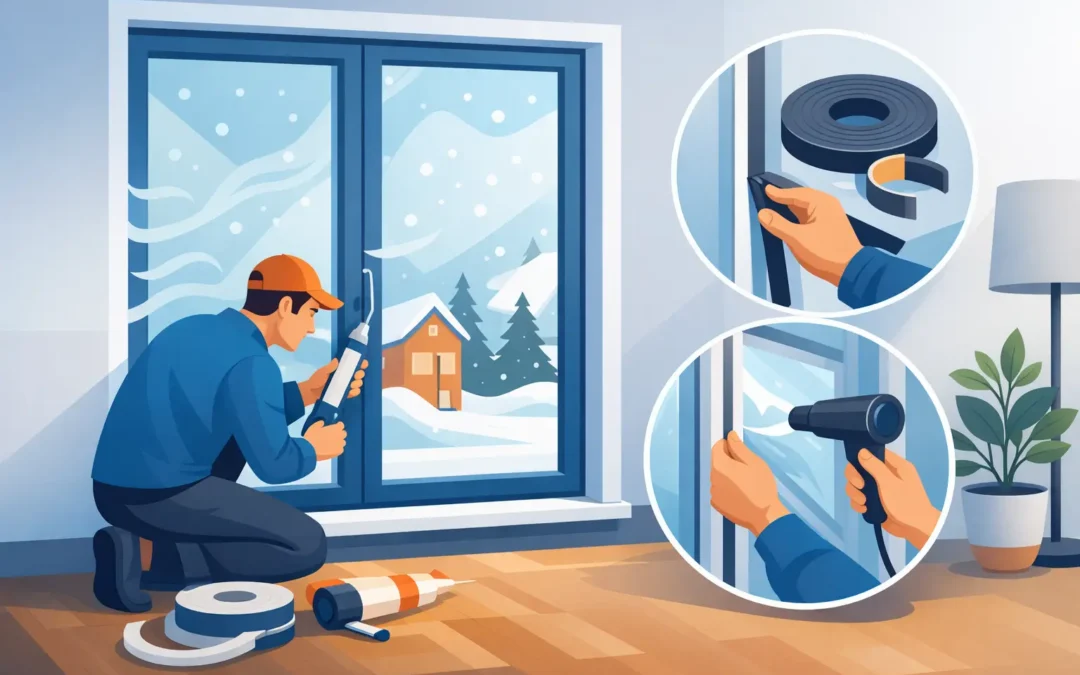
A cold patch beside the sofa, curtains that move when every door is shut, or a room that never quite warms up are all familiar signs of a window draught. Learning how to fix draughty windows starts with finding where the air is getting in. The right repair may be as simple as a new seal, but it can also point to a worn hinge, failed glazing unit or an installation issue that needs professional attention.
Before buying anything, check the window on a still, cool day. Run the back of your hand slowly around the opening sash, frame and sill. You may feel the change in temperature before you feel moving air. A thin piece of tissue can also help – hold it near the edges of the window and watch for movement. Take care around candles or naked flames; they are not needed for this job.
Find the source of the draught first
A draught does not always mean the glass itself is the problem. Most cold air enters at the points where different parts of the window meet: between the opening sash and frame, around the edges of the frame, through a gap at the sill, or around hardware that no longer pulls the sash tight.
Look closely at the rubber or foam seals. They should be continuous, flexible and sitting firmly in their channel. Brittle, flattened or missing sections cannot create a reliable seal. On older timber windows, cracked putty, loose beading and gaps where the frame meets the wall are common causes. With uPVC or aluminium windows, worn gaskets, poorly adjusted hinges and drainage issues are more likely.
Condensation between the panes is a different issue. It usually means the sealed unit has failed, allowing moisture into the gap between the glass. That failure will reduce insulation, but it does not necessarily mean the complete window needs replacing. In many cases, replacement glass can be fitted into a sound existing frame.
How to fix draughty windows with simple repairs
Start with the easiest work that matches the fault you have found. A careful repair often makes a noticeable difference to comfort and heating bills, particularly in bedrooms, bay windows and rooms with large areas of glazing.
Replace worn window seals
If the existing seal is compressed, torn or has come away, replacing it is often the most effective first step. Remove a short piece and take it to a glazing specialist so the profile can be matched correctly. Window seals are not one-size-fits-all: a seal that is too thick can make the window hard to close, while one that is too thin will not stop the draught.
Clean the groove before fitting the new gasket, then press it in without stretching it. Stretching can cause it to shrink back later and leave a gap at the corners. Close and lock the window afterwards to check that it engages smoothly.
Adjust loose hinges, locks and keeps
A casement window should pull snugly against its seals when locked. If the handle feels loose, the sash drops slightly when opened, or you can see a gap on the hinge side, adjustment may be needed. Modern uPVC windows often have adjustable hinges and locking keeps, but the settings vary by system.
Small adjustments can improve the seal, yet it is easy to make the window catch, bind or stop locking properly if the wrong screw is turned. If you are unsure, a window repair technician can assess the hinge condition and alignment quickly. Severely worn friction hinges usually need replacement rather than further adjustment.
Seal small gaps around the frame
A narrow gap between the window frame and internal wall finish can allow cold air through even when the window itself closes well. For a small, stable internal gap, a suitable flexible decorators’ caulk can provide a neat finish. Larger external gaps may need proper frame sealant or repair to the surrounding brickwork, render or timber.
Avoid blocking drainage holes at the bottom of uPVC and aluminium frames. They are there to direct rainwater away from the window, and sealing them can lead to leaks and further damage. If you can see daylight around the frame, or the outside sealant has split away, it is worth having the installation checked rather than simply applying more sealant over the top.
Use temporary measures where they make sense
Heavy, well-fitted curtains can reduce the feeling of cold around glazing at night, provided they do not cover radiators. Secondary glazing film can also help through a winter season in a rarely used room or on an older single-glazed window. These are practical short-term measures, not substitutes for repairing a clear gap or a window that will not close correctly.
For traditional sliding sash windows, brush or pile draught proofing is usually a better long-term answer than adhesive foam strips. The window still needs to move freely, so the system must be fitted accurately. Timber windows also benefit from repairing decayed sections and renewing the paint finish before draught proofing is installed.
When a draught points to a bigger window problem
Some issues need more than a seal or a tube of caulk. A window that is difficult to lock, has visible movement in the frame, lets in water, or has misted glass may need a more thorough repair. The same applies if you have already renewed the seals but the room remains noticeably cold.
Double glazing works by trapping an insulating layer between panes. If the sealed unit has failed, the glass may feel colder and show persistent misting inside. Replacing the glass unit can restore performance where the frame, hinges and locks are otherwise in good condition. This can be a sensible option for homeowners who want to improve comfort without replacing every window.
There are occasions when replacement is the more economical choice. Frames that are warped, badly damaged, insecure or beyond adjustment can undermine any repair. Older single glazing may also be difficult to improve substantially with draught proofing alone. A straightforward survey should distinguish between a repairable fault and a window that has reached the end of its useful life.
Do not overlook ventilation
It is tempting to seal every possible opening, especially when rooms feel cold. However, homes still need controlled ventilation to manage moisture and maintain healthy air quality. Do not tape over trickle vents or permanently block designed ventilation routes.
If condensation is building up on the room-side glass, consider how the room is ventilated as well as how well the window seals. Drying clothes indoors, cooking, showering and limited airflow can all contribute. The aim is to stop unintended draughts while retaining purposeful ventilation.
Get a clear view before committing to replacement
A good repair assessment should identify the actual cause, explain what can be repaired and set out when replacement glass, hardware or a new window is justified. There should be no need for pressure or guesswork. For homes across South East London and Kent, Pearson Glazing can inspect draughty windows and advise on practical repairs, replacement units or upgrades based on the condition of what is already there.
A warmer room often comes down to a small fault that has been left to worsen over time. Deal with the gap you can see, have the parts you cannot assess checked properly, and you can improve comfort without replacing more than your home needs.
Recent Comments