
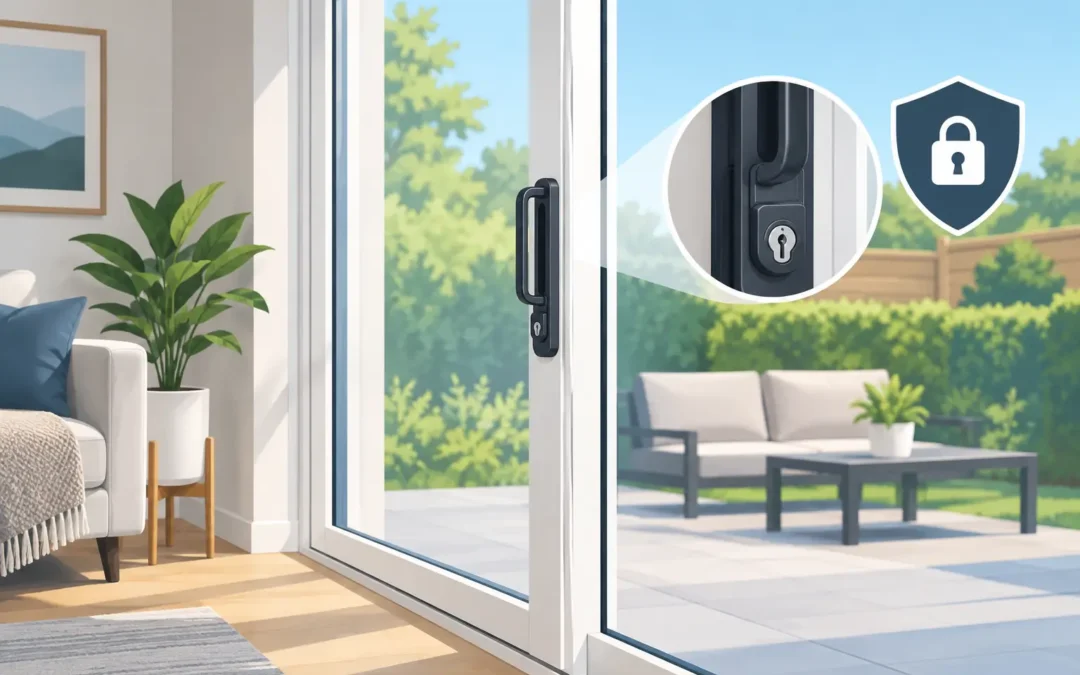
A patio door should feel easy to use, not like the weak point in your home. The best locks for patio doors are not always the biggest or most expensive option. They are the ones that suit the door’s opening style, work properly with the existing frame and glass, and make forced entry far more difficult without making everyday access a nuisance.
For many homes, the right answer is a combination of a well-fitted main lock and sensible secondary security. A lock upgrade can also be a good opportunity to check the handle, rollers, keeps and alignment. A high-quality lock cannot do its job if the door does not close squarely into the frame.
Start with the type of patio door you have
“Patio door” can describe several different designs, and each needs a different locking approach. Sliding patio doors, French doors, bi-fold doors and lift-and-slide doors may all lead onto the garden, but their mechanisms are not interchangeable.
A sliding patio door generally locks where the moving sash meets the fixed frame. Older doors may have a simple latch or hook lock operated by a handle, while newer systems often use more secure multi-point arrangements. French doors usually have a multi-point lock running through the main opening leaf, with shoot bolts securing the secondary leaf. Bi-fold doors also tend to use multi-point locking, but need careful adjustment because several panels and hinges work together.
Before choosing a replacement, establish whether the issue is the lock itself or the door’s operation. If you have to lift, push or pull the door hard before it will lock, the rollers, hinges, keeps or frame alignment may need attention too.
Multi-point locks offer strong everyday protection
For many modern patio doors, a multi-point locking system is the best starting point. Rather than securing the door at just one point, it engages bolts, hooks or rollers at several positions along the edge of the sash. This spreads resistance across the frame and makes it harder to force the door open at one vulnerable spot.
Multi-point locks are commonly found on French doors, PVC-u patio doors and many bi-fold systems. They are operated by lifting the handle and turning the key, although the exact sequence varies by door design. The lock must match the gearbox, backset, spindle position and keeps already fitted to the door. This is why it is rarely wise to order a replacement based on appearance alone.
There is a practical trade-off. Multi-point locks offer excellent security, but they have more moving parts than a basic latch. Keeping the door correctly aligned and avoiding excessive force on the handle will help it last longer. If it becomes stiff, arrange an adjustment early rather than continuing to force it.
Look at the cylinder, not just the lock body
Where a patio door uses a euro cylinder, the cylinder is a key part of its security. A standard cylinder can be the weak link even when the multi-point mechanism is sound. Higher-security cylinders are designed to resist common forms of attack, including snapping, drilling and picking.
Look for a cylinder that is appropriate for the door and meets recognised security standards, such as TS 007 where suitable. A 3-star cylinder is often chosen for stronger protection, while a correctly specified security handle may provide an additional layer with a suitable 1-star cylinder. The best combination depends on the door system and its existing hardware.
Cylinder sizing matters as much as the rating. It should sit neatly within the handle backplate, without projecting excessively on the outside. An overhanging cylinder can give an intruder more to grip or strike. A professional survey can identify the correct size and avoid a small fitting detail undermining a worthwhile upgrade.
The best locks for sliding patio doors
Sliding doors need protection against two different problems: the door being forced sideways and the sash being lifted from its track. A good sliding-door lock should address both.
A quality hook bolt lock is a common choice. When locked, a hooked bolt engages into a keep in the frame, resisting attempts to slide the panel open. Some systems use twin hooks or a more substantial locking arrangement for additional strength. The handle and lock should operate smoothly, with the hook fully engaging every time the door is closed.
Anti-lift blocks or devices are equally valuable. They limit how far the moving panel can be raised, reducing the risk of someone lifting it out of the track. These are often fitted within the top track or frame and should be compatible with the door’s operation. They are not a substitute for a proper lock, but they are a sensible part of securing a sliding door.
For some properties, a lockable patio door security bar can provide extra reassurance, particularly on a rarely used door or while you are away. It should be treated as secondary protection, not a workaround for a faulty main lock. It must also be easy for household members to remove in an emergency where the door forms part of an escape route.
Handles, keeps and alignment matter more than people expect
A new lock may not solve a patio-door security problem if the handle is loose, the keep is worn or the door sits badly in the frame. The keep is the metal part fixed to the frame that receives the lock bolt or hook. If it is damaged, incorrectly positioned or pulling away from the frame, the lock may appear to turn but will not offer full protection.
Security handles can help shield the cylinder and reduce access to fixing screws. They should be sturdy, tightly fitted and suitable for the thickness and style of your door. On a sliding door, a handle that does not fully operate the locking mechanism can leave the hook only partly engaged.
Misalignment is particularly common on older sliding doors. Rollers wear, hinges settle and seasonal temperature changes can affect how a door sits. Signs include scraping, draughts, a handle that is difficult to lift, or a door that bounces back slightly instead of closing cleanly. Adjustment may be all that is needed, but it should be checked before replacing parts unnecessarily.
Avoid relying on a key alone
A keyed lock is useful, but security should not depend on one small component. The door frame, glazing, handles, tracks and installation all contribute to the overall result. Toughened or laminated safety glass, where appropriate, can improve resistance around large glazed areas. Secure keeps and correctly fitted anti-lift protection strengthen the weak points that a key-operated lock cannot cover on its own.
It is also worth considering how the door is used. A patio door that is regularly opened for the garden needs a lock that is simple and reliable for daily use. A rarely used set of French doors may benefit from checking the shoot bolts and adding a secondary measure. Households with children should consider whether the handle height and locking routine provide the balance of access and safety they need.
Never leave the key in a lock that can be reached through an open window, letterbox or nearby glazed panel. Equally, do not store it somewhere so obscure that it cannot be found quickly if the door is needed in an emergency.
When a lock repair is better than a replacement
Not every stiff or faulty patio door needs a complete new locking system. A professional can often repair a failed gearbox, replace a worn cylinder, renew a handle or adjust the door so that the existing mechanism works as intended. This can be a cost-effective option when the door and frame are otherwise in good condition.
Replacement becomes more sensible if parts are obsolete, the lock has suffered significant damage, the cylinder offers limited protection, or the door cannot be aligned well enough for consistent locking. It may also be the right time to upgrade if you have moved into a property and do not know who may still have keys.
At Pearson Glazing, we would assess the whole door rather than simply fitting the first lock that appears to match. That means checking the mechanism, the condition of the frame and the way the door closes, then explaining the practical options without pressure.
A simple checklist before choosing a lock
When comparing patio door lock options, focus on four things: the exact door type, the condition of the existing locking mechanism, the level of cylinder protection, and whether the door closes and aligns correctly. If any of these is overlooked, a seemingly good upgrade may not perform as it should.
A secure patio door should close smoothly, lock positively and leave you confident when you turn in for the night. If yours sticks, rattles, will not lock fully or has an old-style cylinder, it is worth having it checked before a minor issue becomes a frustrating – or avoidable – security concern.
Recent Comments