
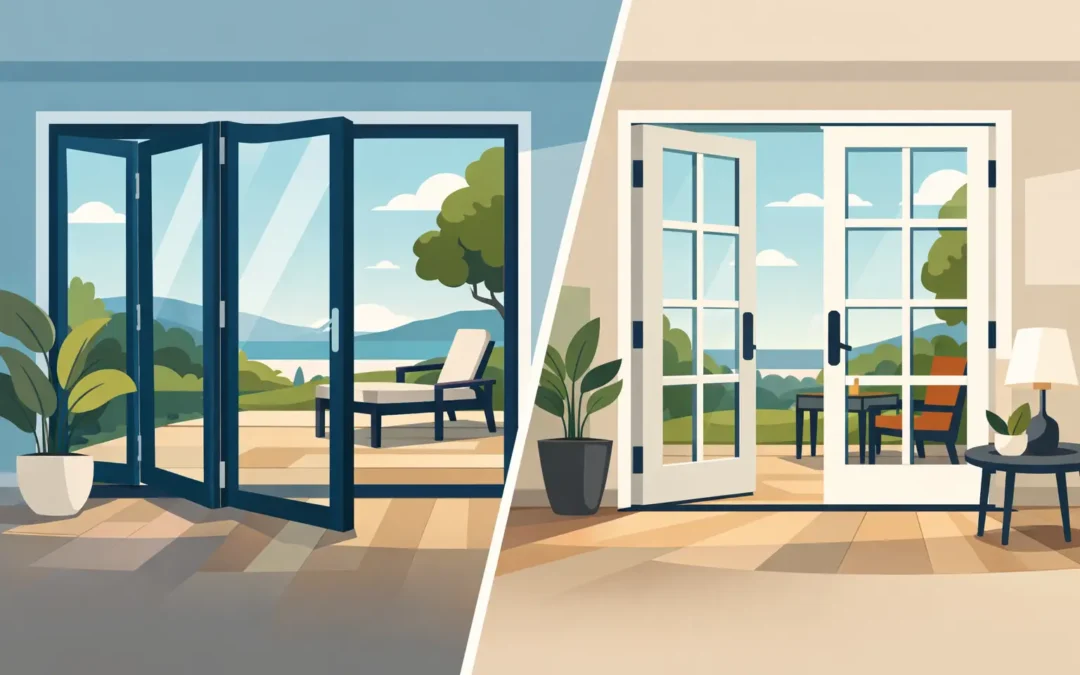
The choice between Bi-fold vs French doors often comes down to one practical question: how do you want your home and garden to work together? Both can bring in more natural light, improve access to the outside and give a tired rear elevation a welcome lift. But they open differently, suit different room layouts and can lead to very different results in daily life.
There is no single right answer. A wide kitchen extension with uninterrupted garden views may suit bi-fold doors beautifully, while a smaller dining room may feel more balanced, more practical and better value with French doors. Looking at the opening, your available space and how you use the room will give you a clearer answer than choosing on appearance alone.
Bi-fold vs French Doors at a Glance
Bi-fold doors use a series of glazed panels that fold and slide to one or both sides of an opening. When fully open, they can create a wide, open connection between the house and garden. They are commonly chosen for extensions, larger kitchens and properties where opening up a broad section of wall is part of the plan.
French doors are a pair of glazed doors that open from the centre. One door is usually used as the everyday access door, while both can be opened when you need a wider route outside. They offer a classic look and are a strong choice for standard-sized openings, patios, balconies and conservatories.
The biggest difference is the opening itself. Bi-folds are designed to make the most of a wide aperture. French doors provide a generous, straightforward opening without requiring a large span or a folding panel system.
When Bi-Fold Doors Are the Better Fit
Bi-fold doors are a good option when your priority is creating an open-plan feel. With the panels folded back, the boundary between indoors and outdoors feels far less defined. This can work particularly well for summer entertaining, family kitchens and ground-floor extensions that lead directly onto a patio or garden.
They can also make excellent use of a wide opening. Where a property has a large rear wall, bi-fold doors can be made with several panels to suit the size and configuration of the space. Rather than having a fixed central section, you can open most of the width when the weather and occasion allow.
Modern aluminium bi-fold doors are especially popular for their slim frames and strength. The frames support larger areas of glass, helping to maximise the view even when the doors are closed. uPVC bi-folds can be a more budget-conscious route in some situations, although the frame sightlines are usually broader.
There are a few practical points to consider. When open, folded panels need somewhere to stack, either inside or outside. That can affect furniture placement, kitchen units, blinds and patio space. On a cold or wet day, most people use just the traffic door rather than folding the entire set away, so it is worth checking that the everyday opening is positioned where it will be most useful.
Why French Doors Remain a Popular Choice
French doors have stayed popular because they are simple, attractive and versatile. They suit both traditional and contemporary homes, and their symmetrical design can bring a pleasing sense of proportion to a rear room, conservatory or dining area.
For many households, the everyday experience is also hard to beat. Open one door for quick access to the garden, let the dog out or bring in the washing. Open both for guests, garden furniture or larger items. There are no panels to fold and stack, and the door arrangement is easy to understand and use.
French doors are often the more sensible choice where the existing opening is modest. Installing bi-folds may require a wider opening and, in some cases, structural work such as a new lintel or steel support. If your current opening already suits a pair of doors, replacing it with well-specified French doors can provide a major improvement without turning the project into a larger building job.
They can also offer more uninterrupted glass when closed. Bi-fold systems have vertical frame lines between every panel. French doors have a central meeting point, but typically fewer divisions across the full view. If you are mainly looking out at a carefully maintained garden rather than regularly opening up the whole wall, that distinction matters.
Space, Layout and Day-to-Day Use
Before focusing on styles and finishes, stand in the room and think about movement. Which way do people walk to the garden? Where will dining chairs, a sofa or kitchen island sit? Is there enough patio space for outward-opening French doors, or would inward opening work better for the room?
French doors can open inwards or outwards, subject to the layout and safety requirements. Outward-opening doors preserve internal floor space, while inward-opening doors can be useful where outdoor space is restricted. Either way, the swing of the doors needs to be planned properly.
Bi-fold doors do not have the same wide swinging arc, but the stacked panels still occupy space. If they fold externally, they may reduce the usable patio area at the side of the opening. If they fold internally, they can affect the room when fully open. A good survey considers these details before the doors are ordered, not once installation day arrives.
Threshold choice is important too. A low threshold gives a neater transition to the garden and can make access easier for pushchairs, wheelchairs or anyone with reduced mobility. The correct detail depends on exposure to weather, floor levels and the door system, so it should be agreed as part of the survey.
Light, Views and Ventilation
Both options can brighten a room dramatically, particularly if they replace older doors with smaller glazed areas. The difference is in how the framing is arranged.
French doors tend to create a more traditional framed view, with two large glazed sections. They are often a strong match for period homes or properties where you want to retain a familiar look. Adding side panels or a glazed fanlight can bring in more light without changing the essential style.
Bi-folds are more architectural and suit large glazed openings. Even though there are more vertical frames, the overall effect can be striking when several panels span a full wall. They are particularly effective when the doors open onto a level patio and the inside floor line continues towards the garden.
For ventilation, French doors are easy to use in small increments. With bi-folds, a traffic door provides the same convenient option, while opening multiple panels gives far greater airflow when wanted. Neither is automatically better – it depends on whether you value controlled everyday ventilation or the ability to open up a whole elevation.
Cost and Installation Considerations
All doors should be priced against the exact opening, material, glazing specification, hardware and installation work required. As a general rule, French doors cost less than bi-fold doors of a similar quality because they use fewer moving panels and simpler hardware.
Bi-fold doors become more expensive as the opening gets wider and the panel count rises. Aluminium frames, premium handles, upgraded glass, integral blinds and structural alterations can all add to the final cost. That does not mean bi-folds are poor value. If a wide, flexible opening is central to your extension, they may be the right investment. But it is sensible to compare like for like rather than judging only by a starting price.
The quality of fitting matters just as much as the product. Doors need to be measured accurately, packed correctly and adjusted so that they open, close and lock as intended. This is particularly important with bi-fold systems, where panel alignment and running gear need careful setup. At Pearson Glazing, fitters also survey projects, helping to keep the advice practical from the first visit through to installation.
Security, Energy Efficiency and Maintenance
Well-made modern bi-fold and French doors can both provide strong security and thermal performance. Look for multipoint locking, toughened safety glass where required, quality cylinders and hardware that is suited to the door system. A professional installer can explain the available security options clearly without pushing unnecessary upgrades.
Energy efficiency depends on the full specification, not just whether you choose French or bi-fold doors. Frame material, glass units, seals, the size of the glazed area and the quality of installation all play a part. Large glass areas can still be comfortable and efficient when the correct system and glazing are chosen for the property.
French doors have fewer moving parts, so maintenance is generally straightforward. Routine cleaning, keeping the tracks and drainage areas clear, and occasional checks to hinges and handles will usually keep them working well. Bi-folds need similar care, with a little more attention to the tracks, rollers and panel alignment. Neither should feel difficult to own, but bi-folds are the more complex mechanism.
Choosing With Confidence
Choose bi-fold doors if you have a wide opening and genuinely want the option of opening up most of the wall to the garden. They make a strong feature in a modern extension and can transform the way a larger living space feels in warmer months.
Choose French doors if you want a timeless design, simple everyday garden access and a practical solution for a smaller or standard-sized opening. They are often better value, easier to accommodate and every bit as effective at bringing light into the room.
The best door is the one that suits the building, the way you live and the budget you are comfortable with. A straightforward on-site survey should leave you clear on the options, the work involved and what will look right in your home – without any pressure to choose more than you need.
Recent Comments