
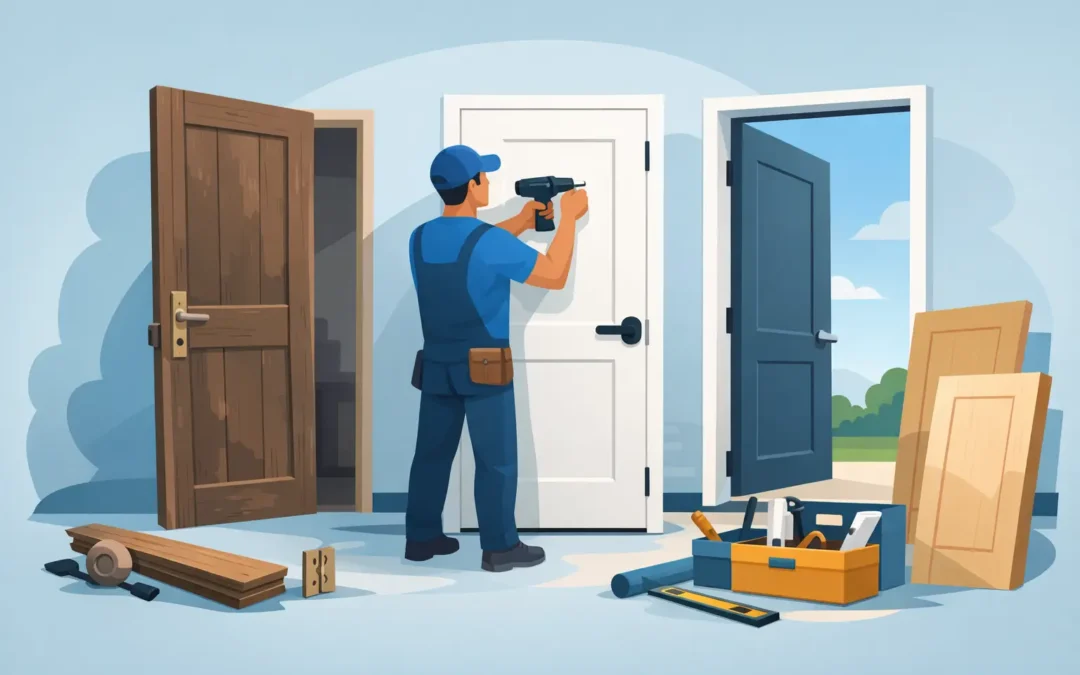
A sticking front door can feel like a small annoyance until it lets in a draught, rattles in its frame or leaves you worrying about security. Door replacement is often the sensible answer when repairs are becoming frequent, performance has slipped, or your home simply no longer looks the way you want it to.
A new door should do more than look smart from the pavement. It needs to close securely, keep the weather outside, suit the character of the property and work properly every day. The right choice depends on where the door is fitted, how you use it and what you want to improve.
Signs You May Need Door Replacement
Not every tired-looking door needs replacing straight away. A loose handle, worn letterbox or faulty lock can often be repaired, and replacement glass may solve misting or a cracked glazed panel. However, there comes a point where putting more money into an old door stops making sense.
Persistent draughts are one of the clearest signs. If you can feel cold air around the frame when the door is shut, the seals may have failed, the door may have warped, or the frame may no longer be sitting square. Condensation between panes of double glazing, visible gaps, rot around timber frames and water coming in during heavy rain also deserve prompt attention.
Security is another reason homeowners choose to upgrade. Older doors can have dated locking systems, weak panels or frames that have deteriorated over time. A modern replacement door with suitable locks, a solid frame and professionally fitted hinges provides everyday reassurance without making the entrance feel over-engineered.
You may also be ready for a change because the layout of your home has changed. Replacing a back door with French doors, patio doors or bi-fold doors can bring more light into a kitchen or living space and make access to the garden easier. That is a larger project than a like-for-like swap, but it can change how a room feels and functions.
Choosing the Right Replacement Door
The best door is not always the most expensive one. It is the one that suits the opening, the property and your priorities. A survey before ordering is essential, particularly in older homes where openings are not always perfectly square.
Composite doors for a strong front entrance
Composite doors are a popular choice for front doors because they combine a solid feel with low maintenance. They are available in a wide range of colours, glazing designs and furniture options, so it is possible to create a traditional or more contemporary look without the upkeep associated with painted timber.
They are particularly useful when warmth, security and kerb appeal are all high on the list. The trade-off is that styles and finishes vary between products, so it is worth seeing samples and discussing what will work with your existing windows, brickwork and porch.
PVC-u doors for practical everyday use
PVC-u doors offer a reliable, cost-conscious option for front, side and rear entrances. They are easy to maintain, do not need painting and can be made with glazed panels to bring more daylight into a hallway or utility room.
A PVC-u door can be a very good fit for a straightforward replacement, especially where value and weather resistance are the main concerns. The key is good installation. Even a well-made door will not perform properly if the frame, seals and thresholds are poorly fitted.
Aluminium, French, patio and bi-fold doors
For wider openings, aluminium doors can provide slim sightlines and a clean, modern finish. They are commonly chosen for garden-facing rooms because they allow more glass and less frame, helping light travel through the home.
French doors work well where you want a traditional pair of opening doors without changing the whole rear wall. Patio doors are practical where space is limited, as the panels slide rather than swing into the room or garden. Bi-fold doors can open a larger section of wall, making them ideal for entertaining and easy access outdoors, although they need enough clear space to stack back.
There is no single winner between these options. Consider how often the doors will be opened, whether furniture restricts the opening, which way the room faces and how much of the garden you want to connect with the house.
What Matters Beyond the Door Itself
It is easy to focus on panel design and colour, but the surrounding details make a real difference to comfort and long-term performance. The frame should be sized and fitted correctly, the threshold should be practical for the people using it, and the glazing should suit the level of privacy and light needed.
For a front entrance, think about sightlines from the street and from inside the house. Decorative or obscured glass can brighten a dark hall while retaining privacy. For a rear door, clear glazing may be the better choice if the garden is private and daylight is the priority.
Hardware deserves attention too. Handles, hinges, letterboxes and locks are the parts you touch most often. Choosing a finish that works with your windows and exterior fittings helps the door look considered, while quality hardware makes day-to-day use feel more secure and reliable.
Colour is another practical decision. A bold front door can give a plain frontage real character, but neutral tones tend to have broad appeal and can be easier to pair with future changes to windows or render. Dark colours often look striking, although they can show dust and marks more readily in exposed locations.
A Straightforward Door Replacement Process
A good door replacement project should feel clear from the first conversation. You should be able to explain what is not working with your current door, what you would like instead and whether there are any concerns around warmth, security, access or appearance. A helpful adviser will then talk through suitable options rather than pushing the most costly one.
The survey is where the detail is checked properly. Measurements, frame condition, opening direction, floor levels and any building work required should all be considered before the door is made. This reduces the risk of surprises on installation day and ensures the finished door operates as it should.
Installation is not just a case of taking one door out and putting another in. The old frame may need careful removal, surrounding finishes need protecting, and the new frame must be level, secure and properly sealed. The door should then be adjusted, tested and checked with you before the work is signed off.
For homes in South East London and Kent, a local installer who can survey, fit and deal with future repairs can be especially useful. If a lock needs attention or a handle wears out later, it is reassuring to know there is practical support available rather than a call centre at the end of a long chain.
Questions Worth Asking Before You Commit
Before accepting a quote, ask what is included in the price and whether removal and disposal of the old door are covered. Confirm the proposed door style, colour, glazing, handles, locking system and threshold, rather than relying on a general description. If there is building work involved, ask how the inside and outside will be finished around the new frame.
It is also sensible to ask about guarantees, maintenance and what to do if an adjustment is needed after fitting. Doors can settle slightly in the first period of use, especially where a property moves with seasonal temperature changes. Knowing who will deal with any follow-up gives you confidence from the start.
Avoid making a decision based on a time-limited sales pitch. A replacement door is a visible, long-term part of your home. Take time to compare the practical differences between options, not just the headline price.
A well-chosen door should make arriving home feel better: quieter when it is shut, warmer on cold days and easier to use every time you carry in shopping, welcome guests or step out into the garden. Start with the problem you want solved, ask straightforward questions, and choose an installer who gives you clear answers.
Recent Comments