
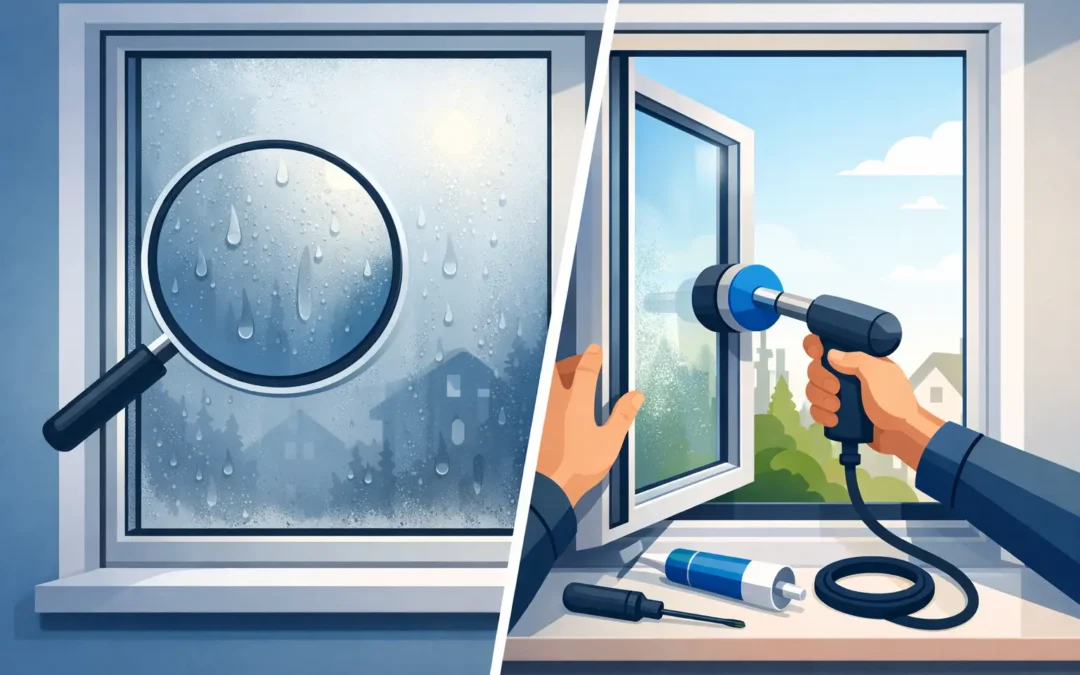
A clear double-glazed window should stay clear between the panes. So, why do windows mist internally? In most cases, it means the sealed unit has failed and moisture has found its way into the gap between the glass. It can look like a minor annoyance at first, but it is usually a sign that the unit is no longer performing as it should.
The good news is that misted glass does not automatically mean you need an entirely new window. The right solution depends on where the condensation is sitting, the condition of the frame and how well the window still operates.
Why do windows mist internally?
Modern double glazing is made from two panes of glass separated by a narrow, sealed gap. That gap contains dry air or an insulating gas, helping to reduce heat loss and improve comfort inside the home.
Around the edge of the unit is a spacer bar and a seal. This seal keeps moisture out and preserves the insulating space between the panes. When it breaks down, humid air can enter. As temperatures change, that moisture condenses on the inside faces of the glass, creating the familiar misty or cloudy appearance.
This is often referred to as a blown window, blown unit or failed sealed unit. The glass has not necessarily cracked, and the frame may still be perfectly sound. The problem is with the glass unit’s perimeter seal rather than the whole window.
First, check where the condensation is
Not all misting means the same thing. Before deciding what work is needed, look carefully at where the water or haze appears.
If you can wipe the moisture away from the room-facing side of the glass, it is surface condensation. This happens when warm, moist air in the home meets cold glass. Cooking, showering, drying clothes indoors and limited ventilation can all contribute. It is common in colder weather and can often be improved with regular ventilation, extractor fans and steady background heating.
If the moisture is on the outside pane and you cannot reach it from indoors, that can actually be a sign of efficient glazing. The outer pane has become cold enough for moisture in the outside air to settle on it, while less heat escapes from the house.
However, if the mist, droplets or dirty-looking haze are trapped between the panes, the sealed unit has failed. You cannot clean this from either side because the moisture is inside the unit itself.
What causes a sealed unit to fail?
Sealed units are designed to last for many years, but they are exposed to constant changes in weather and temperature. Over time, the materials around the edge of the glass can weaken. There is rarely one single cause.
Age is a common factor. Older double glazing may simply reach the point where its seals no longer perform effectively. Strong sunlight can make the glass and frame expand during the day, then contract as temperatures fall. That repeated movement puts pressure on the seal.
Poor installation can also shorten a unit’s lifespan. If glass is not properly supported in the frame, or if drainage around the frame is blocked, moisture can place extra strain on the edges of the unit. Damage to the frame, loose beads or previous repairs carried out without the correct materials can have a similar effect.
In coastal or highly exposed locations, wind-driven rain and harsher weather can be a factor. Everyday wear matters too. A window that is frequently slammed, difficult to close or out of alignment may transfer unnecessary stress to the glass and seals.
Is internal misting a serious problem?
Misting between the panes will not usually create an immediate security risk, but it should not be ignored. Once the seal has failed, the window’s insulating performance is reduced. That can make the room feel colder near the glass and may contribute to higher heating costs over time.
The appearance can also worsen. Early failure may look like a light fog around the edges first thing in the morning. Later, you may see droplets, streaks, mineral deposits or a permanent cloudy patch. At that stage, the view through the glass can be noticeably affected.
A failed unit can sometimes be accompanied by other issues, such as draughts, worn hinges, faulty handles or damaged locks. These are separate problems, but a proper assessment can identify whether they need attention at the same time.
Can misted double glazing be repaired?
In most cases, the practical repair is to replace the sealed glass unit while keeping the existing frame. A surveyor measures the glass accurately and checks the thickness, spacer bar, glazing type and any safety requirements. The old unit is removed, and a new sealed unit is fitted into the frame.
This is often a sensible option when the uPVC, aluminium or timber frame remains solid, opens and closes properly, and suits the property. It is less disruptive and generally more cost-effective than replacing a complete window.
There are businesses that offer to drill the glass and remove moisture from the cavity. While this may improve the appearance temporarily, it does not recreate the original factory-sealed insulating unit. The gap can become misty again, and the thermal performance will not be restored in the same way. For a lasting result, replacement of the failed unit is normally the better choice.
When is full window replacement the better option?
Replacing only the glass is not always the answer. A complete window replacement may make more sense if the frame is warped, badly discoloured, cracked or allowing water into the property. It may also be worth considering if the window is difficult to lock, has failed hinges, persistent draughts or several misted units across the property.
Homeowners sometimes choose full replacement when they want to improve the look of their home, upgrade to more energy-efficient glazing or change the style of opening. For example, old units with limited performance may be replaced with modern low-emissivity glass, while safety glass can be specified where required in doors, low-level glazing and certain window locations.
There is a trade-off. Replacing a single failed unit is usually the most economical route when everything else is in good condition. Replacing the whole window costs more, but can address broader issues in one job. A straightforward inspection should give you a clear recommendation without pressure to choose work you do not need.
How to reduce the risk of future misting
No sealed unit lasts forever, but good installation and simple maintenance can help it perform for longer. Keep drainage channels in window frames clear of leaves and dirt so rainwater can escape. Avoid using abrasive cleaners or sharp tools around the edge seals, and do not force a stiff window shut.
If a window becomes hard to operate, deal with it early. Adjusting hinges or replacing worn hardware can prevent repeated strain on the frame and glass. It is also worth checking for cracked external sealant, loose glazing beads or signs of water collecting around the frame.
Inside the home, reducing excess humidity helps prevent surface condensation, though it will not reverse misting inside a failed unit. Use kitchen and bathroom extractors, keep trickle vents open where fitted, and allow air to circulate around windows rather than pressing furniture or heavy curtains tightly against them.
Getting the right advice for misted windows
A clear diagnosis saves money. Ask a glazing specialist to confirm whether the issue is surface condensation, external condensation or moisture between the panes. They should inspect the frame, opening mechanism and glass as well as the visible misting, then explain whether a replacement unit or a full window is the sensible option.
For homeowners in South East London and Kent, Pearson Glazing can assess misted units and advise on a practical repair or replacement route. The aim should be simple: clear glass, a warmer room and work that fits the condition of your existing windows, without being talked into more than is necessary.
Recent Comments