
by admin | Sep 30, 2026 | Uncategorized
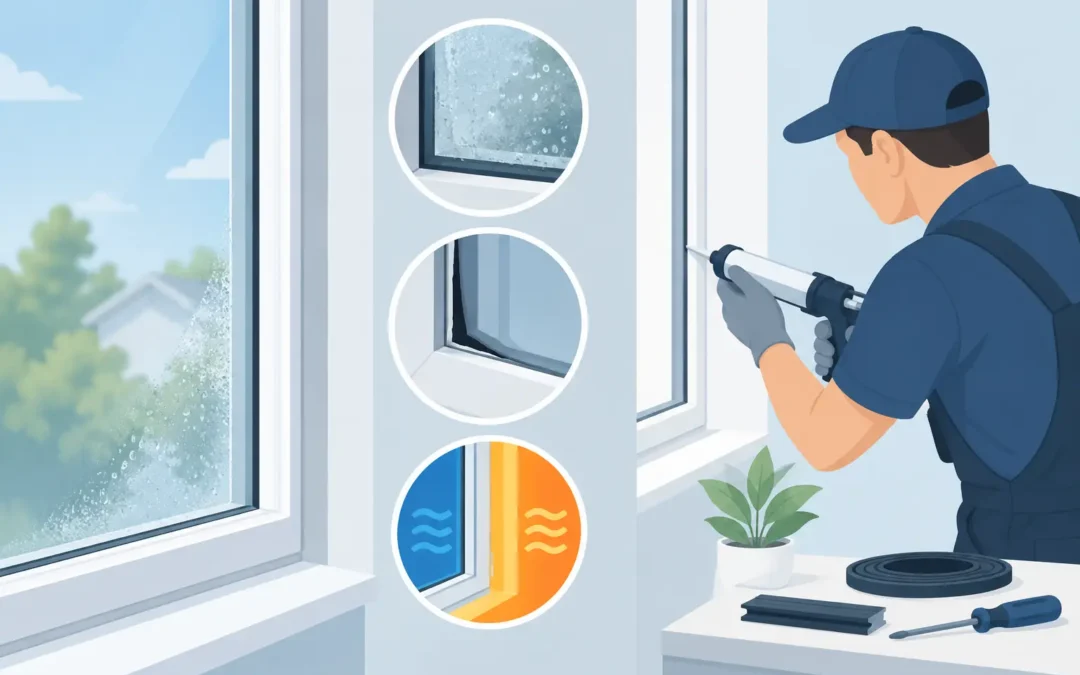
Condensation trapped between the panes is one of the clearest signs of window seal failure. It can start as a faint mist on a cold morning, then become a permanent cloudy patch that spoils the view and makes a room feel less comfortable. It is frustrating, but it does not always mean the whole window has to be replaced.
For most homeowners, the sensible next step is to establish exactly what has failed. A problem with the sealed glass unit, a draught around the frame and condensation on the room-side surface can look similar at first glance, but they need different solutions.
What is window seal failure?
Most modern double-glazed windows contain an insulated glass unit: two panes of glass separated by a spacer bar and sealed around the edge. The gap is filled with air or an insulating gas, helping to reduce heat loss and outside noise.
Window seal failure happens when that perimeter seal breaks down. Moisture can then enter the gap between the panes. Once inside, it may create misting, droplets or a white, hazy appearance that cannot be wiped away from either side of the glass.
This is different from ordinary condensation on the inside of a window. Surface condensation is usually caused by warm, humid indoor air meeting cold glass. It can often be reduced through ventilation, steady heating and managing moisture from cooking, showers and drying clothes. Moisture inside the sealed unit cannot be cleaned away because it is trapped between the panes.
The signs to look for
The most obvious symptom is condensation between the glass panes. Depending on the weather and the stage of the failure, it may appear and disappear at first. As more moisture enters, the glazing often becomes consistently misty or marked.
You may also notice a rainbow-like sheen, dirt-like staining within the unit, or small deposits around the edge of the glass. In some cases, the spacer bar becomes more visible than before. These are all worth having checked, particularly if they affect several windows in the same elevation of the house.
A colder feel near the window can be another clue, though it is not proof on its own. Draughts may come from worn opening seals, poorly adjusted hinges, gaps around the frame or an issue with the installation rather than the glass unit. A professional inspection separates these problems rather than assuming that every chilly room needs new windows.
When it is not a failed sealed unit
If water appears on the room-facing side of the glass, or on the frame and window sill, look first at ventilation and humidity. Bathrooms, kitchens, bedrooms and rooms where washing is dried indoors are common trouble spots. Extractor fans, trickle vents where fitted and short periods of ventilation can make a noticeable difference.
If you can feel moving air around an opening sash, the rubber gaskets, hinges or locks may need attention. These are repairable parts on many uPVC, aluminium and timber window systems. The glass may be perfectly sound.
Why sealed units fail
Sealed glass units do not last indefinitely. Sunlight, temperature changes and years of expansion and contraction place stress on the edge seal. South- and west-facing windows can experience particularly high temperatures in summer, while winter brings sharp cooling. Over time, materials naturally age.
Poor drainage can contribute too. Window frames are designed to channel rainwater away through drainage paths. If these become blocked, standing water can put unnecessary pressure on the glazing system and surrounding components.
Damage is another cause. A cracked pane, impact to the edge of the unit or careless work around the frame can compromise the seal. Occasionally, the issue stems from an older installation where the unit was incorrectly sized, packed or fitted.
It is also worth being realistic about age. If one unit in a 20-year-old installation has failed, others may follow eventually. That does not mean replacing everything immediately is the only sensible option. It simply means the condition of the wider installation should inform the decision.
Can a failed window seal be repaired?
The seal within a double-glazed unit is not generally repaired in place to a standard that restores its original insulating performance. Products that claim to clear misted glazing by drilling the glass or removing moisture may improve the appearance for a time, but they do not normally recreate the factory-sealed unit or its original thermal efficiency.
The dependable repair is usually to replace the failed glass unit while retaining the existing frame. This is often a straightforward, cost-effective choice where the frame is in good condition, opens and locks properly, and has no significant damage or distortion.
Replacement glass can be specified to suit the window and the room. Homeowners may choose clear double glazing, patterned or obscured glass for privacy, tougher safety glass where required, or improved energy-efficient glass. Matching the appearance of nearby units matters too, especially where some original glazing remains.
When replacing the whole window makes more sense
A replacement unit is not always the best answer. Whole-window replacement may be worth considering if frames are cracked, warped, badly discoloured, difficult to operate or no longer secure. It can also be sensible where multiple units have failed and the windows are approaching the end of their useful life.
There is a trade-off. Replacing glass units is typically less disruptive and less expensive than replacing complete windows. New windows, however, can address several issues at once: poor security, dated appearance, difficult operation, draughts and lower thermal performance. The right choice depends on the condition of the frame, not just the misting inside the glass.
What happens during a replacement glass visit?
A proper assessment starts with measuring the existing unit and checking the frame, beads, seals and operation of the window. The aim is to make sure a new unit will fit correctly and that replacing it will solve the underlying problem.
Once the new glass has been made, the old sealed unit is carefully removed and the replacement fitted with the correct packers and glazing system. The beads and seals are refitted, and the window should be checked for smooth opening, closing and locking. If hinges, handles or gaskets are worn, it is useful to identify those at the same time rather than leaving a separate issue unresolved.
At Pearson Glazing, the focus is on giving homeowners a clear view of whether replacement glass, adjustment or a new window is the sensible route. There is no benefit in recommending a larger job if a well-fitted sealed unit will do what you need.
Reducing the risk of future seal problems
You cannot stop materials ageing, but a little maintenance helps windows perform as they should. Keep drainage slots clear of leaves and debris, particularly after autumn. Avoid using abrasive cleaners or sharp tools around the edges of glazing, and do not force stiff handles or opening sashes.
If a window is hard to close, catches on the frame or needs pressure to lock, arrange an inspection. Early adjustment can prevent unnecessary strain on hinges, locks and seals. Also check for obvious damage after building work, decorating or accidental impact.
For indoor condensation, aim for consistent habits rather than keeping windows shut all winter. Use extractor fans during bathing and cooking, cover pans where practical, and ventilate briefly after producing moisture. This will not fix a failed sealed unit, but it can protect the rest of your windows and help keep rooms healthier.
Getting the right answer for your windows
Misted double glazing is rarely an emergency, but it is worth dealing with before it becomes a permanent annoyance. A failed unit can reduce comfort, affect the appearance of your home and gradually undermine the benefit you expected from double glazing.
Start with an inspection that looks at the glass, frame and opening parts together. That gives you a practical answer, whether it is replacement glass, a minor repair or a wider upgrade. A clear view and a warmer-feeling room are often closer than they first appear.
by admin | Sep 28, 2026 | Uncategorized
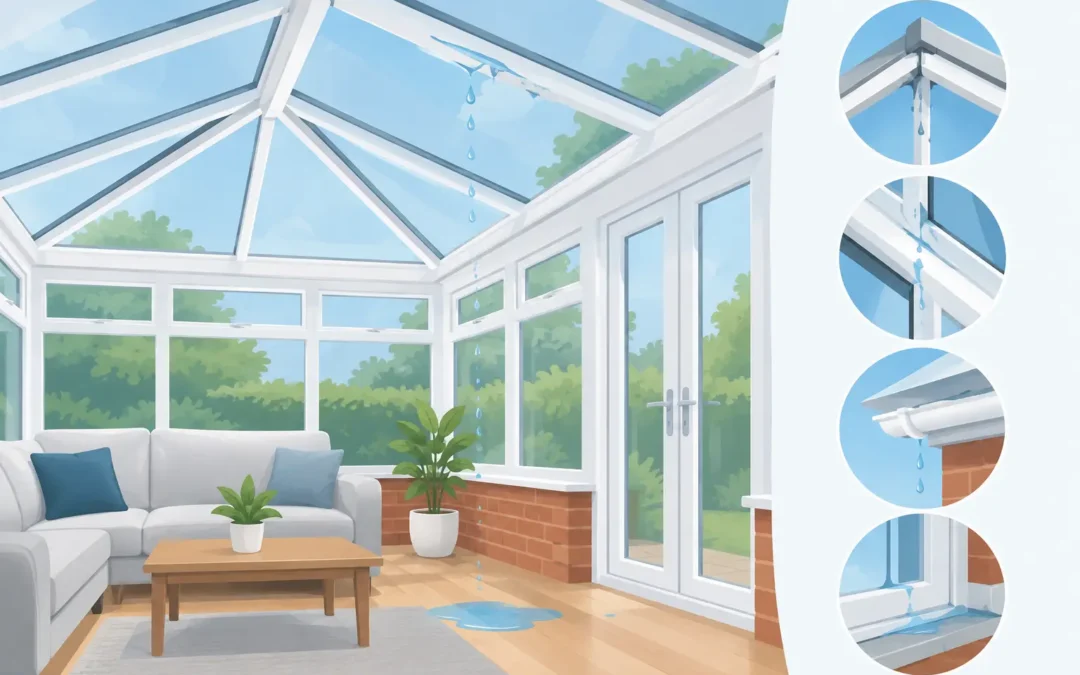
A conservatory leak rarely starts as a dramatic stream of water. More often, it is a damp patch by a frame, a drip that appears only in wind-driven rain, or a musty smell that was not there last winter. Understanding what causes conservatory leaks can help you act before moisture damages plaster, flooring, furnishings or the structure itself.
The visible drip is not always directly below the fault. Water can track along roof bars, guttering, wall flashings and internal trims before finding a way through. That is why a careful inspection matters more than simply applying sealant where the water appears.
What Causes Conservatory Leaks Most Often?
Most leaks come down to one of three areas: the roof, the junction between the conservatory and the house, or the drainage around it. Age can play a part, but a relatively new conservatory can leak too if a component has moved, been damaged or was not fitted correctly.
Worn or failed seals
Rubber gaskets and silicone seals keep water out at the edges of glazing panels, around roof bars and where frames meet. Over time, sunlight, temperature changes and general weathering can make these materials shrink, crack or lose their grip.
A failed seal may leave a small gap that only lets in water during heavy rain. It can be tempting to cover the area with more silicone, but this is not always the right repair. If the original seal has failed because a roof panel has slipped or a frame has moved, new sealant alone will only hide the problem for a while.
Slipped roof panels or loose roof caps
Conservatory roof panels expand and contract as the temperature changes. If they are not held securely, or if the fixings and caps have deteriorated, a panel can move slightly from its original position. Even a small gap can allow rainwater to pass beneath the roof bar.
You may notice staining or drips along a particular roof bar, especially after prolonged rain. A professional can check whether the panel needs repositioning, whether the glazing system needs new gaskets, or whether damaged caps and fixings should be replaced.
Blocked gutters, downpipes and valley channels
Leaves, moss and debris can stop rainwater from draining away properly. Instead, water builds up in gutters or valley channels and may overflow towards the conservatory roof edge, wall or door frame. This is particularly common beneath trees and after autumn weather.
A blockage does not always mean the conservatory itself is at fault, but it should not be ignored. Overflowing water can expose weak seals and create staining that looks like a roof leak. Clearing accessible gutters safely and regularly is useful maintenance, but a damaged or poorly aligned gutter should be repaired rather than repeatedly cleaned.
Defective flashing where the conservatory meets the house
Flashing is the weatherproof material that seals the join between the conservatory roof and the brickwork of your home. If it has lifted, cracked, split or been sealed poorly, rain can get behind it and travel down the adjoining wall.
Signs can include damp near the top of the conservatory, water running down the inside wall, or marks that worsen after wind from one direction. Flashing repairs need to deal with the full junction, including the condition of the masonry and any previous sealant. A quick surface patch may not withstand another season of rain.
Cracked glazing, damaged roof sheets or failed units
A crack in a glass panel, polycarbonate sheet or roof component can let water through. Cracks are sometimes obvious after impact from a falling branch or storm debris, but finer damage can be harder to see from ground level.
Condensation between the panes of a double-glazed unit is different from a rainwater leak, although both can leave the conservatory feeling damp and uncomfortable. Moisture inside a sealed unit usually points to a failed glass unit, while water arriving after rainfall suggests a problem with the roof, frame, seals or drainage.
Frame movement and ageing components
Conservatories are exposed to changing temperatures throughout the year. Minor movement is normal, but older installations can develop gaps as frames, roof systems, fixings and seals age at different rates. Movement may also occur if the base has settled or if doors and windows have become difficult to open and close.
This is where diagnosis matters. Replacing a seal may be enough for a localised issue. If several leaks, draughts and sticking openings are appearing together, the conservatory may need more extensive repair work or an upgrade to key components.
How to Find the Source of a Conservatory Leak
Start by noting when and where the leak appears. Does it happen only during heavy rain, or when rain is blown against a particular side? Is the water coming from the roof, a corner, the wall connection, or around a window or door? These details help narrow down the likely cause.
Look for obvious signs from inside first. Water marks, bubbling paint, mould, warped window boards and damp patches around roof bars can all point towards the route water is taking. Check whether the problem is worse after rain than after cold weather, as this helps distinguish a leak from ordinary condensation.
From outside, only inspect what you can reach safely from ground level. Look for overflowing gutters, visible debris, slipped caps, cracked panels or gaps at the wall junction. Do not climb onto a conservatory roof. It is not designed to take a person’s weight and a fall or damaged panel can turn a manageable repair into a much bigger problem.
A controlled water test can sometimes identify the entry point, but it must be done carefully and one section at a time. Flooding the roof with a hose can force water into areas that would not leak in normal rainfall, making the result misleading. For persistent or unclear leaks, a survey by an experienced conservatory repair specialist is usually the quickest route to the right answer.
When a Simple Repair Is Enough
A conservatory does not necessarily need replacing because it leaks. Many issues are repairable, particularly where the structure is sound and the fault is limited to a gasket, roof panel, gutter, flashing section, glass unit or hardware component.
A straightforward repair is more likely to be suitable when the leak is confined to one area and there are no signs of significant frame movement or widespread deterioration. Replacing perished seals, refitting a slipped panel or repairing a localised flashing fault can often restore weatherproofing without unnecessary work.
The trade-off is that a local repair will not resolve unrelated ageing elsewhere. If several roof bars are leaking, multiple glazed units have failed, and the conservatory is difficult to heat, it may be worth discussing whether an upgrade would offer better long-term value. The right choice depends on the condition of the existing structure, not on a one-size-fits-all answer.
What You Can Do While Waiting for a Repair
Move furniture and electrical items away from the affected area, then place a container beneath active drips. Dry standing water promptly and ventilate the room once the weather allows, as trapped moisture encourages mould.
Avoid pushing sealant into every visible gap or drilling into roof bars. These actions can block designed drainage routes, damage hidden components or make a later repair more difficult. If a gutter is safely accessible from ground level and clearly full of leaves, removing loose debris may reduce overflow, but do not lean ladders against the conservatory roof or frames.
Take a few photographs during the leak and again when the area is dry. Showing where water appears, along with any external staining or gutter overflow, gives a surveyor useful evidence and can make the visit more efficient.
A Leak Is Usually Repairable When It Is Properly Diagnosed
Conservatory leaks can be frustrating, particularly when they return with every spell of heavy rain. The good news is that the source is often a specific, repairable issue rather than a reason to write off the whole room. A careful inspection of the roof, seals, flashings, frames and drainage will identify what has failed and what work is genuinely needed.
For homeowners in South East London and Kent, Pearson Glazing can assess conservatory leaks without pressure, explain the practical options clearly and carry out the repair work needed to help keep your conservatory dry and usable.
by admin | Sep 26, 2026 | Uncategorized
A quote for new windows or doors should make a home improvement decision easier, not leave you wondering what has been left out. Good glazing quotes set out the product, the work involved and the final cost clearly, so you can compare like for like without sitting through a hard-sell presentation.
The lowest figure is not always the best value, and the highest figure is not automatically a sign of quality. What matters is knowing exactly what you are being offered, who will carry out the work and whether the price covers the job from survey through to a proper finish.
What should be included in glazing quotes?
A useful quote starts with a clear description of the products. For replacement windows, this should cover the style, material and quantity, along with the glazing specification where relevant. For doors, it should identify the door type, frame, colour or finish, hardware and locking arrangements. A vague line such as “supply and fit windows” does not give you enough to make a confident comparison.
It should also state whether the price includes surveying, removal of existing frames or glass, installation, making good around the openings and disposal of waste. These are ordinary parts of a replacement project, but they can vary depending on the property and the condition of the existing frames, walls and trims.
For larger work, such as a conservatory or a set of bi-fold doors, the quote may need to cover additional items. Structural alterations, roof work, drainage, electrical work and building control requirements can all affect the price. There is no problem with work being excluded where it is not needed or cannot be confirmed before survey. The key is that exclusions are written down plainly.
A fair quote should make the following points easy to find:
- the products being supplied, including style, finish and specification
- fitting, removal, waste disposal and any finishing work included
- items that are excluded or subject to further inspection
- the total price, payment stages and how long the quote remains valid
Why prices for the same job can differ
Two quotes can look very different even when both are for the same number of windows. The reason is often specification rather than a simple difference in profit.
The frame material is one example. uPVC is a popular, cost-effective choice for many homes, while aluminium can offer slimmer sightlines and a different look, usually at a higher upfront cost. Within either material, choices around profile, colour, glazing, handles and decorative features will change the figure.
Glass also makes a difference. Standard double glazing may suit one property perfectly, while another may benefit from improved acoustic performance, obscured glass for privacy, safety glass near doors or low-threshold areas, or upgraded thermal performance. These details should be chosen for how you use the room, not simply because they appear on an upgrade list.
Access and installation conditions matter too. A ground-floor window with clear external access is a different job from a large upper-floor unit above a conservatory roof. Restricted parking, scaffolding, difficult removal of old frames and repairs to damaged reveals can add time and labour. An experienced surveyor should identify likely issues early rather than allowing an unexpectedly low price to become a difficult conversation once work has started.
Compare the specification, not just the total
When reviewing glazing quotes, place the product details side by side before looking at the final totals. Check that every quotation covers the same number of openings and the same styles. A casement window, vertical slider, French door and patio door each involve different materials and fitting requirements, so broad descriptions can hide meaningful differences.
Look at the glass specification, the colour or foil finish, handles, locks and thresholds. If one quote includes a composite front door with upgraded hardware and another allows for a basic PVC-u door, the prices should not be expected to match. The same applies to doors with side panels, decorative glass and larger glazed areas.
It is also worth checking whether the quotation is based on a proper survey or an initial estimate. An estimate can be useful at the early stage, particularly if you are exploring options. However, a final price should follow a site visit and accurate measurements. This helps avoid ordering products that do not suit the opening or discovering additional work too late.
Questions worth asking before you accept
You do not need to be a glazing expert to ask sensible questions. A straightforward installer should be happy to explain the proposal in plain English and give you time to consider it.
Ask who will survey the work and who will fit it. At Pearson Glazing, fitters also act as surveyors, helping keep the information gathered on site connected to the installation itself. That can reduce the risk of details being lost between a sales appointment, a survey and the fitting team.
Ask how long the work is expected to take and whether you need to prepare rooms, move furniture or arrange access. For most replacement window projects, disruption is manageable, but knowing the plan in advance makes the day far less stressful.
You should also ask how any unforeseen issues will be handled. Older properties can reveal rotten timber, damaged brickwork or unsuitable existing supports once frames are removed. No company can predict every hidden issue, but they should explain how they will discuss options and costs with you before carrying out additional work.
Finally, ask about workmanship cover, product guarantees and aftercare. Windows and doors are long-term parts of your home. It is reassuring to know who to contact if a handle needs adjustment, a lock develops a fault or replacement glass is required later on.
Be wary of pressure, not reasonable detail
A detailed quote is a good sign. Pressure is not. Be cautious if you are told that a price is available only if you sign during the appointment, or if a salesperson will not leave the paperwork for you to review. Home improvements deserve thought, especially where security, energy efficiency and a significant household budget are involved.
Equally, be careful with a figure that is much lower than every other quote without a clear explanation. It may be based on a reduced specification, omit fitting elements or leave limited room for good aftercare. Ask the supplier to explain the difference rather than assuming one price is automatically wrong.
For homeowners in south east London and Kent, local knowledge can be useful where access, parking and the character of the property affect the work. Even so, the same principle applies anywhere: choose the company that explains the job honestly and gives you confidence in both the product and the people fitting it.
A quote should give you confidence to decide
The best glazing quotes are not the longest or the flashiest. They answer the practical questions: what is being fitted, what it will cost, what happens on installation day and who remains available afterwards. If anything is unclear, ask for it to be clarified in writing before you proceed.
A replacement window or door should improve daily life for years to come. Take the time to choose a specification that suits your home, and work with an installer who makes the decision feel straightforward rather than rushed.
by admin | Sep 24, 2026 | Uncategorized
A misty patch trapped between the panes is frustrating because it cannot be wiped away from either side. It is usually the first sign homeowners notice before asking, can blown window units be repaired? In most cases, the answer is yes – but the repair normally means replacing the sealed glass unit, not trying to fix the old one in place.
A blown unit does not necessarily mean the whole window needs replacing. If the frame, hinges, handles and locks are still working properly, fitting new double-glazed glass can be a sensible, cost-effective solution. The right choice depends on the condition of the complete window, not the condensation alone.
What is a blown window unit?
Double-glazed windows contain two panes of glass separated by a spacer bar and sealed around the edge. The gap is filled with air or an insulating gas to reduce heat loss and help prevent condensation.
When that perimeter seal fails, moisture can enter the gap between the panes. This is commonly called a blown unit, failed unit or misted unit. The insulating performance drops, and condensation, cloudiness or water marks can build up inside the glass.
It is worth clearing up one point: a blown window unit has not exploded or cracked. The term refers to a failed seal. A cracked pane is a separate issue, although it can sometimes be dealt with at the same time by replacing the glass unit.
Can blown window units be repaired without replacement?
The sealed unit itself cannot usually be restored to its original condition. Once the edge seal has failed and moisture has entered, drilling the glass or attempting to dry it out is unlikely to provide a durable result. The unit may look clearer for a while, but its insulation and seal have still been compromised.
A proper repair involves carefully removing the failed double-glazed unit and installing a new one made to the correct size and specification. The existing frame stays in place. This is often known as replacement glass or a sealed unit replacement.
For homeowners, this distinction matters. You may not need to pay for a completely new uPVC or aluminium window simply because one pane has misted up. Equally, replacing the glass alone is not always the best value if the frame is warped, badly worn or no longer secure.
Signs that the sealed unit has failed
Condensation between the panes is the clearest sign. Unlike surface condensation inside your home, it will not disappear when you improve ventilation or turn the heating on. It is trapped within the unit.
You may also notice a milky appearance, streaks, small droplets, or pale marks around the edges of the glass. On some units, the decorative bars inside the glazing can become discoloured or loose.
A room may feel colder near the window, but this alone does not prove the unit has blown. Draughts are more often linked to worn seals, poor adjustment, damaged hinges or gaps around the frame. A professional inspection can identify whether you need a new glass unit, a hardware repair, or attention to the window fitting itself.
When replacing the glass is the sensible option
Replacement glass is usually the straightforward choice when the frame is in good order. This applies to many modern uPVC, aluminium and timber windows where the opening sash is sound, the window opens and closes as it should, and the locking mechanism remains secure.
It is also a practical opportunity to improve the specification of the glass. Depending on the existing window system and the survey, you may be able to choose improved thermal performance, tougher safety glass for doors and low-level glazing, obscured glass for bathrooms, or acoustic glass where outside noise is an issue.
The new unit must be accurately measured and correctly fitted. Small differences in thickness, spacer position, toughened glass requirements and the type of beading can affect both appearance and performance. This is why an on-site survey is more reliable than ordering a unit based on a rough measurement.
When a full window replacement may be better
There are situations where replacing only the blown glass would be a short-term fix. If several units have failed in an older window, the frames may be approaching the end of their useful life too. Replacing one pane can still make sense, but it is worth considering the wider condition and likely future costs.
Full replacement may be the better option if the frame is cracked, warped or rotten, if water is getting into the surrounding structure, or if the sash no longer closes and locks securely. Persistent draughts, damaged hinges and outdated single glazing can also change the calculation.
Appearance can be another consideration. A new sealed unit may look noticeably clearer than neighbouring older panes, particularly where several windows have weathered over many years. Some homeowners choose to replace one failed unit now; others prefer to plan an upgrade of the whole elevation for a more consistent finish and improved efficiency.
There is no one-size-fits-all answer. A good glazing company should explain both options clearly rather than pushing a full replacement where a glass repair will do the job.
What happens during a blown unit replacement?
The process is generally far less disruptive than having a new window installed. First, the glass is assessed and measured so the replacement can be manufactured to suit the frame. The survey should also confirm whether the existing glass needs to meet safety requirements, such as toughened glass in a door, beside a door or close to floor level.
When the replacement unit is ready, the fitter removes the glazing beads, takes out the old sealed unit and checks the packers that hold the glass in the correct position. The new unit is fitted, packed and beaded securely before the window is tested.
With a straightforward repair, the work is often completed without disturbing internal plaster, external render or surrounding decoration. That is one reason replacement glass is such a popular route for otherwise sound windows.
Will a replacement unit stop condensation?
It will stop condensation that is trapped between the panes because the new sealed unit has an intact perimeter seal. However, it cannot eliminate normal condensation on the room-side surface of the glass.
Internal condensation happens when warm, moist air meets a colder surface. Cooking, showers, drying clothes indoors and limited ventilation can all contribute. Better glazing can reduce the likelihood of it, but practical measures such as using extractor fans, opening trickle vents where fitted and maintaining steady background heating still make a difference.
Condensation on the outside pane can be a positive sign in certain conditions. It can occur when efficient glazing keeps the outer surface cool while the air outside is damp. It is not the same as a failed unit.
How long should double-glazed units last?
Many sealed units give reliable service for years, but their lifespan varies. Exposure to strong sun, driving rain, coastal air, movement in the building and the original quality of the unit all play a part. A unit on a sheltered elevation may last longer than one facing frequent wind and weather.
If a relatively new unit has failed, check any paperwork you have for a guarantee. If the window was installed by a previous owner, the guarantee may not transfer, but it is still worth asking. An inspection can also establish whether the problem is isolated or part of a broader issue with the window system.
Getting the right advice for your windows
A misted pane is not a reason to panic or commit to a whole-house replacement. Start by having the window checked properly. The condition of the frames, handles, hinges, locks, seals and glass should all be considered before a recommendation is made.
For homeowners in South East London and Kent, Pearson Glazing can assess failed double-glazed units and provide straightforward advice on replacement glass or wider window repairs. The aim should be a clear solution that suits the condition of your home, with no pressure to buy more than you need.
If your windows are secure and the frames remain sound, replacing a blown unit can restore a clearer view and better insulation with minimal disruption. If the window has wider faults, finding that out before spending money on a single glass repair is just as valuable.
by admin | Sep 22, 2026 | Uncategorized
A new window should make your home feel warmer, quieter and more secure without creating a maintenance job for years to come. When comparing aluminium windows vs uPVC, the right answer is rarely about which material is universally best. It is about the style of your property, the openings you are replacing, your budget and what you want the finished result to look like.
Both are excellent choices for modern replacement windows when specified and fitted properly. uPVC remains a popular, good-value option for many homes across South East London and Kent. Aluminium brings slim sightlines and a premium architectural look, particularly where you have large panes of glass or want a darker frame colour. Here is how to make a clear, no-pressure choice.
Aluminium Windows vs uPVC: the main difference
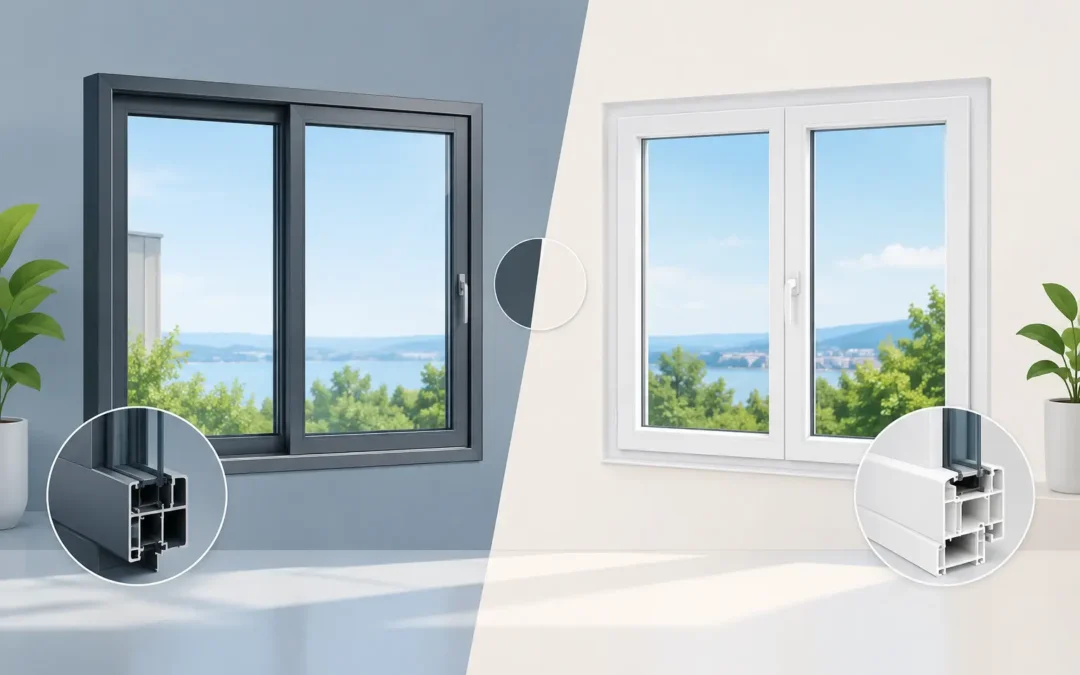
The most obvious difference is in the frame itself. uPVC is a durable plastic material made with internal chambers that help reduce heat loss. Aluminium is a strong metal, so its frames can be much slimmer while still supporting larger, heavier glazed units.
That difference affects appearance, price and the types of window each material suits best. It does not mean one is automatically warmer, safer or longer-lasting than the other. Modern systems in both materials can provide strong security, double or triple glazing options and very good energy performance.
The details matter: frame profile, glass specification, opening style, ventilation, locks and, crucially, the quality of the survey and installation.
Appearance and sightlines
Aluminium is often chosen for its clean, contemporary appearance. Because it is strong, less frame is needed around the glass. This creates narrow sightlines and can let more daylight into a room, which is especially useful for wide windows, bays, stairwells and modern extensions.
Anthracite grey, black and other darker shades tend to look particularly sharp in aluminium. The powder-coated finish is durable and available in a wide choice of colours, including different colours inside and out if required. For homeowners aiming for a more architectural finish, aluminium can be well worth the extra cost.
uPVC has also moved on considerably. It is no longer limited to bright white, chunky frames. Modern uPVC windows are available in grey, black, cream and realistic wood-effect finishes, with profiles that suit contemporary houses as well as more traditional properties. Casement windows, flush sash styles and vertical sliders can all give a smart, well-proportioned result.
For period homes, the question is often less about aluminium or uPVC and more about getting the proportions right. A frame that is too bulky, the wrong glazing bar arrangement or an unsuitable colour can change the character of a property. In conservation areas or listed buildings, planning requirements may also affect your options.
Thermal performance: do not judge by the frame alone
People sometimes assume uPVC must always be warmer because plastic does not conduct heat like metal. There is some truth in that, but modern aluminium windows use a thermal break within the frame. This insulating section separates the inner and outer parts of the aluminium, helping to limit heat transfer.
As a result, quality aluminium systems can achieve strong energy ratings. Quality uPVC systems can do the same, often at a lower initial price. The glass makes a major contribution too. Low-emissivity coatings, argon-filled units, warm-edge spacers and the right pane thickness can all improve performance.
Rather than choosing purely on material, ask about the whole window’s U-value and energy rating. These measures give a more useful indication of how the completed unit performs. A poorly fitted high-specification window can still allow draughts and heat loss around the frame, so installation should never be treated as an afterthought.
Triple glazing can be worthwhile in some homes, particularly where you are tackling noise or replacing older, inefficient windows. However, it is heavier and costs more, and it is not always necessary for every room. A good survey should consider the building, the orientation of the room and the result you are trying to achieve.
Cost and long-term value
uPVC is generally the more affordable option to buy and install. For a straightforward replacement project, it can offer excellent energy efficiency, security and appearance without stretching the budget. That makes it a sensible choice for many whole-house window replacements.
Aluminium usually costs more because of the material, manufacturing process and the type of system involved. The extra investment can make sense when slim frames are a priority, when windows are unusually large, or when you are matching aluminium bi-fold doors, patio doors or roof glazing elsewhere in the home.
Price should include more than the frame. Check what has been allowed for surveying, removal and disposal of existing windows, trims, making good, glazing, locks, trickle vents where needed and the installation itself. A low starting figure can look less attractive once essential items are added.
Long-term value also depends on how long you plan to stay in the property and what matters most to you. If a better-looking rear extension is a key part of your home, aluminium may be the finish you will appreciate every day. If you want reliable replacement windows with a lower upfront cost, uPVC may be the better fit.
Security and durability
Both materials can provide excellent security when fitted with appropriate multi-point locking, reinforced sections and toughened or laminated glass where suitable. The handle, locking mechanism, hinges and fitting standard are just as important as the frame material.
Aluminium is inherently rigid and resists warping, which makes it particularly useful for wider openings. It does not rust in the way untreated steel can, and its powder-coated surface is designed to withstand normal weather exposure.
uPVC is also built for British weather and does not rot, peel or require painting. Quality uPVC frames are reinforced where needed and can give many years of dependable service. Very cheap systems may be more prone to discolouration or less refined operation over time, which is another reason to look beyond the headline quote.
Whichever material you choose, good drainage, accurate fitting and properly adjusted hinges are vital. Windows should open, close and lock smoothly from day one.
Maintenance and everyday living
Neither aluminium nor uPVC needs regular painting. Both normally need only a wipe with warm, soapy water and a soft cloth, alongside occasional cleaning of the tracks, drainage channels and moving parts.
Avoid abrasive cleaners, scouring pads and harsh solvents, as these can damage finishes and seals. It is also worth checking handles, hinges and locks periodically, especially on frequently used windows and doors. Small adjustments made early can prevent a minor issue becoming an avoidable repair.
In terms of colour, aluminium finishes are generally very stable, particularly in darker shades. Modern coloured uPVC is also reliable, but it is sensible to choose a proven system and finish rather than basing the decision solely on a sample in a showroom.
Noise, ventilation and glazing choices
If traffic, trains or busy neighbours are a concern, glazing specification can make more difference than choosing aluminium over uPVC. Acoustic glass, different glass thicknesses and a well-sealed installation can all help reduce outside noise. For the best results, the window needs to be designed as a complete system rather than simply fitted with thicker glass.
Ventilation matters too. Trickle vents may be required depending on the project and existing ventilation arrangements. They help provide background airflow, which can reduce condensation and improve indoor air quality. If ventilation is a concern, discuss it before ordering rather than trying to solve it after installation.
Which windows should you choose?
Choose uPVC if you want a cost-effective, low-maintenance replacement that performs well across most traditional and modern homes. It is a practical choice for standard-sized windows and can suit a wide range of styles when the right profile and colour are selected.
Choose aluminium if slim frames, larger glass areas and a contemporary finish are high on your list. It is particularly well suited to extensions, feature windows and properties where the windows need to complement aluminium doors.
There is no rule saying every opening must use the same material. Some homeowners use aluminium for large rear-facing openings and uPVC for standard windows elsewhere, balancing budget with the look they want. The key is making sure the colours, proportions and glazing choices work together.
A proper survey should leave you clearer, not pressured. Take the time to compare like-for-like specifications, ask what is included and choose the window that suits your home rather than the one a salesperson is most determined to sell. The best result is a window that looks right, works properly and gives you confidence every time you close it.


Recent Comments