
by admin | Oct 28, 2026 | Uncategorized
The sound that finally becomes unbearable is rarely a single loud event. It is the early bus outside the bedroom, tyres on wet road surfaces, a neighbour’s gate or the steady rush of traffic that never quite stops. Noise reduction windows can make a noticeable difference, but the best result comes from looking at the complete window, the way it is fitted and the type of noise affecting your home.
For homes in busy parts of South East London and Kent, replacing old or poorly fitted windows can bring welcome calm as well as improved warmth, security and appearance. The key is choosing a solution for the problem you actually have, rather than assuming that any new double glazing will provide the same level of sound control.
What are noise reduction windows?
Noise reduction windows are designed to reduce the amount of outside sound that enters a property. They are not completely soundproof – very few domestic window systems can be – but a properly specified and installed window can make a room feel considerably quieter.
Sound travels through glass, gaps around opening sashes, frames and even ventilation openings. That means the glass unit matters, but it is only one part of the job. A high-performing acoustic glass unit in a frame with poor seals, for example, will not deliver the result a homeowner expects.
The aim is usually to reduce the particular sounds that disrupt daily life: road traffic, aircraft, rail noise, voices, barking dogs or activity from nearby shops and schools. Different noises behave differently, so a sensible survey should consider where they come from, when they occur and which rooms are most affected.
Why standard double glazing is not always enough
Modern double glazing is a major improvement on old single glazing. It can reduce outside noise simply because it has two panes of glass, sealed units and better frames. However, standard units often use two panes of the same thickness. This is useful for thermal performance, but it is not always the strongest choice for sound reduction.
When panes are identical, they can react similarly to certain sound frequencies. Using glass of different thicknesses helps disrupt that effect. For example, an acoustic unit may combine a thicker outer pane with a different inner pane, rather than using matching glass throughout.
Laminated acoustic glass can offer another step up. It uses an interlayer between two sheets of glass to help dampen sound vibration. It also has a safety benefit because the glass tends to remain held together if broken. Whether it is worthwhile depends on the noise level, your existing window openings and the room in question.
Triple glazing is sometimes suggested as the automatic answer. It can be excellent for insulation, but it is not always the quietest option. The spacing between panes, the thickness of each pane and the quality of the installation all matter. In some situations, a carefully designed acoustic double-glazed unit will outperform a basic triple-glazed unit for the noises you hear outside.
The details that make windows quieter
A window is only as quiet as its weakest point. Good seals around the opening sash are essential, particularly on older windows that rattle, let in draughts or need to be pulled tightly shut. Quality uPVC and aluminium systems can both perform well when they are correctly made and fitted.
The gap between the panes is important too. A wider cavity can help in some cases, although there is no one-size-fits-all measurement. The best configuration depends on the glass specification and the type of sound being reduced.
Installation deserves just as much attention as the unit itself. Gaps around the frame, insufficient insulation at the perimeter or poor finishing can allow sound to bypass the glass. A professional survey should identify the condition of the reveal, existing frames and any practical issues before an order is placed. This is one reason a survey-led approach is more useful than a quick estimate based only on window sizes.
Ventilation is another consideration. Trickle vents are often required to support healthy airflow, but an open vent can also allow more sound in. There are acoustic vent options, and the right approach should balance ventilation requirements with your need for quiet. Blocking vents without advice is not a good solution, as it can lead to condensation and stale air.
Secondary glazing can be a practical alternative
Where original windows need to stay in place, secondary glazing can be an effective option. It involves fitting a separate internal window behind the existing one, creating a larger air gap than is possible inside a standard sealed unit.
This can work particularly well for period properties, flats with restrictions or homes where the appearance of existing windows must be retained. It may also suit rooms facing a main road while other windows in the property need less intervention.
The trade-off is that you have an additional panel to open and clean, and the appearance from inside changes. It is not necessarily the right answer for every property, but it is worth discussing where replacement windows are not practical or desirable.
Choosing the right solution for each room
Not every window needs the same specification. A front bedroom facing a busy route may need acoustic laminated glass and particularly careful sealing, while a quiet rear bedroom may only need a quality replacement double-glazed window. Spending money where it will make the biggest difference is usually the most sensible route.
Think about how each room is used. Bedrooms and home offices often benefit most from reduced noise. A living room may be more tolerant of daytime traffic, while a nursery might need a higher level of control at specific times of day.
It also helps to be realistic about the source of the noise. Closed windows cannot stop vibration travelling through walls, roofs or floors. If lorries cause the whole structure to shake, or noise enters through an open fireplace, extractor fan or poorly insulated wall, window replacement alone will have limits. A straightforward installer should explain those limits rather than promise silence.
Questions to ask before you choose
When comparing quotations, ask what glass make-up is being proposed and why. You do not need to become an expert in pane thicknesses, but you should be given a clear explanation of whether the unit includes laminated glass, different pane thicknesses or another acoustic feature.
Ask how the frames will be sealed and finished, whether your current openings are suitable, and how ventilation will be handled. If the noise is concentrated in one area, ask whether different specifications can be used across the property. This can be more cost-effective than upgrading every window to the same level.
It is also worth asking about opening styles. Fixed panes generally offer fewer potential air gaps than opening sections, but a room still needs practical ventilation and escape routes where required. Casement windows, sash windows and sliding systems can all be specified well – the quality of the system, seals and fitting is what counts.
A quieter home starts with an honest survey
The most useful first step is to describe the noise clearly: where it comes from, which rooms it affects and whether it is constant or occasional. A surveyor can then assess the existing glazing, check for obvious gaps or failed seals, and recommend a proportionate solution.
At Pearson Glazing, that conversation should feel practical, not pressured. The right noise reduction window is not automatically the most expensive one. It is the one that improves the comfort of your home, suits the property and is fitted carefully enough to do the job it was chosen for.
by admin | Oct 26, 2026 | Uncategorized
A front door has a demanding job. It needs to look right from the pavement, keep out draughts and rain, feel secure when you lock up at night, and cope with daily use from children, visitors, deliveries and pets. That is why choosing between front door materials is not simply a matter of picking a colour you like.
For most homes, the best choice comes down to four things: the character of the property, the level of insulation and security you expect, how much maintenance you are happy to take on, and your budget. There is no single right answer, but there is usually a sensible one once those priorities are clear.
Front door materials at a glance
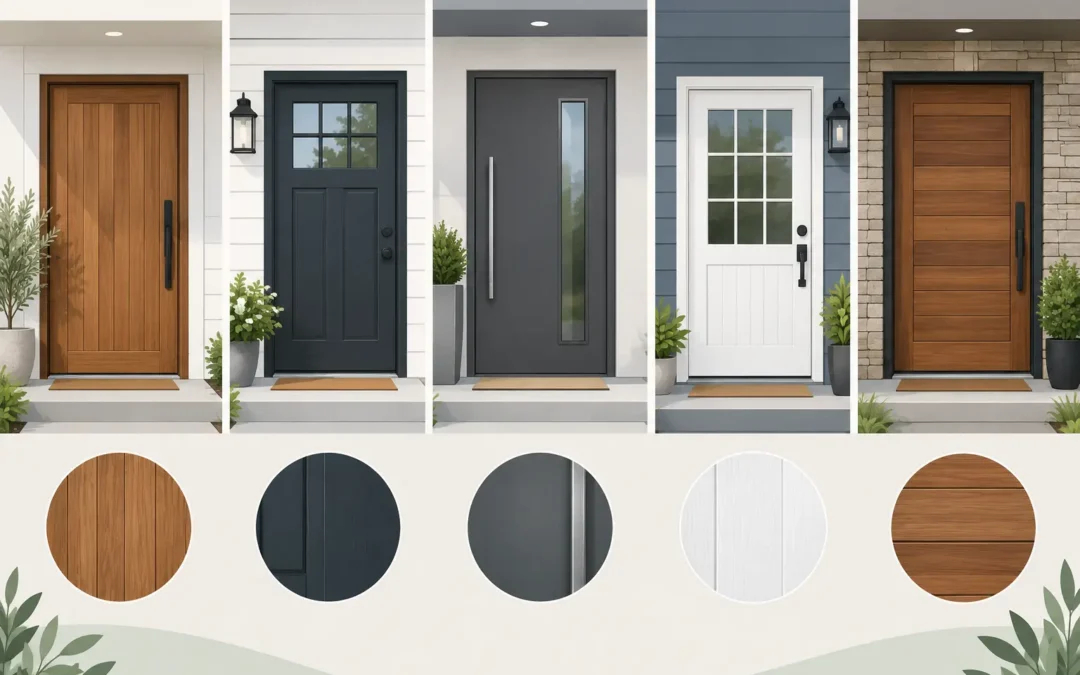
The main options for replacement entrance doors are uPVC, composite, timber and aluminium. Each has a different balance of price, appearance, strength and upkeep. The door itself matters, but so do the frame, glazing, locking system and installation. A well-made door fitted properly will perform far better than a premium product that has been measured or installed poorly.
uPVC front doors
A uPVC door is often the most cost-effective route to a warmer, more secure entrance. Modern designs are a long way from the plain white doors many people remember. There are now woodgrain finishes, coloured options, decorative panels and glazed sections that can suit everything from a compact terrace to a newer family home.
The practical appeal is easy to see. uPVC does not rot, needs very little maintenance and is simple to clean with mild soapy water. It also provides good thermal performance when paired with quality seals and double glazing. For homeowners replacing an old, draughty door on a sensible budget, it can be a very good fit.
There are trade-offs. uPVC is generally less rigid than aluminium and may not give quite the same substantial feel as a quality composite or timber door. The range of finer architectural details can also be more limited. That does not make it a poor option – it simply means the specification needs to suit the property and your expectations.
Composite front doors
Composite doors are popular because they combine the look of timber with the lower-maintenance benefits of modern materials. Rather than being made from one material throughout, they are built from several layers, often including a solid or insulated core, reinforced elements and a durable outer skin.
This construction gives a composite door a reassuringly solid feel. It can offer excellent insulation, strong resistance to everyday knocks and good security when matched with suitable hinges, a reinforced frame and a quality multi-point lock. The broad choice of colours, panel designs, glazing and furniture makes it easier to create a traditional or contemporary look.
Composite is usually more expensive than a basic uPVC door, but many homeowners feel the added weight, appearance and performance justify the difference. Check the details rather than relying on the word composite alone. Core construction, thickness, locking hardware, finish quality and guarantees all vary between products.
Timber front doors
Timber has a character that other materials work hard to imitate. It is especially well suited to period properties, cottages and homes where original details matter. Painted timber can be given almost any colour, while stained finishes allow the natural grain to show through.
A properly engineered timber door can be strong, warm and long-lasting. It can also be repaired more readily than some alternatives if it is damaged. For a conservation area or a property with traditional joinery, timber may be the most appropriate visual choice.
Its main consideration is maintenance. Paint or stain needs checking and renewing at intervals, particularly on an exposed entrance. South-facing doors can receive plenty of sun, while wind-driven rain can take its toll on less protected doorways. The quality of the timber, finish and installation makes a real difference, so this is not an area where cutting corners tends to pay.
Aluminium front doors
Aluminium is a strong choice for modern homes, large entrance doors and properties with a clean, contemporary style. It is slim, rigid and highly durable, allowing for crisp lines and larger glazed areas without the bulkier frames some other materials require.
Powder-coated aluminium comes in a wide range of colours and has a finish designed to stand up well to the weather. It will not rot or swell, and maintenance is generally limited to cleaning the surface and checking moving parts. With a thermally broken frame and the right glazing, it can also provide very good insulation.
The higher initial price is the main limitation. Aluminium is not always necessary for a standard-sized entrance door, especially where a good composite door would achieve the look and performance you want for less. It comes into its own where design, slender sightlines and long-term durability are high on the list.
How to compare front door materials properly
It is tempting to compare doors by their headline price or by a photograph in a brochure. A more useful approach is to think about how the entrance works in real life. Is the doorway exposed to rain? Do you need more daylight in a dark hall? Is your home traditional, contemporary or somewhere in between? Do you want minimal upkeep, or are you happy to maintain a painted finish?
Security should be assessed as a complete system. A strong door slab is only part of the picture. Ask about the frame, hinges, cylinder, handle, letterplate and locking points, as well as whether any glazed panels use suitable toughened or laminated glass. A professional survey helps ensure the door and frame are correctly matched to the opening, with no gaps that undermine weather resistance or security.
Energy efficiency matters too, particularly if your existing door feels cold around the edges or lets in draughts. Look beyond the material itself. Insulated cores, weather seals, threshold design and glazing all affect performance. A solid-looking door with poor fitting can still lose heat, while a carefully specified glazed door can keep an entrance bright without making it feel chilly.
Appearance should be considered in context. A black aluminium door may look striking on a modern extension but out of place on a Victorian façade with painted timber sash windows. Equally, a traditional composite door can give a newer house more warmth and definition. Bring together the door colour, glazing pattern, handles, house number and nearby windows so the entrance feels considered rather than pieced together.
Glazing, colour and hardware can change the result
The material is the starting point, not the finished decision. A small glazed panel can make a hallway noticeably lighter, while obscure or patterned glass can preserve privacy. If security is a concern, the glass specification and its installation are as important as the style.
Colour also affects maintenance and appearance. Dark shades can look smart and suit many brickwork colours, but they may show dust, fingerprints or marks more readily on a busy entrance. A lighter finish can be more forgiving, while a woodgrain effect can soften the look of uPVC or composite doors. Choose a shade that works with the window frames and roofline as well as the front elevation.
Do not leave the furniture until last. Handles, knockers, letterplates and numbers are small details, yet they have a major effect on the finished look. They should also be practical. A letterplate, for example, needs to work with the door construction and should not compromise insulation or security.
Getting the installation right
Even the best door will disappoint if it is fitted badly. Accurate surveying is essential because older homes rarely have perfectly square openings. The installer needs to assess the brickwork, existing frame, threshold level, drainage and any surrounding glazing before recommending the right product.
A good installation should leave the door opening and closing smoothly, locking cleanly and sealing evenly all the way round. The finish around the frame matters too. Internal trims, external sealant and making good should look tidy while protecting the opening from water ingress.
At Pearson Glazing, the aim is to make this decision straightforward: clear advice, a proper survey and no pressure to choose more than your home needs. If you are comparing options, it is reasonable to ask for the strengths and limitations of each material, not just the sales points.
The right front door should feel like part of the home from the first day. Whether that means a practical uPVC replacement, a solid composite design, traditional timber or sleek aluminium, choose the option that suits your property, your routine and the level of care you want to give it over the years.
by admin | Oct 24, 2026 | Uncategorized
A misted double-glazed unit, cracked pane or draughty window does not always mean replacing the whole frame. The right replacement glass types can restore comfort, improve privacy or security, and help your windows and doors perform as they should. The best choice depends on where the glass sits, how the room is used and whether you are repairing a fault or improving the property.
For most homeowners, the sensible starting point is a survey. Glass can look similar from a distance, but the specification behind it matters. Thickness, coatings, spacers and safety requirements all affect what can be fitted safely and effectively.
Replacement glass types at a glance
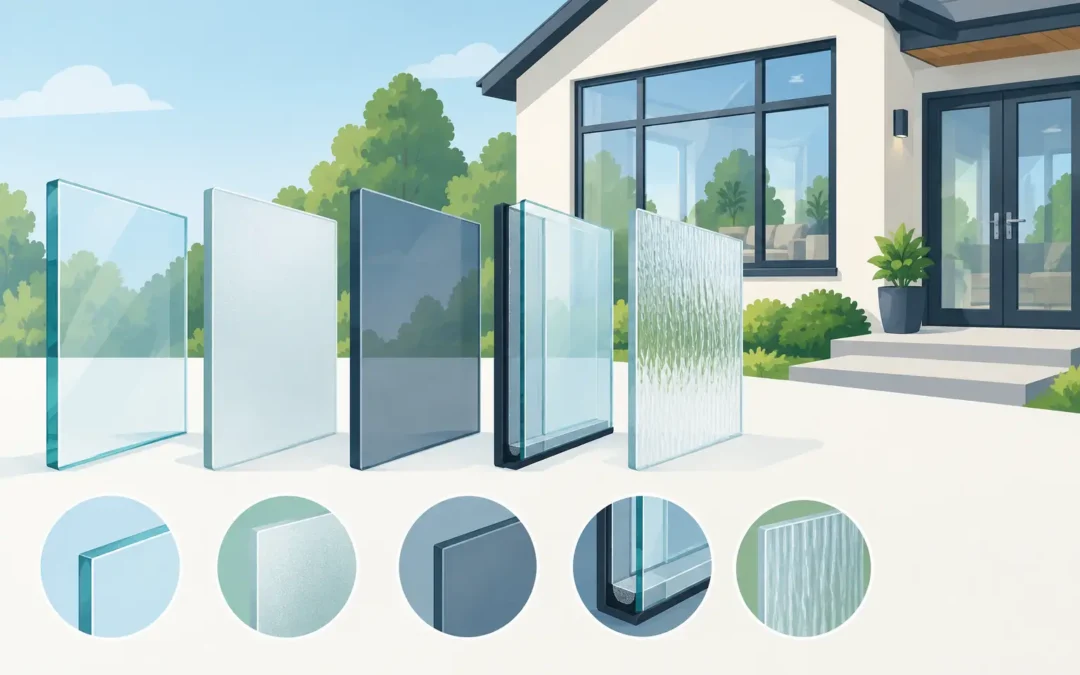
Replacement glazing usually falls into two categories: single panes and sealed double-glazed units. Single glass is commonly found in older properties, internal doors, sheds and some decorative panels. Modern windows and doors are more likely to use a sealed unit, made from two panes of glass separated by a spacer bar and a gap filled with air or insulating gas.
If a double-glazed unit has condensation between the panes, the seal has failed. Replacing the glass unit can often solve the problem without disturbing a sound uPVC, aluminium or timber frame. It is a practical repair, but the new unit must be measured accurately and made to suit the existing system.
Clear float glass for straightforward replacements
Clear float glass is the familiar transparent glass used in many ordinary windows. It is a suitable option where the original glazing is single-pane glass and there are no special safety, privacy or thermal requirements.
It is not, however, automatically suitable for every location. Glass close to doors, at low level, in bathrooms and in other vulnerable areas may need to be safety glass. A professional survey helps avoid fitting a like-for-like pane where a safer upgrade is required.
Toughened glass for safety and strength
Toughened glass is heat-treated to make it considerably stronger than standard glass. If it breaks, it is designed to fracture into small, blunt pieces rather than large, sharp shards. For that reason, it is commonly used in patio doors, French doors, bi-fold doors, sidelights, low-level glazing and other areas where people may accidentally fall against the glass.
Toughened glass is a sensible choice for busy family homes and door openings with frequent use. It cannot be cut, drilled or reshaped once it has been toughened, so measurements and any holes for hardware must be confirmed before manufacture. It can also cost more than standard glass, but safety is rarely the place to compromise.
Laminated glass for security and noise reduction
Laminated glass has two panes bonded together with a clear interlayer. When damaged, the interlayer helps hold the glass in place. This makes it useful for security-conscious areas, such as accessible ground-floor windows, glazed doors and certain roof applications.
It can also help reduce outside noise, depending on the full specification. That may be worth considering if your home is near a main road, railway line or busy urban route. Laminated glass is heavier than ordinary glass, though, so the frame, hinges and opening mechanism need to be suitable for it.
Toughened and laminated glass are both safety options, but they behave differently when broken. Toughened glass breaks into small pieces. Laminated glass tends to remain together. The right option depends on the location and the level of security or containment needed.
Low-emissivity glass for warmer rooms
Most modern replacement double-glazed units use low-emissivity, often shortened to Low-E, glass. This glass has a nearly invisible coating that helps reflect heat back into the room while allowing useful daylight to pass through.
For a failed double-glazed unit, replacing it with a modern Low-E unit can be a worthwhile improvement over older glazing. It can help reduce heat loss and make rooms beside windows feel less chilly in colder months. Results still depend on the condition of the frame, seals and installation. New glass will not fully cure a draught caused by a warped sash, worn hinge or damaged gasket.
The spacer bar around the edge of a sealed unit also plays a part. Warm-edge spacers can reduce heat loss at the perimeter and may help lower the chance of condensation forming around the inside edge of the glass.
Obscure glass for privacy without losing light
Bathroom windows, front-door panels, landing windows and overlooked side elevations often need privacy as much as light. Obscure glass gives you both. It comes in a wide choice of patterned, frosted and textured finishes, from subtle designs to stronger obscurity levels.
When choosing obscure glazing, check it from both sides and consider the time of day. A pattern that offers good privacy in daylight may look different when lights are on inside after dark. In some cases, a laminated or toughened obscure option may also be needed for safety.
Solar-control glass for bright spaces
Large south-facing windows, conservatories and glazed extensions can become uncomfortably warm in direct sun. Solar-control glass is designed to reduce the amount of solar heat passing through the glazing while still admitting natural light.
This can make a real difference in a conservatory or room with extensive glazing, particularly during warmer weather. The trade-off is that some solar-control products slightly alter the appearance of the glass or reduce the amount of light entering the room. It is best chosen as part of the overall glazing specification rather than as an afterthought.
Decorative glass for character and privacy
Lead designs, bevels, coloured details and patterned panels can give a front door or period-style window more character. Decorative replacement glass is often selected after accidental damage, but it can also update a tired entrance without replacing the whole door.
Matching an existing design takes care. Colour, texture, lead width and panel proportions all affect the finished appearance. If you are replacing only one panel in a set, a close visual match matters just as much as the glass performance.
Choosing the right glass for the job
A replacement should be based on the opening, not just the visible problem. A steamed-up bedroom window may need a new energy-efficient sealed unit. A broken patio-door panel may require toughened safety glass. A ground-floor pane facing a busy street may benefit from laminated glass, while a bathroom window may call for obscure safety glazing.
Before ordering, a fitter or surveyor should check the glass size, thickness, cavity depth, frame condition and any relevant safety requirement. They should also look for the source of the issue. Condensation on the room-facing surface can be caused by everyday moisture and ventilation, whereas condensation trapped between panes points to a failed sealed unit.
At Pearson Glazing, the focus is on practical advice rather than pushing a full replacement when a glass repair is the better answer. A properly specified unit can improve the look and comfort of your home while keeping disruption and cost under control.
If your glass is cracked, misted, loose or no longer giving you the privacy you need, arrange for it to be assessed. The right replacement is the one that suits the opening, meets safety needs and gives you a result that feels right every time you look through it.
by admin | Oct 22, 2026 | Uncategorized
A door lock rarely starts sticking at a convenient time. You may notice it when rushing out in the morning, coming home in the rain, or trying to secure the house at night. So, why do door locks stick? Usually, the lock is not the only part involved. The key, cylinder, handle, door frame and locking mechanism all need to line up and move freely.
A little resistance can often be dealt with early. Forcing a key or handle, however, can turn a straightforward adjustment into a broken key, damaged cylinder or failed multipoint lock. The first step is to work out where the resistance is coming from.
Why do door locks stick in the first place?
The most common cause is misalignment between the door and its frame. As a property settles, seasons change or hinges wear, a door can drop or move slightly. That small shift may stop the hooks, rollers or bolts from entering their keeps cleanly. On a uPVC, composite or aluminium door with a multipoint locking system, this often means the handle is difficult to lift before the key will turn.
If the key is stiff even when the door is open, the issue is more likely to be inside the cylinder or with the key itself. Dirt, moisture and general wear can affect the moving pins inside a lock cylinder. A worn or slightly bent key may also struggle to lift those pins into position.
Wooden doors can swell in damp weather and contract as they dry. uPVC and aluminium doors do not absorb moisture in the same way, but temperature changes can still affect how the door sits in its frame. This is why a lock that seems fine for most of the year may become troublesome during a cold spell or after prolonged rain.
Start by identifying the symptom
How the lock behaves gives a useful clue. Try the key carefully with the door open first. If it turns smoothly when the door is open but becomes stiff when the door is shut, the cylinder is probably working and the door or keeps may be out of alignment.
If the key will not turn easily in either position, inspect the key for visible wear, bending or damage. If you have a clean spare key, try that instead. Avoid using a key that has been copied many times, as even a small inaccuracy can make a tired lock feel worse.
A handle that will not lift fully usually points to the locking strip, keeps, hinges or door alignment rather than the key cylinder. Do not keep lifting the handle harder in the hope that it will catch. Multipoint mechanisms contain several moving parts, and forcing them can cause internal components to fail.
If the key turns but the door will not open, or the handle moves loosely without operating the lock, there may be a problem with the spindle, gearbox or latch mechanism. This is a repair job rather than a lubrication job.
Safe checks you can make at home
Begin with the simplest checks. Look along the gaps around the door. A noticeably wider gap at the top or bottom, rubbing marks on the frame, or a door that needs lifting to close can all indicate dropped hinges or movement in the frame.
With the door open, operate the handle and watch the locking points extend and retract. They should move together without catching. Do not put fingers near the moving hooks or bolts. If they appear slow, uneven or reluctant, stop there rather than dismantling the mechanism.
For a stiff keyhole, use a small amount of lubricant made specifically for lock cylinders, following the product instructions. A dry PTFE or graphite-based lock lubricant is commonly suitable. Insert and remove the key gently a few times, then wipe it clean before trying again.
General-purpose oily sprays can seem to fix the problem for a day or two, but they may attract dust and grime inside the cylinder over time. They are not a long-term answer for a sticking lock. Likewise, do not pour household oil into the keyhole.
Check the screws around the handle and cylinder too. Loose furniture can affect how the handle operates, but overtightening screws can create a different problem. If you are unsure, it is better to leave the adjustment to someone who can check the full mechanism and door alignment together.
When the door is out of alignment
Door alignment is a common issue on modern entrance doors, particularly where a heavy door leaf has settled on its hinges. It does not necessarily mean the door needs replacing. In many cases, careful hinge and keep adjustment restores smooth operation.
The trade-off is that adjustment needs to be precise. Moving one hinge or keep without checking the rest can improve one point while creating pressure elsewhere. A door should close comfortably, seal properly against the weather and allow every locking point to engage without force.
On multipoint locks, people sometimes turn the key while pushing or pulling the door to relieve pressure. This can help confirm an alignment issue, but it should not become the routine way to lock your home. If the door only locks when lifted, pushed hard or pulled towards you, arrange an adjustment before the mechanism is put under further strain.
A sticking lock can be a security issue
A lock that sticks is not always an emergency, but it should not be ignored. A door that does not fully engage may not provide the level of security it was designed to offer. Equally, a lock that becomes progressively harder to operate can fail while you are outside the property or unable to secure it properly.
Seek professional help promptly if the key is catching badly, the lock feels loose, the handle will not lift or return, or you can see signs of attempted damage around the cylinder. Call for urgent assistance if the key has snapped, the door is locked shut and will not open, or the door cannot be locked securely overnight.
Replacing a cylinder can be sensible where it is worn, damaged or no longer meets your security needs. But it is worth diagnosing the issue first. A new cylinder will not resolve a door that is dropping or a multipoint mechanism that is already under pressure.
Preventing door locks from sticking again
A small amount of regular attention can make a significant difference. Keep keys clean and replace visibly worn ones rather than relying on a poor copy. Avoid slamming the door, especially if it already catches on the frame. A hard impact can worsen alignment and put stress on the locking strip.
Clean dirt from the frame, threshold and locking keeps, particularly after building work or periods of poor weather. Check that drainage channels around uPVC and aluminium doors are clear, as trapped water and debris can contribute to problems around the threshold and frame.
It is also sensible to operate the lock gently and consistently. Fully close the door, lift the handle only as far as it moves comfortably, then turn the key. If that action changes, take notice early. A repair or adjustment is usually simpler before a mechanism has failed completely.
For homeowners in South East London and Kent, Pearson Glazing can assess whether the problem is caused by the cylinder, handles, hinges, alignment or a failing multipoint mechanism. A proper inspection focuses on getting the door secure and easy to use again, rather than replacing parts that do not need replacing.
A lock should not need force to do its job. If yours has started to stick, treat it as a useful early warning: a careful check now can help keep a minor inconvenience from becoming a locked-out evening or a compromised front door.
by admin | Oct 20, 2026 | Uncategorized
A window handle that turns without properly securing the sash can feel like a small irritation – until it leaves a ground-floor room vulnerable or lets in a draught. Well-fitted window locking systems are a key part of home security, but they also affect how easily your windows open, close and ventilate. The right answer is not always a complete replacement. Sometimes a professional adjustment, new handle or replacement lock is all that is needed.
How window locking systems work
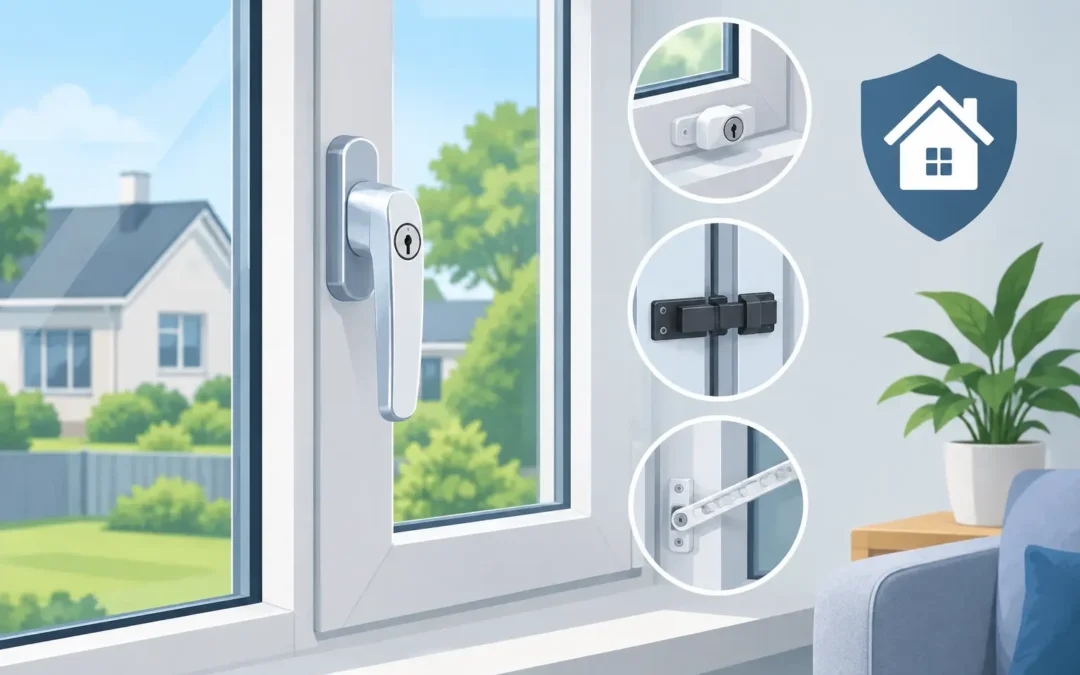
Most modern uPVC and aluminium casement windows use a locking mechanism within the frame rather than relying on the handle alone. Turning the handle moves a concealed metal strip, often called an espagnolette or multipoint lock. This engages locking points around the edge of the opening sash and pulls it tightly against the frame.
The more accurately the sash meets the frame, the better the lock can do its job. A secure window should close smoothly, with no need to lift, push hard or force the handle. When it is locked, the sash should sit evenly against its seals, helping to keep out cold air, rain and outside noise as well as unwanted entry.
The handle is the part you see and use every day, but it is only one piece of the system. A key-locking handle can prevent the handle being operated from inside if glass is broken nearby, while the internal mechanism and locking points provide the main resistance when the window is shut. If the mechanism is worn, damaged or badly aligned, fitting a new key handle alone will not solve the underlying problem.
Common types of window locking systems
The lock fitted to your window depends on its style, age and material. Older windows often use different parts from modern replacements, so it is worth identifying the existing arrangement before ordering a repair.
Espagnolette and multipoint locks
These are widely used on modern uPVC and aluminium casement windows. The handle operates a gearbox, which moves locking points along a metal rail. Depending on the window, those points may be mushroom cams, rollers, bolts or hooks that engage with keeps fixed to the frame.
This arrangement offers strong, even closure across the sash. It also means that poor alignment can affect more than one point at once. A window that catches at the top, leaves a gap on the hinge side or needs a sharp lift before it locks may need its hinges, keeps or sash position adjusted.
Locking window handles
A locking handle is a familiar and useful feature, particularly on accessible windows. It normally has a small key cylinder at the base of the handle. The key should be kept somewhere safe but accessible to the adults in the household, rather than left in the handle all the time.
Handle styles and spindle lengths vary, especially on older uPVC windows. A handle that looks similar may not operate the mechanism correctly, so measuring and matching the part matters. This is one reason a repair visit can be more straightforward than trying several off-the-shelf options.
Sash locks and catch systems
Sliding sash and vertical slider windows commonly use sash fasteners or catches where the two sashes meet. These are designed to hold the window closed, and some versions include a key-operated feature. They can be highly effective when fitted correctly, but they need to be paired with sound frames, well-maintained cords or balances, and a sash that closes squarely.
Restrictors and ventilation catches
Window restrictors limit how far a window opens. They are particularly helpful in upper-floor rooms, homes with young children, and properties where a wide opening creates a safety concern. A restrictor is not a replacement for a main lock, but it can provide useful control when ventilation is needed.
Some windows also have a night-vent position, allowing a small gap while the sash remains partly engaged. Whether this is suitable depends on the location of the window. It may be practical on an upper floor, but it is rarely a sensible security choice for an easily reached ground-floor window.
Security is not just about the number of locks
It is easy to assume that more locking points automatically mean better security. In practice, the whole installation matters. Strong locking hardware is only as effective as the frame, glazing, hinges and fitting around it.
For example, a window with a good multipoint lock can still be compromised if the sash is loose, the hinges are worn or the frame has moved over time. Similarly, double glazing improves comfort and efficiency, but the glass specification and its installation are separate considerations from the lock itself.
For replacement windows, homeowners may wish to ask about security testing and specifications appropriate to their property. A reputable installer should explain the options plainly, including what is included as standard and where an upgrade would offer a genuine benefit. There is no need to pay for features that do not suit the window position or how you use the room.
Signs your window locks need repair
Locks rarely fail without warning. Paying attention to small changes can prevent a window becoming stuck open, difficult to secure or damaged by repeated forcing.
Common warning signs include a stiff handle, a handle that spins freely, a key that will not turn, scraping when the window closes, or locking points that do not engage. You may also notice draughts around one side of the sash, even when the handle is fully down. This can point to alignment issues rather than a failed lock.
Avoid forcing the handle. Excess pressure can break the internal gearbox, strip the handle spindle or damage the keeps on the frame, turning a manageable adjustment into a larger repair. If the window will not lock, close it as securely as possible, avoid leaving the property unattended where practical, and arrange for it to be inspected.
Condensation and general wear can also affect older mechanisms. Dirt in the tracks, paint on moving parts, tired hinges and lack of lubrication all make a lock work harder than it should. A professional can identify whether the mechanism can be adjusted and serviced, or whether a replacement part is the safer long-term option.
When to repair and when to replace
A repair is often the sensible choice when the frames and glass are in good condition. Replacing a faulty handle, gearbox, lock rail, hinge or set of keeps can restore secure operation without the disruption and cost of replacing the full window.
Replacement becomes more worth considering when problems are repeated, frames are distorted, double-glazed units have failed, or the windows no longer provide the comfort, appearance or security you need. If several windows are the same age and have similar faults, comparing the cost of individual repairs with a planned upgrade can help you make a clearer decision.
For older properties, the style of the window matters too. A repair may preserve the character of traditional sash windows, while a carefully chosen replacement can improve thermal performance and everyday ease of use. There is no one-size-fits-all answer – the right route depends on the condition of the existing windows and what you want from them.
Simple care that helps locks last
Window locks benefit from light, regular attention. Keep the frame channels and locking points free from grit, especially after building work or windy weather. Clean the moving metal parts with a soft cloth and use a suitable light lubricant sparingly where recommended. Avoid heavy oils that attract dirt or products that may affect uPVC surfaces and seals.
Open and close each window occasionally, including those in less-used rooms. This helps you spot changes early and makes sure the key, handle and mechanism still operate as expected. If a key is difficult to turn, do not keep trying with force. The issue may be the cylinder, the handle or pressure from a misaligned sash.
Get the lock and the fitting right
Security upgrades work best when they are chosen around the individual window, not picked from a generic shelf. The window type, its location, the age of the frame and the condition of the hinges all affect the suitable repair or replacement.
A proper survey should look beyond the visible handle. At Pearson Glazing, the aim is to give straightforward advice on whether a window can be repaired, adjusted or replaced, without pressure to choose more work than is necessary. For homeowners in south-east London and Kent, this can mean a practical route back to windows that close cleanly, lock properly and give reassurance every time you leave the house.
If a window is stiff, loose or no longer secure, dealing with it early is usually simpler than waiting for the lock to fail completely. A clear assessment from an experienced glazing professional can turn an everyday worry into a straightforward repair decision.
by admin | Oct 18, 2026 | Uncategorized
A lock that needs a hard shove, a lifted handle or several attempts with the key is more than an everyday annoyance. It can leave a door difficult to secure and, in some cases, difficult to open when you need it. The good news is that many homeowners can fix sticking locks with a few careful checks. The key is to establish whether the problem is in the lock itself, the key, the handle or the way the door or window is sitting in its frame.
Do not force a stiff key or lean your full weight on a handle. A little resistance can quickly become a snapped key, damaged cylinder or broken multi-point locking mechanism. Start gently, and arrange a repair if the lock feels close to failing.
First, work out when the lock sticks
The timing of the problem tells you a great deal. If the key turns easily while the door is open but sticks once the door is shut, the lock is often sound and the door is out of alignment. This is common with uPVC doors, composite doors and patio doors, particularly after a change in temperature or following years of regular use.
If the key is difficult to insert or turn whether the door is open or closed, look first at the key and cylinder. A worn key, dirt inside the keyway or a tired cylinder may be the cause. If you have a spare key, try it. A spare that works smoothly usually means the everyday key is worn and should be copied before it gets worse.
For doors with a lift-to-lock handle, notice whether the handle becomes difficult to lift before you turn the key. That points towards the keeps, hinges or door alignment rather than the euro cylinder. On a window, a stiff handle may indicate that the espagnolette mechanism is binding, or that the sash is not closing squarely against the frame.
How to fix sticking locks safely
Begin with the least invasive checks. Wipe the key clean with a dry cloth and inspect it for bent teeth, cracks or obvious wear. Never use a bent key in a lock. It may turn once, then break inside the cylinder.
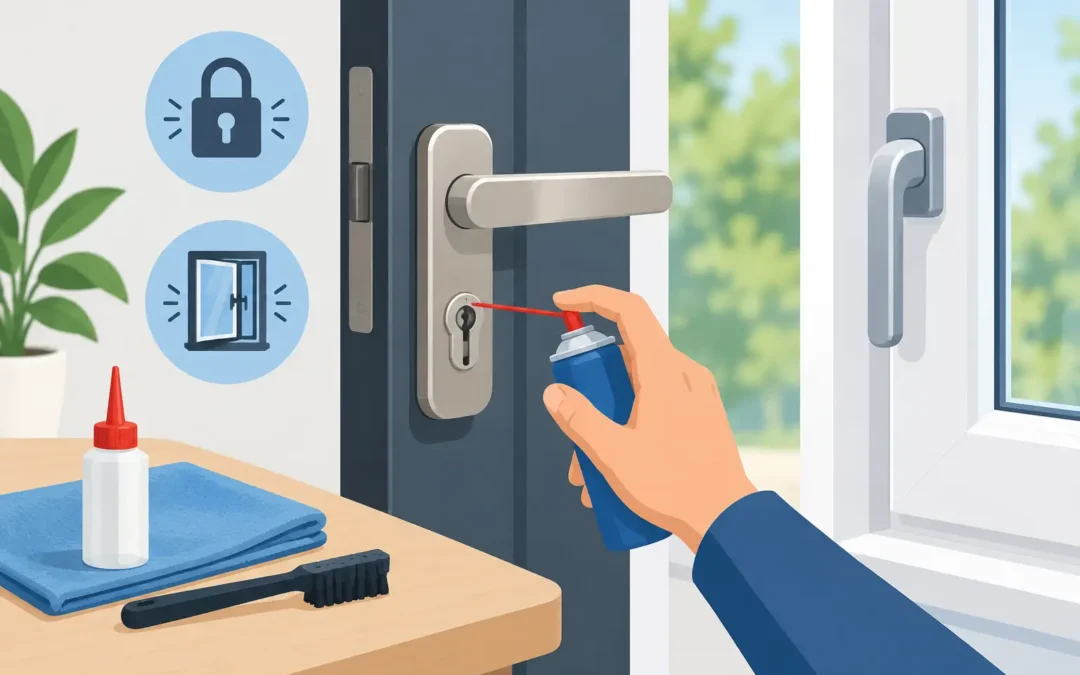
Next, use a lock lubricant made for cylinders. A dry PTFE lubricant or graphite-based product is usually a sensible choice. Apply a small amount into the keyway, insert the key and turn it gently a few times. Wipe away any excess. Avoid cooking oil, grease and household oils. They can feel helpful at first but attract dust and grit, leaving the lock stickier over time.
If the handle or moving parts are stiff, use a light silicone or PTFE lubricant on the accessible moving points of the mechanism. Keep lubricant away from painted finishes and clean any drips promptly. On older timber doors, check that paint has not built up around the lock edge, latch or strike plate.
After lubricating, test the lock slowly with the door open. Lift the handle where required, turn the key, release it and repeat. If it now works freely open but catches when closed, stop focusing on the cylinder. The next step is to check alignment.
Check the door and frame alignment
Close the door without locking it and look at the gaps around the edges. An uneven gap, a door that rubs on the frame, or a latch that does not meet its keep cleanly can all create resistance. You may also notice that lifting the door slightly by the handle makes the key turn. That is a strong sign that the door has dropped or shifted.
Changes in weather can make this more noticeable. uPVC and composite doors expand slightly in warmer conditions, while timber can swell in damp weather. A minor seasonal adjustment may be all that is needed. However, recurring sticking should not be ignored, especially on an external door that protects your home.
Some modern hinges have adjustment points, but the correct adjustment depends on the hinge type and the door system. Small alterations can make a real difference; incorrect ones can worsen the fit or affect weather seals. If you are unsure, it is safer to have the door assessed rather than repeatedly adjusting screws at random.
With multi-point locking doors, the keeps on the frame may also need adjustment. These are the parts that receive the hooks, rollers or bolts when you lift the handle. If the locking points are scraping or failing to engage cleanly, forcing the handle can damage the gearbox inside the door.
Look for signs of a failing lock mechanism
A sticky lock is not always a lubrication or alignment issue. Be alert for a loose or floppy handle, grinding noises, a key that spins without operating the lock, or a handle that will not return to its normal position. These can indicate a worn gearbox, faulty spring cassette, damaged cylinder or failing multi-point mechanism.
If the door will lock only after repeated attempts, arrange a repair soon. Waiting until it will not lock at all can create a security issue, while waiting until it will not open can leave you locked out. In many cases, a professional can replace the affected part without replacing the whole door.
The same principle applies to windows. If a casement window handle will not turn, do not force it. The internal locking strip may be jammed, the handle spindle may be worn, or the window may have dropped slightly. A repair can often restore safe operation and security without the cost or disruption of a new window.
Common mistakes that make sticking locks worse
It is tempting to spray a generous amount of general-purpose oil into a lock and hope for the best. This may provide a brief improvement, but it is rarely a long-term fix. Thick or oily products hold dirt inside the cylinder and can leave the keyway clogged.
Another common mistake is continuing to use a key that has started to bend or catch. Keys wear gradually, so the change can be easy to miss. Replacing a worn key early is simpler than dealing with a broken one inside the lock.
Finally, avoid removing the cylinder or dismantling a multi-point mechanism unless you know exactly what you are doing. On a locked or closed door, this can make access more difficult. It can also leave the property unsecured if the replacement part is not the correct size or specification.
When to call for a lock repair
A professional repair is the sensible option if lubrication has not helped, the door needs lifting to lock, the handle is loose, or the key is showing signs of sticking and catching. It is also worth arranging an inspection after a break-in attempt, if the lock is visibly damaged, or if you are worried about the security of an older cylinder.
For homeowners in South East London and Kent, Pearson Glazing can assess problems with door and window locks, handles and mechanisms as part of a straightforward repair service. A proper inspection identifies whether the issue is a simple adjustment, a replacement cylinder, a handle repair or a fault within the locking mechanism. That means you pay for the work that is needed, rather than being pushed towards a replacement door.
Keep testing the lock gently after any adjustment or repair, both open and closed. A secure door should close without a fight, the handle should operate smoothly and the key should turn without excessive pressure. Addressing small changes early is one of the easiest ways to protect your home and avoid a lock failing at the most inconvenient moment.


Recent Comments