
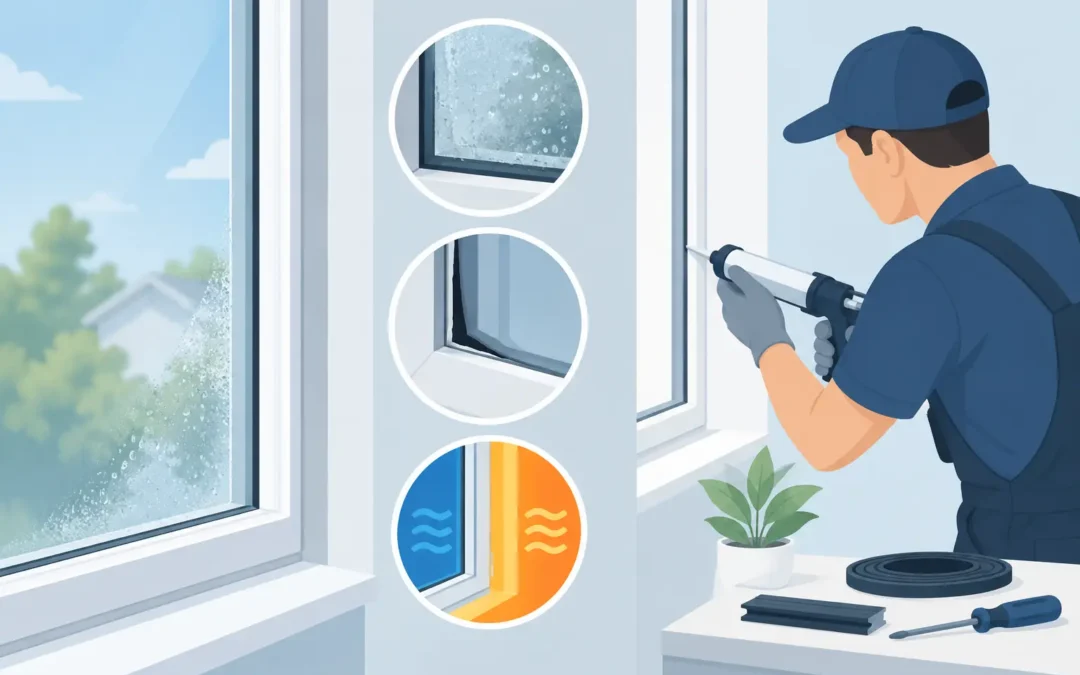
Condensation trapped between the panes is one of the clearest signs of window seal failure. It can start as a faint mist on a cold morning, then become a permanent cloudy patch that spoils the view and makes a room feel less comfortable. It is frustrating, but it does not always mean the whole window has to be replaced.
For most homeowners, the sensible next step is to establish exactly what has failed. A problem with the sealed glass unit, a draught around the frame and condensation on the room-side surface can look similar at first glance, but they need different solutions.
What is window seal failure?
Most modern double-glazed windows contain an insulated glass unit: two panes of glass separated by a spacer bar and sealed around the edge. The gap is filled with air or an insulating gas, helping to reduce heat loss and outside noise.
Window seal failure happens when that perimeter seal breaks down. Moisture can then enter the gap between the panes. Once inside, it may create misting, droplets or a white, hazy appearance that cannot be wiped away from either side of the glass.
This is different from ordinary condensation on the inside of a window. Surface condensation is usually caused by warm, humid indoor air meeting cold glass. It can often be reduced through ventilation, steady heating and managing moisture from cooking, showers and drying clothes. Moisture inside the sealed unit cannot be cleaned away because it is trapped between the panes.
The signs to look for
The most obvious symptom is condensation between the glass panes. Depending on the weather and the stage of the failure, it may appear and disappear at first. As more moisture enters, the glazing often becomes consistently misty or marked.
You may also notice a rainbow-like sheen, dirt-like staining within the unit, or small deposits around the edge of the glass. In some cases, the spacer bar becomes more visible than before. These are all worth having checked, particularly if they affect several windows in the same elevation of the house.
A colder feel near the window can be another clue, though it is not proof on its own. Draughts may come from worn opening seals, poorly adjusted hinges, gaps around the frame or an issue with the installation rather than the glass unit. A professional inspection separates these problems rather than assuming that every chilly room needs new windows.
When it is not a failed sealed unit
If water appears on the room-facing side of the glass, or on the frame and window sill, look first at ventilation and humidity. Bathrooms, kitchens, bedrooms and rooms where washing is dried indoors are common trouble spots. Extractor fans, trickle vents where fitted and short periods of ventilation can make a noticeable difference.
If you can feel moving air around an opening sash, the rubber gaskets, hinges or locks may need attention. These are repairable parts on many uPVC, aluminium and timber window systems. The glass may be perfectly sound.
Why sealed units fail
Sealed glass units do not last indefinitely. Sunlight, temperature changes and years of expansion and contraction place stress on the edge seal. South- and west-facing windows can experience particularly high temperatures in summer, while winter brings sharp cooling. Over time, materials naturally age.
Poor drainage can contribute too. Window frames are designed to channel rainwater away through drainage paths. If these become blocked, standing water can put unnecessary pressure on the glazing system and surrounding components.
Damage is another cause. A cracked pane, impact to the edge of the unit or careless work around the frame can compromise the seal. Occasionally, the issue stems from an older installation where the unit was incorrectly sized, packed or fitted.
It is also worth being realistic about age. If one unit in a 20-year-old installation has failed, others may follow eventually. That does not mean replacing everything immediately is the only sensible option. It simply means the condition of the wider installation should inform the decision.
Can a failed window seal be repaired?
The seal within a double-glazed unit is not generally repaired in place to a standard that restores its original insulating performance. Products that claim to clear misted glazing by drilling the glass or removing moisture may improve the appearance for a time, but they do not normally recreate the factory-sealed unit or its original thermal efficiency.
The dependable repair is usually to replace the failed glass unit while retaining the existing frame. This is often a straightforward, cost-effective choice where the frame is in good condition, opens and locks properly, and has no significant damage or distortion.
Replacement glass can be specified to suit the window and the room. Homeowners may choose clear double glazing, patterned or obscured glass for privacy, tougher safety glass where required, or improved energy-efficient glass. Matching the appearance of nearby units matters too, especially where some original glazing remains.
When replacing the whole window makes more sense
A replacement unit is not always the best answer. Whole-window replacement may be worth considering if frames are cracked, warped, badly discoloured, difficult to operate or no longer secure. It can also be sensible where multiple units have failed and the windows are approaching the end of their useful life.
There is a trade-off. Replacing glass units is typically less disruptive and less expensive than replacing complete windows. New windows, however, can address several issues at once: poor security, dated appearance, difficult operation, draughts and lower thermal performance. The right choice depends on the condition of the frame, not just the misting inside the glass.
What happens during a replacement glass visit?
A proper assessment starts with measuring the existing unit and checking the frame, beads, seals and operation of the window. The aim is to make sure a new unit will fit correctly and that replacing it will solve the underlying problem.
Once the new glass has been made, the old sealed unit is carefully removed and the replacement fitted with the correct packers and glazing system. The beads and seals are refitted, and the window should be checked for smooth opening, closing and locking. If hinges, handles or gaskets are worn, it is useful to identify those at the same time rather than leaving a separate issue unresolved.
At Pearson Glazing, the focus is on giving homeowners a clear view of whether replacement glass, adjustment or a new window is the sensible route. There is no benefit in recommending a larger job if a well-fitted sealed unit will do what you need.
Reducing the risk of future seal problems
You cannot stop materials ageing, but a little maintenance helps windows perform as they should. Keep drainage slots clear of leaves and debris, particularly after autumn. Avoid using abrasive cleaners or sharp tools around the edges of glazing, and do not force stiff handles or opening sashes.
If a window is hard to close, catches on the frame or needs pressure to lock, arrange an inspection. Early adjustment can prevent unnecessary strain on hinges, locks and seals. Also check for obvious damage after building work, decorating or accidental impact.
For indoor condensation, aim for consistent habits rather than keeping windows shut all winter. Use extractor fans during bathing and cooking, cover pans where practical, and ventilate briefly after producing moisture. This will not fix a failed sealed unit, but it can protect the rest of your windows and help keep rooms healthier.
Getting the right answer for your windows
Misted double glazing is rarely an emergency, but it is worth dealing with before it becomes a permanent annoyance. A failed unit can reduce comfort, affect the appearance of your home and gradually undermine the benefit you expected from double glazing.
Start with an inspection that looks at the glass, frame and opening parts together. That gives you a practical answer, whether it is replacement glass, a minor repair or a wider upgrade. A clear view and a warmer-feeling room are often closer than they first appear.
Recent Comments