
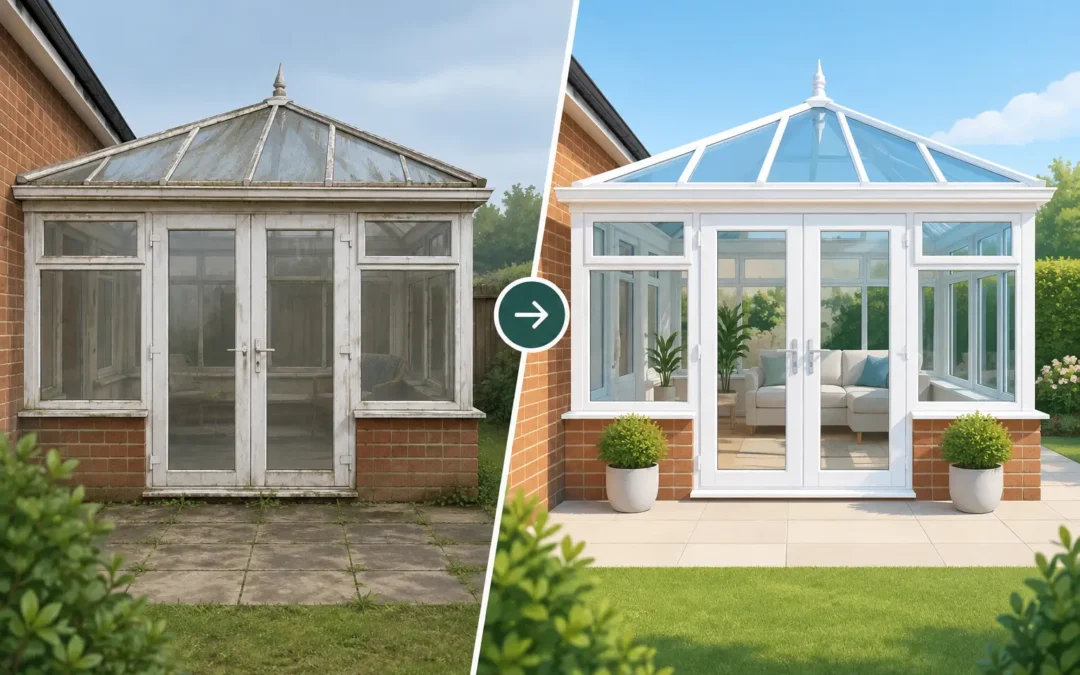
A conservatory should feel like part of your home, not the room you avoid in January or close off during a hot spell. A conservatory refurbishment before-and-after project can make a striking visual difference, but the real change is how the space performs: warmer, quieter, more secure and far more useful day-to-day.
For many homeowners, refurbishment is the sensible alternative to starting again. If the base, brickwork and overall structure are sound, targeted upgrades can refresh a tired conservatory without the cost and disruption of a full replacement. The right approach depends on what is causing the problem, which is why a proper survey matters before choosing windows, a roof or replacement glass.
What changes in a conservatory refurbishment before and after?
The obvious before-and-after change is usually appearance. Faded white uPVC, misted units, stiff doors and dated roof panels can make an otherwise good-sized room look neglected. New frames, glazing or doors give it a cleaner finish and can bring the conservatory back in line with the rest of the house.
However, the less visible improvements often matter more. Old double glazing may have lost its seal, leaving condensation between panes and allowing more heat to escape. Worn locks and handles can affect security. A roof that lets in too much sun can make the room uncomfortable for much of the year, even if it looks fine from outside.
After refurbishment, homeowners often notice that they can sit in the room for longer, use it for meals, work or family time, and keep the doors open to the house without creating a draughty cold spot. That is the standard worth aiming for – not simply a conservatory that looks newer in photographs.
Start with the problem, not the product
There is no single refurbishment package that suits every conservatory. A room that is cold may need different work from one that is too bright, leaks around the roof, or has doors that no longer close properly.
If the frames are in good condition and the issue is misted or cracked panes, replacement sealed glass units may be enough. This can improve the view, reduce draughts and restore insulation without replacing the whole frame. It is a practical option where the existing system remains sound.
Where windows or doors are worn, difficult to operate or no longer provide the level of security you expect, replacement frames may be the better long-term decision. Modern uPVC or aluminium options can improve thermal performance, reduce maintenance and give a more contemporary finish. The best choice is not always the most extensive one. It is the work that addresses the condition of the conservatory properly and offers good value over time.
A careful survey should also look at drainage, roof seals, the condition of opening sections and how the conservatory joins the house. Replacing glass will not solve a leak caused by failed flashing, and fitting a new door will not cure an underlying alignment problem. Clear advice at this stage avoids paying for work that only deals with part of the issue.
The upgrades that make the biggest difference
Replacement glazing
Failed double-glazed units are easy to recognise once you know the signs: moisture or a cloudy appearance between the panes, visible staining around the edges, or a room that feels draughtier than it should. Replacing the units can sharpen the appearance of the conservatory straight away.
The specification of the glass matters too. Energy-efficient glazing can help retain warmth, while solar-control options can reduce excessive glare and heat from direct sunlight. There is a balance to strike. Darker or heavily tinted glass may cut glare, but it can also reduce natural light. A good installer will talk through how you use the room and which elevation it faces before recommending an option.
New doors and opening windows
Doors are often the hardest-working part of a conservatory. Patio doors, French doors and bi-fold doors need to slide, fold or close cleanly, while keeping out weather and providing reliable security. If they stick, drag, let in water or have dated hardware, refurbishment can make the room feel much more usable.
Sometimes adjustment, replacement locks or new handles will extend the life of the existing doors. In other cases, particularly where the frames are warped or seals have failed, replacement is the more dependable route. This is one area where a repair-led assessment is valuable: it gives you a clear answer rather than assuming every problem needs a full new installation.
A roof upgrade
The roof often has the greatest effect on comfort. Older polycarbonate roofs can be noisy in heavy rain and may allow rapid heat build-up in summer while losing warmth in winter. Replacing roof panels or fitting a modern glazed roof can improve light and thermal performance, depending on the design.
A solid or tiled roof can make a conservatory feel more like a conventional extension, particularly if the room is too hot or too cold for regular use. The trade-off is reduced overhead light, so it is worth considering roof windows, glazed sections and the size of the existing side windows. Structural suitability and any building regulation requirements should always be checked before work begins.
Finishing details
Small upgrades can have an outsized effect once the main work is complete. Fresh guttering, tidy trims, new handles and correctly fitted seals make a conservatory look cared for and help protect the larger investment. Internal finishes matter as well. Replacing tired blinds, improving lighting and choosing furniture that suits the room can help the refurbished space feel intentional rather than like an overflow area.
Before-and-after expectations: what refurbishment can and cannot fix
A well-planned refurbishment can transform a conservatory, but it should be judged realistically. It can improve insulation, security, appearance and everyday comfort. It may also reduce outside noise, depending on the glazing chosen and the condition of the current units.
It cannot automatically turn every conservatory into a fully insulated extension. The walls, floor, roof construction, ventilation and connection to the house all influence year-round temperatures. If you want to remove separating doors or make the room a permanent part of the main living space, further building work and approvals may be needed.
This does not make refurbishment a poor option. It simply means the work should match the result you want. For a garden room used from spring through autumn, replacement glazing and repaired doors might be ideal. For a home office used every weekday, a more substantial roof and thermal upgrade may make better sense.
Choosing a conservatory refurbishment company
The best results come from accurate measuring, suitable materials and careful fitting. Price is important, but a low quote can prove expensive if it leaves existing faults unresolved or uses products that do not suit the conservatory.
Ask whether the company can assess repairs as well as replacements, what is included in the quotation, and how they will deal with any issues found during the survey. You should also feel comfortable asking straightforward questions about the glass, frames, roof and timescale. A home improvement decision should not involve pressure or confusing sales language.
For homeowners across South East London and Kent, Pearson Glazing takes a practical approach: assessing what can be repaired, explaining where replacement is worthwhile, and carrying out the work with experienced fitters who also survey. It keeps the process clear from the first visit onwards.
A successful refurbishment does more than create an impressive before-and-after image. It gives you a room you are pleased to walk into, whatever the weather is doing outside.
Recent Comments