
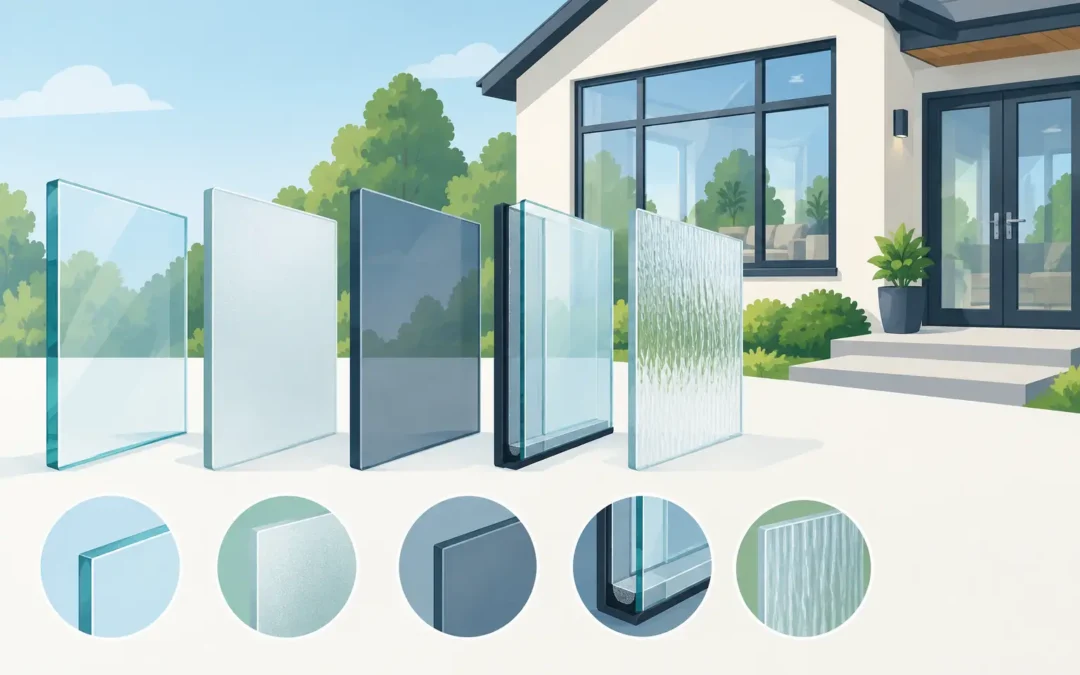
A misted double-glazed unit, cracked pane or draughty window does not always mean replacing the whole frame. The right replacement glass types can restore comfort, improve privacy or security, and help your windows and doors perform as they should. The best choice depends on where the glass sits, how the room is used and whether you are repairing a fault or improving the property.
For most homeowners, the sensible starting point is a survey. Glass can look similar from a distance, but the specification behind it matters. Thickness, coatings, spacers and safety requirements all affect what can be fitted safely and effectively.
Replacement glass types at a glance
Replacement glazing usually falls into two categories: single panes and sealed double-glazed units. Single glass is commonly found in older properties, internal doors, sheds and some decorative panels. Modern windows and doors are more likely to use a sealed unit, made from two panes of glass separated by a spacer bar and a gap filled with air or insulating gas.
If a double-glazed unit has condensation between the panes, the seal has failed. Replacing the glass unit can often solve the problem without disturbing a sound uPVC, aluminium or timber frame. It is a practical repair, but the new unit must be measured accurately and made to suit the existing system.
Clear float glass for straightforward replacements
Clear float glass is the familiar transparent glass used in many ordinary windows. It is a suitable option where the original glazing is single-pane glass and there are no special safety, privacy or thermal requirements.
It is not, however, automatically suitable for every location. Glass close to doors, at low level, in bathrooms and in other vulnerable areas may need to be safety glass. A professional survey helps avoid fitting a like-for-like pane where a safer upgrade is required.
Toughened glass for safety and strength
Toughened glass is heat-treated to make it considerably stronger than standard glass. If it breaks, it is designed to fracture into small, blunt pieces rather than large, sharp shards. For that reason, it is commonly used in patio doors, French doors, bi-fold doors, sidelights, low-level glazing and other areas where people may accidentally fall against the glass.
Toughened glass is a sensible choice for busy family homes and door openings with frequent use. It cannot be cut, drilled or reshaped once it has been toughened, so measurements and any holes for hardware must be confirmed before manufacture. It can also cost more than standard glass, but safety is rarely the place to compromise.
Laminated glass for security and noise reduction
Laminated glass has two panes bonded together with a clear interlayer. When damaged, the interlayer helps hold the glass in place. This makes it useful for security-conscious areas, such as accessible ground-floor windows, glazed doors and certain roof applications.
It can also help reduce outside noise, depending on the full specification. That may be worth considering if your home is near a main road, railway line or busy urban route. Laminated glass is heavier than ordinary glass, though, so the frame, hinges and opening mechanism need to be suitable for it.
Toughened and laminated glass are both safety options, but they behave differently when broken. Toughened glass breaks into small pieces. Laminated glass tends to remain together. The right option depends on the location and the level of security or containment needed.
Low-emissivity glass for warmer rooms
Most modern replacement double-glazed units use low-emissivity, often shortened to Low-E, glass. This glass has a nearly invisible coating that helps reflect heat back into the room while allowing useful daylight to pass through.
For a failed double-glazed unit, replacing it with a modern Low-E unit can be a worthwhile improvement over older glazing. It can help reduce heat loss and make rooms beside windows feel less chilly in colder months. Results still depend on the condition of the frame, seals and installation. New glass will not fully cure a draught caused by a warped sash, worn hinge or damaged gasket.
The spacer bar around the edge of a sealed unit also plays a part. Warm-edge spacers can reduce heat loss at the perimeter and may help lower the chance of condensation forming around the inside edge of the glass.
Obscure glass for privacy without losing light
Bathroom windows, front-door panels, landing windows and overlooked side elevations often need privacy as much as light. Obscure glass gives you both. It comes in a wide choice of patterned, frosted and textured finishes, from subtle designs to stronger obscurity levels.
When choosing obscure glazing, check it from both sides and consider the time of day. A pattern that offers good privacy in daylight may look different when lights are on inside after dark. In some cases, a laminated or toughened obscure option may also be needed for safety.
Solar-control glass for bright spaces
Large south-facing windows, conservatories and glazed extensions can become uncomfortably warm in direct sun. Solar-control glass is designed to reduce the amount of solar heat passing through the glazing while still admitting natural light.
This can make a real difference in a conservatory or room with extensive glazing, particularly during warmer weather. The trade-off is that some solar-control products slightly alter the appearance of the glass or reduce the amount of light entering the room. It is best chosen as part of the overall glazing specification rather than as an afterthought.
Decorative glass for character and privacy
Lead designs, bevels, coloured details and patterned panels can give a front door or period-style window more character. Decorative replacement glass is often selected after accidental damage, but it can also update a tired entrance without replacing the whole door.
Matching an existing design takes care. Colour, texture, lead width and panel proportions all affect the finished appearance. If you are replacing only one panel in a set, a close visual match matters just as much as the glass performance.
Choosing the right glass for the job
A replacement should be based on the opening, not just the visible problem. A steamed-up bedroom window may need a new energy-efficient sealed unit. A broken patio-door panel may require toughened safety glass. A ground-floor pane facing a busy street may benefit from laminated glass, while a bathroom window may call for obscure safety glazing.
Before ordering, a fitter or surveyor should check the glass size, thickness, cavity depth, frame condition and any relevant safety requirement. They should also look for the source of the issue. Condensation on the room-facing surface can be caused by everyday moisture and ventilation, whereas condensation trapped between panes points to a failed sealed unit.
At Pearson Glazing, the focus is on practical advice rather than pushing a full replacement when a glass repair is the better answer. A properly specified unit can improve the look and comfort of your home while keeping disruption and cost under control.
If your glass is cracked, misted, loose or no longer giving you the privacy you need, arrange for it to be assessed. The right replacement is the one that suits the opening, meets safety needs and gives you a result that feels right every time you look through it.
Recent Comments