
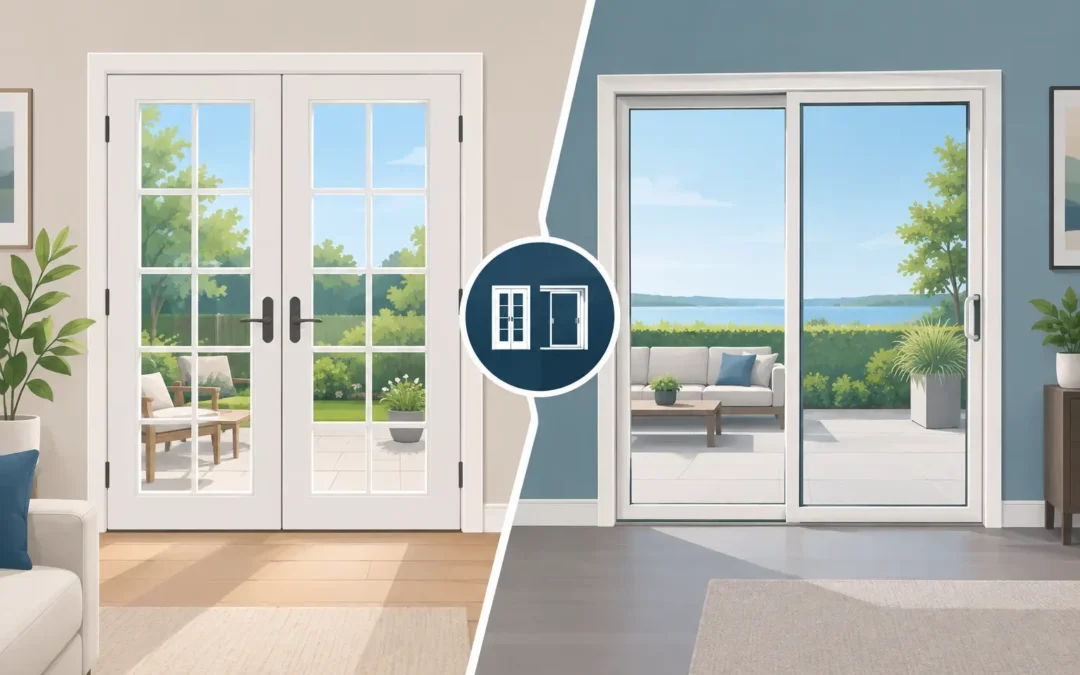
The door between your home and garden has to work hard. It may be the route for muddy boots, summer barbecues, shopping bags and everyday ventilation, while also affecting how light, warm and secure a room feels. When weighing up French doors versus patio doors, the best choice usually comes down to how you use the space around them – not simply which style looks best in a brochure.
Both can make a real improvement to a kitchen, dining room, conservatory or lounge. They offer good security, energy efficiency and attractive finishes when correctly specified and professionally fitted. The practical differences are in how they open, the view they create and the amount of clear access they provide.
French doors versus patio doors: the main difference
French doors are a pair of hinged doors that open outwards or inwards. One door is typically used day-to-day, while the second can be opened when you need a wider passage. With both doors open, there is no central fixed panel, giving you a clear opening to the garden.
Patio doors, often called sliding patio doors, move sideways along a track. One panel slides behind the other, so they do not take up extra room inside or outside the property. They usually have a fixed panel and a sliding panel, although wider configurations are available.
Neither design is automatically better. French doors are often chosen for their traditional character and open feel, while patio doors suit homeowners who want a broad glazed area without allowing for door swing.
Choose French doors for a wider, open connection
French doors are particularly effective where you want the garden to feel like an extension of the room. Open both leaves on a warm day and you have a generous, unobstructed route outside. This is useful for moving a table, pushchair or garden furniture through the doorway, and it can make a compact room feel more sociable during summer.
They also provide flexible ventilation. You can open one door slightly for fresh air, or open both fully when the weather allows. Depending on the layout, outward-opening doors can keep valuable floor space clear indoors. Inward-opening doors may suit a patio or pathway where external clearance is limited.
The trade-off is that hinged doors need space to open. A door leaf can interfere with furniture, a radiator, a dining table or the route through a narrow patio. Before choosing French doors, think about the swing on both sides of the threshold, including where people will stand when carrying items in and out.
French doors tend to suit period homes, traditional extensions and properties where symmetry matters. They can also work beautifully in more contemporary homes with slim frames, large glazed panels and a colour chosen to complement the windows.
When French doors make the most sense
French doors are a strong option if you value a full-width opening, have enough clear space for the doors to swing, and prefer a more classic appearance. They are also well suited to smaller openings where a sliding door would leave only half the overall width available for access.
Choose patio doors when space is tight
A patio door is often the more practical choice in a room where every centimetre matters. Because the moving panel slides rather than swings, you can position furniture closer to the doorway. It is a sensible solution for a compact dining area, conservatory or flat where an inward-opening door would feel intrusive.
Sliding doors can also create a wide view of the garden. Their larger panes and fewer opening lines may make them feel less visually busy than French doors, especially when closed. If your garden is a key feature of the room, that uninterrupted sightline can be a deciding factor.
A patio door is easy to use for everyday access. The sliding panel glides along its track, so there is no door leaf to catch in the wind or block a walkway. For households with children or pets, it can be helpful to open the door just enough for controlled ventilation rather than opening a full hinged leaf.
The compromise is the opening width. In a standard two-panel patio door, one panel remains fixed, meaning only around half the total width is open at any one time. That may be perfectly adequate for daily use, but it is worth considering if you regularly host guests or want a particularly open indoor-outdoor feel.
When patio doors are the better fit
Patio doors are a good choice where furniture layout is tight, the garden path runs close to the property, or you want larger glazed panels and a broad garden view. They are also an appealing option for modern extensions and contemporary homes where clean horizontal lines suit the overall design.
Light, views and how the room feels
Both options bring natural light into the home, but they create a different effect. French doors have a meeting point in the middle, so the view is divided when the doors are shut. Modern designs can keep this fairly slim, but it remains part of the look.
Patio doors have vertical frame lines too, yet the larger panes often give a more expansive glazed appearance. This can be especially useful when replacing older, smaller doors that make a room feel enclosed.
The surrounding glass matters as much as the door style. Side panels can increase daylight, while the size and orientation of the opening will influence how much sun the room receives. A survey is the right time to discuss sightlines, frame colour, glazing options and whether the existing opening could be altered to achieve the result you want.
Security and energy efficiency should not be an afterthought
A well-made, correctly fitted French door or patio door should offer reliable security and thermal performance. Look beyond the basic style and ask about the locking system, reinforced frames, toughened safety glass where required, weather seals and the quality of the installation.
French doors are usually secured with multi-point locking and a secure central meeting point when both leaves are closed. Patio doors use locking systems designed for their sliding mechanism and should sit correctly within the frame so they move smoothly and lock firmly.
Energy efficiency depends on the whole installation, not just the glass. Double glazing, low-emissivity coatings, draught-resistant seals and a properly finished frame all help retain warmth. Poor fitting can undermine a good product, causing draughts, difficulty operating the door and gaps around the frame. That is why accurate measuring and a careful survey are worth far more than a rushed, headline-price quote.
Think about thresholds and everyday access
The threshold deserves proper attention, particularly if someone in the household has limited mobility or you are planning for the future. A lower threshold can make the transition between home and garden easier, although the best option depends on drainage, floor levels and the type of door being installed.
Also consider the track on a patio door. It should be easy to keep clean and free from grit, leaves and debris so the panel continues to slide properly. French doors have no sliding track, but hinges and handles still benefit from occasional checks and maintenance.
For homes in South East London and Kent, external exposure can vary greatly. A sheltered courtyard has different demands from a garden that catches driving rain and wind. The right drainage detail, opening direction and weather sealing should reflect the property rather than follow a one-size-fits-all approach.
Making the decision without the sales pressure
Start with the opening itself. Measure the available width, note where furniture sits, and picture how you use the door on an ordinary weekday as well as when friends are round. French doors may give you the open, welcoming connection you want; patio doors may solve a space problem that becomes obvious only once you live with the room.
It is also worth choosing a company that takes time to survey the property rather than pushing a standard answer. At Pearson Glazing, the practical details matter: how the door will open, how the threshold will work, and how the finished installation will look from both inside and out.
A new garden door should make everyday life easier, whether that means sliding it open for morning air or throwing both doors wide for a family lunch outside. Choose the style that fits your room, your routine and your home – then let a proper survey turn that choice into an installation you can rely on.
Recent Comments