
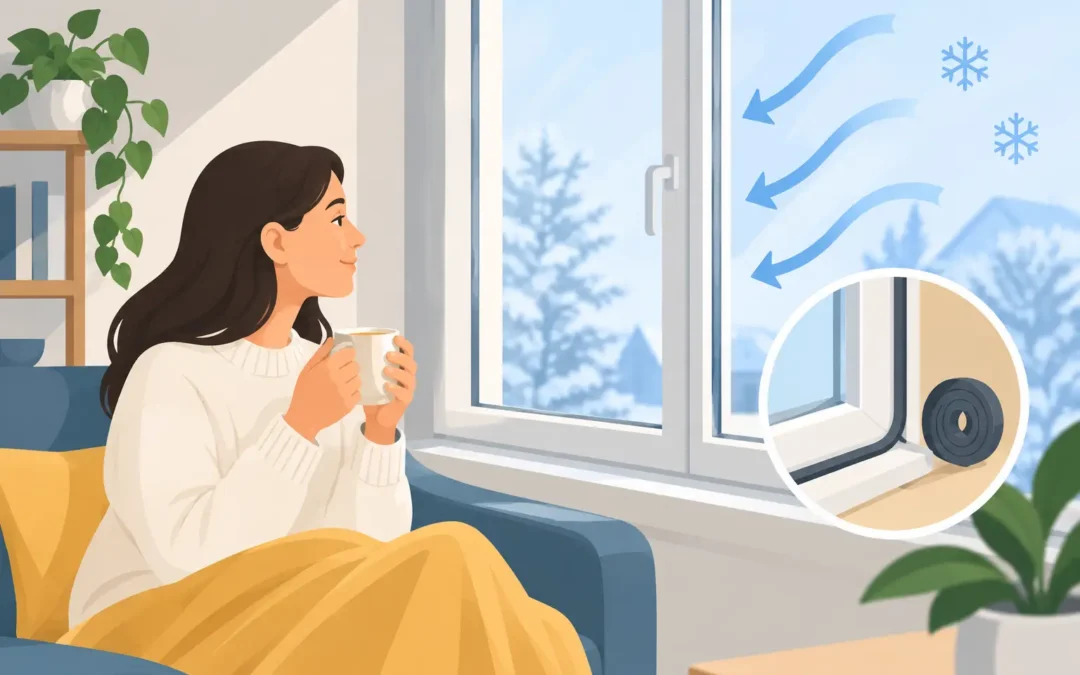
A cold line around the edge of a window is more than an annoyance when the heating is on. It can make a room feel uncomfortable, raise energy use and leave you wondering whether the whole window needs replacing. The good news is that, to prevent window draughts, the first step is usually to find where the air is actually getting in. Many problems can be repaired without replacing every window.
Start by finding the source of the draught
Not every cold area near a window is a draught. Glass naturally feels cooler than an insulated wall, especially on a winter morning. A genuine draught is moving air, often felt around the opening sash, the frame, the handles or where the frame meets the wall.
On a still day, run the back of your hand slowly around the inside edge of the window. Pay particular attention to the corners, opening sections and the area beneath the sill. You may also notice curtains moving slightly, a whistling sound in windy weather, or a visible gap in old sealant.
It helps to check these common areas:
- Worn or flattened rubber seals around opening windows
- Window handles, hinges and locks that no longer pull the sash tightly closed
- Gaps or failed sealant between the frame, sill and brickwork
- A poorly fitted replacement unit or an older timber frame that has warped
- Door and window junctions, particularly around patio doors and French doors
If the draught seems to come through the middle of the glazed unit rather than around its edges, the issue may be poor insulation from older single glazing or an ageing double-glazed unit. That calls for a different solution than replacing a seal.
Simple ways to prevent window draughts
A few practical checks can make a noticeable difference, particularly when the window itself is still in good condition. Start by making sure the window is properly closed and locked. On many modern uPVC and aluminium windows, engaging the handle fully helps draw the sash against the seals.
Clean the seals with warm, soapy water and a soft cloth, then dry them carefully. Dirt, paint residue and debris can stop a window from closing as closely as it should. Avoid harsh cleaners or petroleum-based products, as these can damage rubber over time.
For small gaps around an opening sash, replacement weather seals can be effective when they are the correct size and profile. A seal that is too thick can make the window difficult to close; one that is too thin will not stop the airflow. It is worth identifying the existing seal type before buying a replacement rather than applying a generic strip over the top.
Gaps around a fixed frame can often be resealed externally or internally, depending on their location. Cracked silicone, shrinking mastic and failed pointing around a sill are common on older installations. This work needs a clean, dry surface and the right sealant for the material. Simply covering over loose or split sealant rarely lasts.
Temporary draught excluder tape can be useful during a cold spell, but treat it as a short-term measure. It can look untidy, leave residue and may hide a fault that needs proper attention.
Do not block planned ventilation
Trickle vents are designed to provide background ventilation. They can feel cold when open, but blocking them completely can increase condensation, mould and stale air, especially in bedrooms and kitchens. If a vent is noisy, damaged or excessively draughty, it is better to have it assessed than permanently sealed.
The same applies to extractor fans and air bricks. A comfortable home needs controlled ventilation as well as good seals. The aim is to stop unwanted air leakage around the window, not to make the property airtight in the wrong places.
When hinges, handles or locks are the real problem
A window can look closed while still sitting slightly away from its seals. This is particularly common with older casement windows where hinges have worn, dropped or become restricted by dirt. You might find that the gap is worse at the top or bottom corner, or that you need to push hard on the frame before the handle will lock.
In some cases, an experienced repairer can adjust the hinges, realign the sash or replace worn locking components. New hinges, handles or keeps may restore the closing pressure and make the window easier to use at the same time.
Do not force a stiff handle. Excess pressure can damage the gearbox or lock mechanism, turning a relatively straightforward adjustment into a larger repair. If the handle is difficult to turn, the sash is catching, or the lock does not engage cleanly, arrange for it to be checked.
Check the glazing and the installation, not just the seals
Double glazing reduces heat loss, but it does not last forever. If you can see mist or moisture between the panes, the sealed unit has failed. This does not usually create a draught in the same way as a gap around the frame, but it does reduce insulation and can make the room feel colder.
Where the frame remains sound, replacing only the glazed unit can be a sensible, cost-effective option. It avoids unnecessary disruption and can improve warmth and clarity without changing the whole window.
The installation around the frame matters just as much. A draught at the edge of a window may be caused by a gap between the frame and the wall, failed exterior sealant, or poor insulation around the opening. These faults need to be diagnosed properly because the visible gap indoors is not always the point where water or air is entering.
Older properties can add another layer of complexity. Uneven brickwork, timber movement and original reveals may mean a repair needs a more considered approach. Filling every gap with expanding foam is not a reliable answer and can make future maintenance difficult.
Repair or replace: how to make the right call
Repair is often the sensible first option when the frame is in good condition and the problem is limited to seals, hinges, locks, handles or glazing units. It is usually less disruptive and can extend the life of windows that still perform well overall.
Replacement becomes more worthwhile when there are several issues at once: persistent draughts from multiple areas, warped or damaged frames, recurring condensation between panes, poor security, difficult operation or single glazing throughout the property. New windows can improve thermal performance, comfort and noise reduction, but their benefits rely on careful surveying and fitting.
A professional inspection should explain what is wrong, what can be repaired and where replacement would offer better long-term value. There should be no need for guesswork or a rushed decision based on a sales pitch.
Prevent draughts from returning
Once a window is repaired or replaced, a little regular care helps keep it working properly. Clean the tracks and drainage channels so water and debris do not build up. Wipe seals occasionally, check that handles lock smoothly and look for cracks in external sealant before winter arrives.
Avoid painting over moving parts or rubber seals on older windows. If you notice a change in how a window closes, deal with it early. Small alignment problems tend to worsen gradually and can place extra strain on locks and hinges.
For homeowners in South East London and Kent, changing weather and exposed positions can make minor faults more obvious, particularly in upper-floor rooms or properties facing prevailing winds. Pearson Glazing can assess whether a focused repair, replacement glass or a new window is the most practical answer, with straightforward advice rather than pressure to replace more than you need.
A warmer room often starts with one careful inspection. Address the gap, worn part or failed unit behind the problem, and your windows can feel quieter, more comfortable and easier to live with when the weather turns.
Recent Comments