
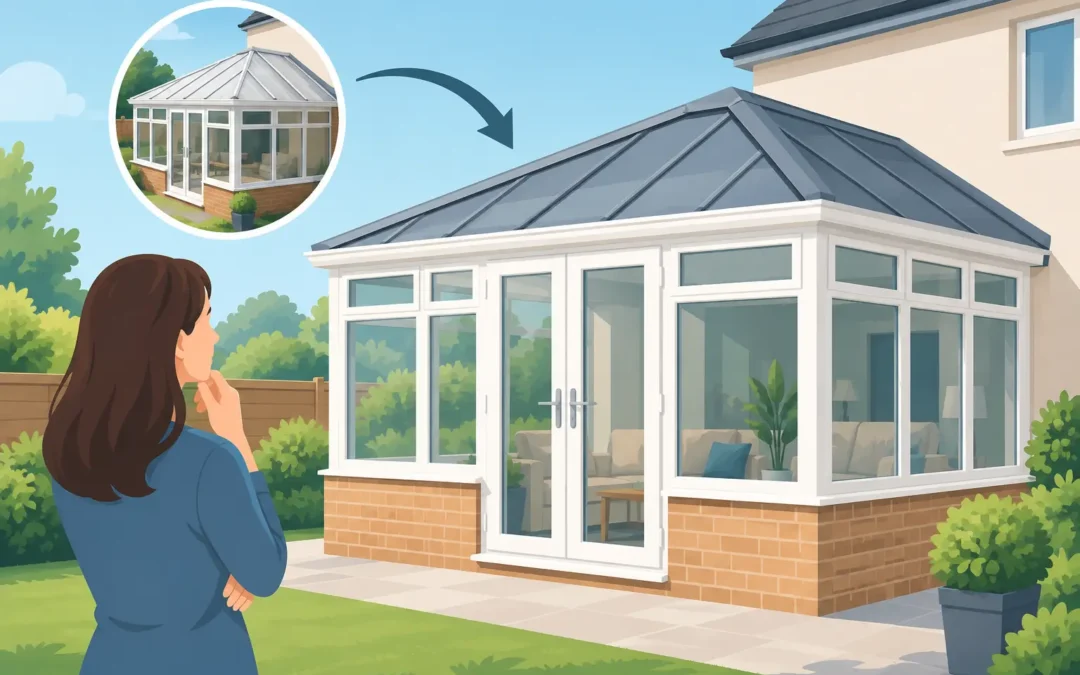
A conservatory that is too hot in July and too cold to use by November can feel like wasted space. This replacement conservatory roofs review looks at whether changing the roof can make a genuine difference, what the options involve and how to decide if the investment is right for your home.
For many households, the answer is not simply to replace the whole conservatory. If the existing frames, doors and base are sound, a carefully specified new roof can turn an underused room into one that feels more comfortable through much more of the year. The result depends on the condition of the structure, the roof type chosen and, crucially, the quality of the survey and installation.
What a replacement conservatory roof can change
Older polycarbonate roofs are a common source of complaints. They can amplify rain, allow rooms to overheat in direct sun and offer limited insulation once temperatures fall. A replacement roof is designed to tackle those issues by improving thermal performance, controlling light and reducing outside noise.
That does not mean every conservatory becomes identical to the rest of the house. A conservatory has more glazed area than a typical extension, so it will still respond to the weather. However, a good roof replacement should make the temperature less extreme, reduce glare and create a calmer, more usable space for reading, dining or spending time with family.
There is also the visual change. A tiled or solid roof can make an ageing conservatory look more considered from both inside and out. For some homeowners, that is as valuable as the improvement in comfort. For others, retaining a brighter, more open feel matters most. This is why the best option is not always the heaviest or most insulated one.
Replacement conservatory roofs review: the main options
The right roof depends on how you use the room, how much natural light you want and what the existing conservatory can support.
Tiled and solid roofs
A tiled roof usually combines insulation with a lightweight structural system and a tile finish that complements the property. It is often the strongest choice for homeowners who want a more extension-like feel. It can reduce heat loss and summer overheating substantially, while rain noise is generally far less noticeable than with older polycarbonate.
The trade-off is daylight. Because the roof is largely solid, the room can become darker, particularly where the conservatory faces north or is surrounded by neighbouring buildings. Roof windows or glazed panels can help, but they need to be planned properly rather than treated as an afterthought. Weight is another consideration, which is why a proper assessment of the original frames and foundations is essential.
Glass roofs
Modern glass roofs have come a long way from the basic glazed units found on older conservatories. Solar-control coatings, improved glazing specifications and well-designed ventilation can make a significant difference to comfort while preserving the airy appearance many people enjoy.
A glass roof is a sensible choice where light is the priority, such as a conservatory opening onto a shaded garden. It may not give the same insulation levels as a well-built solid roof, and it can still need blinds in very sunny positions. Yet for many homes, it provides the best balance between a brighter room and better year-round performance.
Hybrid roofs
A hybrid roof uses solid insulated sections alongside glazed panels. It is a practical middle ground for homeowners who want stronger thermal performance without losing all overhead light. The layout can be tailored to the room, allowing light where it is most useful while adding insulation where the sun is at its strongest.
This flexibility can make hybrid designs particularly effective, but it also means the design work matters. A generic solution may not suit the roof shape, orientation or adjoining rooms. Ask to see how the proposed panel arrangement will affect light inside the conservatory, not just how it will look from the garden.
Is the existing conservatory suitable?
A new roof should never be chosen from a brochure alone. The existing conservatory must be surveyed to establish whether its frames, walls, doors, seals and base are in suitable condition. A roof replacement is an opportunity to spot tired double glazing, failed units, stiff doors or damaged locks before they become separate problems.
The survey should consider structural loading, the condition of the foundations where relevant, drainage, roof pitch and how the new roof will join the house. This is especially important with a tiled roof, even when it is designed to be lightweight. Strong-looking frames are not always enough if the original structure was built for a much lighter roof system.
Be wary of anyone who promises a firm answer without looking closely at the conservatory. A straightforward process should still involve proper measurements, a clear explanation of what is possible and an honest conversation if repairs or additional work are needed first.
Cost: what are you actually paying for?
Replacement conservatory roof prices vary because no two conservatories are quite the same. Size, roof shape, chosen finish, glazing, access and the amount of preparation work all affect the cost. A Victorian or P-shaped conservatory, for example, usually requires more detailed work than a simple lean-to.
It is tempting to compare quotes only by their headline figure. A lower price can look attractive until it becomes clear that removal of the old roof, internal plastering, electrics, insulation, guttering or making good have been left out. Ask for a written breakdown that explains the scope of work and what is not included.
A more expensive quote is not automatically better, either. The useful comparison is whether each installer is proposing the same roof type, insulation specification, internal finish and level of aftercare. Clear pricing is not about finding the cheapest figure. It is about knowing exactly what you are agreeing to.
Planning, building regulations and practical details
Roof replacement work may be possible without planning permission in many cases, but this should be checked for your property rather than assumed. Listed buildings, conservation areas and changes that materially affect the appearance or size of the conservatory can require extra consideration.
Building regulations can also be relevant, particularly when installing a solid roof. The existing structure, thermal performance and separation between the conservatory and the main home may all matter. A professional installer should explain the route that applies to the proposed work and provide the appropriate paperwork when required.
Think about ventilation at the same time. An insulated roof improves comfort, but the room still needs a way to manage warm air and everyday condensation. Opening roof vents, windows, trickle vents and doors all play a part. If the conservatory is used for drying washing, growing plants or cooking nearby, this becomes even more relevant.
Questions worth asking before you choose
Before accepting a quote, ask how the installer will confirm that your existing frames and base are suitable. Find out what insulation and glazing specification is being proposed, how daylight will be protected and whether internal finishing is included. It is also sensible to ask who will carry out the installation, how long the work is expected to take and what guarantee applies to both the product and workmanship.
For homes in South East London and Kent, local experience can be useful because installers are familiar with the mix of Victorian terraces, suburban houses and modern properties found across the area. More importantly, choose a company that takes the time to assess the property in front of them rather than pushing one roof solution for every home.
When a roof replacement may not be the right answer
If the conservatory has serious movement, failing foundations, widespread frame damage or persistent leaks around its connection to the house, replacing the roof alone may not solve the real issue. In those cases, repairs, replacement frames or a different approach could be better value over time.
It may also be worth pausing if your main goal is a fully integrated living room. A conservatory roof can make a major improvement, but it does not automatically make the structure an extension. Be clear about the result you want before choosing the work that will deliver it.
A good roof replacement should feel like a considered home improvement, not a sales exercise. Pearson Glazing can assess the condition of the conservatory, explain the practical options clearly and help you choose a roof that suits the way you want to use the space.
Recent Comments