
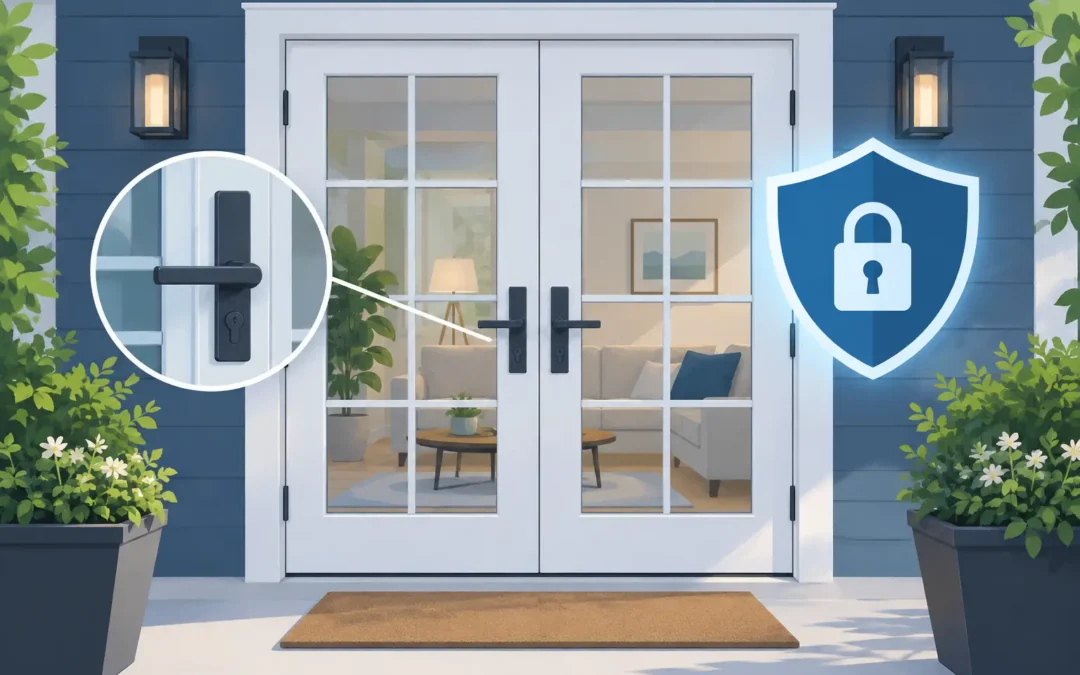
French doors are often chosen for the view they create into a garden, conservatory or patio. That glass and opening space should feel welcoming, not like a weak point in the home. Secure French doors can provide the light, access and traditional appearance people want, while giving you confidence that the doors are properly designed, fitted and locked.
The key is to look beyond the handles. Door security is not one feature you can add at the end. It comes from the frame, the locking system, the glass, the hinges and the quality of installation working together.
What makes French doors secure?
A well-made pair of French doors has two opening panels that meet in the middle. One is usually the main traffic door, operated by the handle, while the other is held in place by shoot bolts. When both panels are closed and locked, the pair should form a firm, aligned barrier rather than two doors that can be pushed or flexed apart.
For most homes, modern uPVC or aluminium French doors offer a considerable security improvement over older units. Their frames are designed to work with multi-point locking, reinforced areas where needed and modern double-glazed units. Composite-style door systems may also be an option where a more solid entrance-door appearance is preferred, although the best choice depends on the opening, the look of the property and how the doors will be used.
Security should never mean a door is awkward to live with. A good installation gives you an easy handle action, smooth opening panels and a positive lock, without gaps, sticking or rattling in windy weather.
Secure French doors start with the lock
The lock is naturally a major consideration, but it is the whole locking arrangement that matters. Most modern French doors use multi-point locking on the main door. Turning the handle engages locking points along the edge of the sash before the key is used to secure the cylinder.
These points may include hooks, bolts or rollers depending on the door system. Hooks can help resist attempts to force the door open, while bolts provide a firm connection between the sash and frame. The important point is that the lock engages cleanly and fully into properly fitted keeps in the frame.
Choose a suitable cylinder
On doors with a euro-profile cylinder, the cylinder should be appropriate for the level of security required and fitted to the correct length. A cylinder that protrudes too far beyond the handle can be more vulnerable to attack, while one that sits too deeply can be difficult to operate.
Anti-snap cylinders are a sensible upgrade for many external doors. They are designed so that, if force is applied, the outer section breaks in a controlled way while the internal locking mechanism remains protected. They are not a substitute for a sound door and frame, but they are a worthwhile part of a wider security specification.
If you have an existing set of French doors that is otherwise in good condition, replacing worn locks, cylinders or handles can be a practical option. A professional assessment can establish whether a repair will give you the security you need or whether the condition of the doors points towards replacement.
Do not overlook the second door
The inactive panel is just as important as the main opening door. It is normally secured by top and bottom shoot bolts that locate into the head and threshold of the frame. These should be strong, easy to operate and properly aligned.
Loose or damaged shoot bolts can leave a pair of doors less secure even if the main lock is working perfectly. They should also be checked after any movement in the property, a door adjustment or signs that the panels are catching.
Glass needs to be part of the decision
French doors have large glazed areas, which is one reason they are so popular. It also means the glass specification deserves more thought than it sometimes receives.
Toughened safety glass is commonly used in doors because it is designed to break into small, less dangerous pieces if it fails. Laminated glass offers a different benefit: an interlayer holds the glass together after breakage, making it more difficult to create an opening quickly. For doors in a more exposed location, or where security is a particular concern, laminated glass may be worth discussing.
There is a trade-off. Different glass specifications can affect cost, weight and, in some cases, the appearance of the unit. Frosted or patterned glass can add privacy, but it is not automatically a security upgrade. The right choice should balance privacy, safety, insulation and the way your home is used.
Fitting is as important as the product
Even high-quality secure French doors will not perform as intended if they are poorly fitted. The frame must be fixed securely to the structure, level and square, with the sashes adjusted so that locks and bolts engage correctly.
A door that needs to be lifted to lock, catches on the threshold or leaves uneven gaps is not simply inconvenient. It may indicate that the locking points are under strain or not fully engaging. Over time, this can lead to wear and can make the door easier to force.
Good fitting also protects weather performance. Draughts, water ingress and movement can all affect how a door closes and locks. This is why surveying the opening properly before installation matters. At Pearson Glazing, fitters also survey work, helping to keep the advice practical from the first measurement through to installation.
Security features worth asking about
When comparing French doors, it helps to ask clear questions rather than relying on a broad claim that a door is “secure”. The following features are useful indicators of a considered specification:
- Multi-point locking that engages along the main opening door.
- Secure top and bottom shoot bolts on the second door.
- A correctly fitted, quality security cylinder, with anti-snap protection where suitable.
- Toughened or laminated safety glass matched to the location and your priorities.
- Reinforced sections where the door system requires them.
- Security-tested hardware and a professional installation with final adjustment.
You may also want to ask whether the proposed doors meet recognised security standards or are suitable for a particular insurance requirement. Standards can be useful, but they should not become a confusing sales point. What matters is that the specification suits your property and is installed properly.
Everyday habits still matter
A secure door needs to be used as intended. Simply pulling French doors shut may not engage the multi-point lock. Lift the handle fully, turn the key and remove it from the lock, particularly when leaving the house or going to bed.
Avoid leaving keys in the inside cylinder where glass close to the handle could allow someone to reach through after breaking a pane. The best arrangement depends on the door layout and household needs, including how quickly people need to leave in an emergency. If there are children, older relatives or anyone who may need easy access, discuss the options rather than choosing a locking style on security alone.
Regular maintenance makes a difference too. Keep tracks and thresholds free of grit, check that handles feel firm, and arrange an adjustment if the doors begin to drop or become difficult to lock. There is no benefit in waiting until a lock fails completely.
When replacement is the sensible option
Repairs can often extend the life of French doors, especially where the issue is a worn cylinder, faulty handle, misted glass unit or misalignment. Replacement becomes more attractive when the frame is damaged, the doors have significant movement, the locking system is obsolete, or repeated repairs are no longer delivering a reliable result.
Older French doors may also have single glazing, basic handles and limited locking points. Replacing them can improve security, warmth and day-to-day operation in one project. For homeowners in South East London and Kent, a straightforward survey can clarify whether adjustment, repair or replacement is the better value route.
The best French doors should not make you choose between a bright home and a secure one. Ask for a clear explanation of the locks, glass and fitting method, then choose a solution that feels right for your property and the people who use it every day.
Recent Comments