
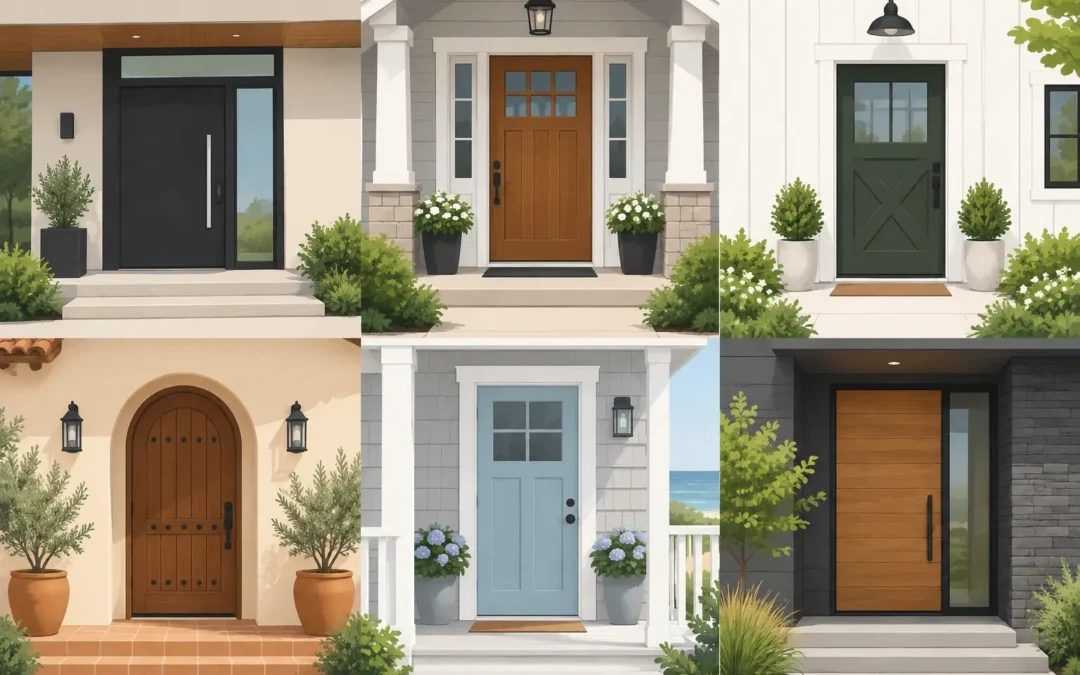
Your front door has a harder job than most parts of the house. It needs to welcome visitors, keep the weather out, help protect your property and look right from the pavement. With so many entrance door styles available, the best choice is rarely just about picking a colour you like. It is about finding a design, material and specification that suit your home and the way you use it.
A good replacement door should feel reassuring from the moment it closes. It should also be straightforward to live with: secure locks, smooth operation, sensible maintenance and a style that will not date quickly. Here is how to narrow down the options without being pushed towards a door that is not right for you.
Start with the character of your home
The entrance sets expectations for the rest of a property. A traditional Victorian terrace, a 1930s semi and a modern new-build can all carry a bold front door, but the details that make it work will be different.
Period homes often suit doors with familiar proportions: raised or recessed panels, glazed upper sections, fanlights and more traditional hardware. A heritage-style composite door can provide this look while offering the benefits of a modern insulated core and multi-point locking. If you are replacing an older timber door, this can be a practical way to retain character without taking on regular painting and repair work.
For a more contemporary property, clean lines usually work best. A slab-style door, a wide vertical glazed panel or a simple geometric design can give the entrance a sharper finish. Aluminium doors are particularly well suited to modern homes because their slim, strong frames allow for a crisp architectural look.
There are no fixed rules, though. Contrast can look excellent when it is deliberate. A deep-coloured contemporary door on a pale rendered house, for example, can create a strong focal point. The key is to consider the whole frontage, including window frames, brickwork, porch, path and exterior lighting.
Entrance door styles by material
The style of the door and the material it is made from go hand in hand. Each option has its own strengths, appearance and price point.
Composite doors
Composite doors are a popular choice for homeowners who want a solid, traditional-looking entrance with strong security and thermal performance. They are built from several materials rather than a single piece of timber or plastic, usually around an insulated core. This gives them a substantial feel and helps reduce heat loss.
They come in a wide range of panel designs, colours and glazing options, from cottage-style doors with decorative glass to simple, contemporary designs. Many finishes are made to resemble timber grain, so they can complement older properties particularly well.
The trade-off is that a composite door may cost more than a basic PVC-u option. It is also worth checking the exact specification rather than comparing doors by appearance alone. The quality of the slab, frame, hinges, locking system and installation all affect how the door performs over time.
PVC-u doors
PVC-u entrance doors remain a practical, cost-effective option. They are easy to maintain, resistant to everyday weather and available in many styles, including panelled, part-glazed and fully glazed designs. They can be a sensible replacement where budget is a major consideration or where you want the door to match existing PVC-u windows.
A white PVC-u door can suit many homes, but coloured and wood-effect finishes offer more choice than they once did. That said, a very ornate design can sometimes look less convincing in PVC-u than in composite or timber. For a straightforward, durable door with good everyday performance, it is still a reliable choice.
Aluminium doors
Aluminium entrance doors are known for their strength, contemporary appearance and long-lasting finish. They are ideal if you prefer a modern design, a bold colour or a larger door format. Their rigidity also makes them a strong option for wider openings and statement entrances.
Because aluminium is a premium material, it tends to sit at a higher price point. It may not be the natural first choice for every period property, either, although the right design can still work well. If you are updating a modern home in South East London or Kent, where clean-lined extensions and renovations are common, aluminium can create a particularly smart finish.
Timber doors
A well-made timber door has a warmth and depth that other materials aim to replicate. It can be the right choice for a listed building, a conservation area or a home where original features matter. Timber is also highly adaptable, allowing for bespoke sizes, mouldings and paint finishes.
It does, however, need more care. Exposure to rain, sun and changing temperatures means coatings need regular attention. If you want the look of wood without the maintenance commitment, a woodgrain composite door is often worth considering.
Choose glazing with privacy in mind
Glazing can make a dark hallway feel much brighter, especially in properties where the front door opens directly into a narrow entrance. A glazed panel, sidelights or a fanlight above the door can bring in useful daylight without leaving the home exposed.
The type of glass matters. Clear glazing suits a private driveway or a sheltered entrance, but patterned, obscure or decorative glass is usually a better fit where the door faces a busy street. It lets light through while limiting views into the property. Some homeowners choose a small clear section at eye level with obscured glass below, which balances visibility with privacy.
Think about safety as well as appearance. Door glass should be fitted with suitable safety glazing, and decorative units should be properly sealed to help prevent draughts or moisture between the panes. A survey is the right time to discuss sightlines, privacy and the amount of light you want inside.
Colour, furniture and small details
Colour has a bigger effect than many people expect. Black, anthracite grey and deep blue create a confident, classic finish and sit comfortably alongside modern and traditional properties. Greens can work beautifully with brick, stone and leafy front gardens. Brighter shades bring personality, but it is wise to consider whether you will still enjoy them in five or ten years.
Look at the fixed features around the door before deciding. A warm red brick frontage may suit a different shade from a pale render or yellow London stock brick. Matching the frame to the door creates a uniform look, while a contrasting frame can make the entrance more defined.
Hardware should not be an afterthought. Handles, letterplates, knockers and house numbers need to work together rather than compete. Chrome and satin finishes are often suited to contemporary doors; black, antique and traditional styles can better complement period designs. More importantly, handles and locks should feel secure and comfortable in daily use.
Do not compromise on security or fitting
A stylish door is only a good investment if it is correctly specified and professionally fitted. A high-quality cylinder lock, reinforced hinges, a secure frame and multi-point locking all contribute to the security of the entrance. The door should close cleanly, seal evenly and operate without force.
This is where measurement and installation make a real difference. An ill-fitting door can allow draughts, affect energy efficiency and cause problems with locking. It can also spoil the appearance of an otherwise attractive product. A proper survey should account for the condition of the opening, threshold height, existing brickwork and whether the frame needs replacing along with the door.
At Pearson Glazing, the focus is on helping homeowners make a practical choice, not steering them towards the most expensive option. A clear quote and a conversation about how the entrance is used will usually tell you far more than a brochure alone.
A door that works for daily life
Before settling on a design, picture the ordinary moments: coming home with shopping, letting the dog out, accepting parcels, cleaning muddy shoes from the hallway or locking up late at night. A low threshold may make access easier. A wider opening can be useful for pushchairs or mobility needs. A spyhole, door viewer or glazed panel may offer reassurance without needing to open the door.
The best entrance door styles are not simply the ones that look good in a showroom. They are the ones that suit your property, feel secure every day and give you a welcome return home each time you turn the key.
Recent Comments