
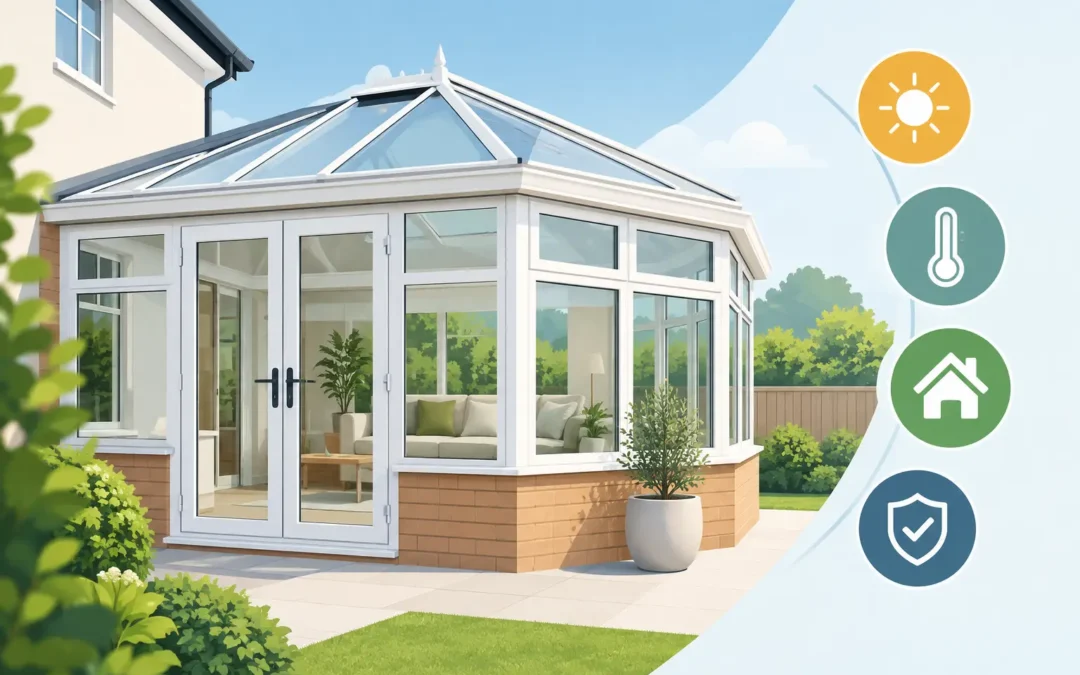
A conservatory that is too hot in July and too cold by November rarely gets used as it should. The best conservatory roof upgrades can change that, making the room more comfortable across the year while improving its appearance and reducing reliance on heating or blinds.
The right answer is not always the most expensive roof. It depends on your existing conservatory, how you use the space, the amount of natural light you want to keep and whether the frames and foundations are suitable for the additional weight. A proper survey should come before any decision, particularly on an older conservatory.
Why replace a conservatory roof?
Older polycarbonate and glass roofs can be the main reason a conservatory feels difficult to live with. Polycarbonate can amplify rain noise, allow heat to build up quickly and offer limited insulation. Older glazed roofs may be better for light, but can still lose heat if the glass or framework is outdated.
A replacement roof gives you the chance to address those problems without rebuilding the whole room. It can help create a more even temperature, reduce glare and noise, and give the conservatory a finish that sits more naturally with the rest of the house.
It is also worth checking the condition of the existing roof before assuming replacement is the only route. Failed sealed units, damaged panels, leaking flashings, worn vents or faulty roof hardware can sometimes be repaired. Straightforward advice matters here: a smaller repair may be all that is needed, while a full upgrade makes sense when the whole roof is underperforming.
The best conservatory roof upgrades to consider
A lightweight tiled roof
For many homeowners, a lightweight tiled roof is the biggest comfort-led upgrade. It replaces most or all of the glazed area with an insulated, solid roof and a tiled external finish. From outside, it can make a conservatory look less like an add-on and more like a considered part of the property.
Its main benefit is temperature control. A well-designed insulated roof can make the room feel warmer in winter and cooler in summer, while rain noise is considerably reduced. It can be a good choice for a conservatory used as a dining room, playroom, home office or everyday sitting area.
The trade-off is light. Even with glazed panels or roof windows included in the design, a solid roof will make the room darker than a fully glazed one. The roof is also heavier, so the existing frames, walls and base need to be assessed carefully. A reputable installer will not make assumptions about what your structure can carry.
A glass conservatory roof
A modern high-performance glass roof is often the best option where daylight is the priority. It keeps the open, bright quality people expect from a conservatory, but offers a substantial improvement over older glazing when specified correctly.
Solar-control glass can reduce excessive heat and glare, while self-cleaning coatings can help cut down on visible dirt. The glass type, tint, roof orientation and ventilation arrangement all affect the final result. A south-facing conservatory may benefit from stronger solar control than one facing north or east.
Glass roofs are not as insulating as a properly specified solid roof, and they can still let in more external noise. However, for a space that overlooks the garden or is already shaded for part of the day, the gain in light can outweigh those compromises. This is usually the most balanced option for homeowners who want to retain a traditional conservatory feel.
A hybrid roof with glazed panels
A hybrid design combines a solid insulated roof with strategically placed glass panels or roof windows. It is a practical middle ground for homeowners who want better insulation but do not want the room to feel enclosed.
The solid sections help control heat loss and reduce overheating, while glazed areas bring daylight into the centre of the room. The layout needs careful thought. One large panel in the right place can work better than several smaller panels that create unnecessary glare or complicate the roof design.
This type of upgrade is particularly useful where the conservatory backs onto a darker kitchen or living room. Retaining light through the roof can help prevent the adjoining room from becoming noticeably dimmer after the work is complete.
Upgrading roof glazing and ventilation
If the existing structure is sound and you are not ready to replace the full roof, upgrading individual roof panels or sealed units may improve comfort at a lower cost. Modern glazing can offer improved thermal performance and solar control, especially compared with old or failed units.
Ventilation should be considered at the same time. Roof vents, opening windows and doors all help hot air escape. Without a sensible ventilation plan, even quality glass can leave a sunny conservatory feeling uncomfortable on the warmest days.
This approach will not transform a poorly insulated polycarbonate roof into a year-round room, but it can be a worthwhile, proportionate improvement for a conservatory used mainly in spring and summer.
What to check before choosing a new roof
The best upgrade starts with the conservatory itself, not a brochure. Age, frame condition, wall construction, base stability and the connection to the main house all influence what can be fitted safely. Water ingress, movement in the frames or signs of a failing base should be dealt with before a new roof is installed.
Think honestly about how you want to use the room. If it is a bright place to enjoy breakfast and look out over the garden, glass may be the natural choice. If you want to work there through winter or use it as an extension of the lounge, an insulated tiled or hybrid roof could be better suited.
Also consider headroom. Some replacement systems can alter the internal ceiling line, so it is sensible to discuss this during the survey. The external appearance matters too, particularly if your home is in a conservation area or has planning restrictions.
Building regulations and permissions
Conservatory roof replacement can involve building regulations, particularly where the work changes the thermal performance or structure of the room. Requirements vary according to the existing conservatory and the proposed roof, so this should be checked before installation begins.
Planning permission is not always required, but there are exceptions. Listed buildings, conservation areas, unusual property layouts and previous extensions can all affect what is permitted. Clear advice at the outset prevents awkward surprises later.
A professional surveyor should explain what applies to your home, rather than offering a one-size-fits-all answer. At Pearson Glazing, this practical survey-led approach helps homeowners understand the options before committing to a project.
Do not overlook the finishing details
A new roof performs best when the surrounding details are in good order. Gutters, downpipes, flashings and seals need to manage rainwater properly. If the roofline is being changed, the junction with the house should be designed carefully to avoid future leaks.
Inside, consider lighting, blinds and heating early rather than treating them as afterthoughts. A solid or hybrid roof can accommodate downlights, but their position should be agreed before the ceiling is finished. For glazed roofs, fitted blinds may still be useful for privacy and managing bright low sun.
The installation itself should be planned around weather protection and access. A competent team will explain how the room will be kept secure during the work, what preparation is needed and how long the installation is likely to take. Clear expectations are more valuable than a rushed promise.
Choose the upgrade that suits your home
There is no single winner among conservatory roof upgrades. A tiled roof is often strongest for year-round comfort, a glass roof is hard to beat for daylight, and a hybrid roof can offer an effective balance of both. The best choice is the one that suits your structure, budget and the way you want to live in the room.
Start with a careful inspection and a straightforward conversation about what is realistic. A conservatory should be a room you choose to use, whether it is raining outside, bright sunshine is pouring in or the evenings start to turn cold.
Recent Comments