
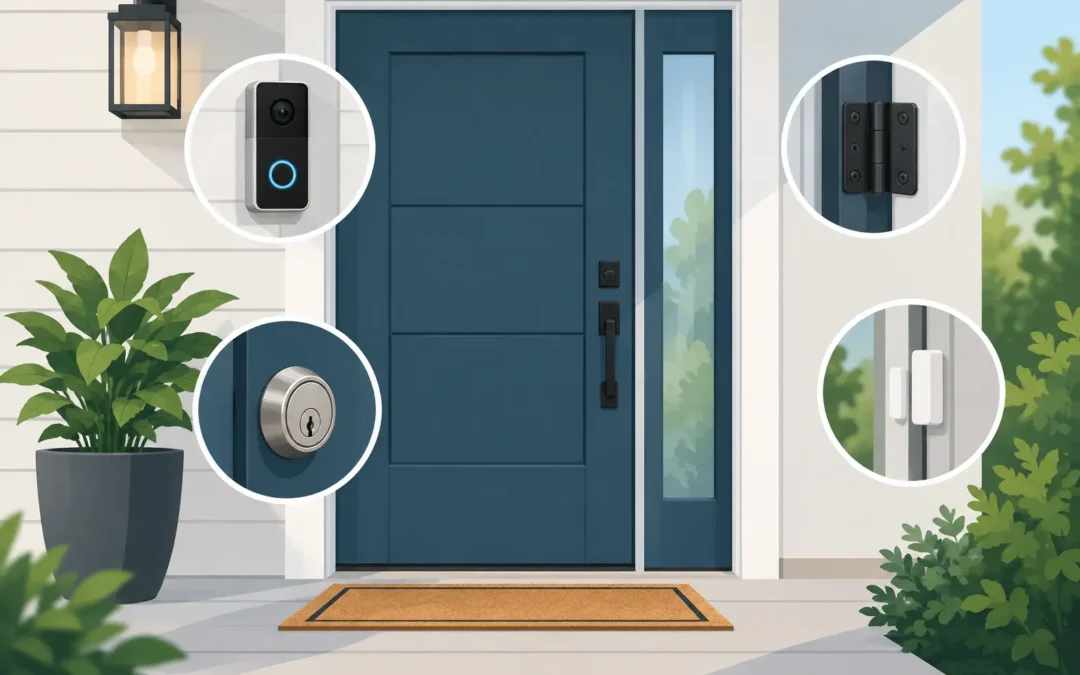
A front or back door can look perfectly sound while still having weak points around the lock, hinges, glass or frame. The most worthwhile door security upgrades are not always the most visible ones. They are the changes that make forced entry more difficult, keep the door properly aligned and give you confidence when you leave the house or settle in for the night.
For most homes, the right answer is a practical combination of quality hardware, a well-fitted door and sensible use. There is no need for scare tactics or a one-size-fits-all replacement. Start by looking at the door you have, how it is used and where its vulnerabilities may be.
Start with the door and frame
Security hardware can only perform as well as the door and frame holding it. A door that catches, drops on its hinges, has a loose frame or leaves visible gaps around the edge needs attention before a new lock alone will make much difference.
Try opening and closing the door slowly. It should move freely, latch securely and sit evenly in the frame without needing to be lifted, pushed or pulled into place. If the key is difficult to turn, the handle is loose, or the door moves when locked, those are signs that adjustment or repair may be needed.
Timber doors can suffer from swelling, movement and wear over time. Older uPVC doors may drop slightly on their hinges, putting pressure on the locking points. Aluminium and composite doors are generally stable, but their locks, keeps and hinges still need to be correctly set. Professional adjustment can often restore secure operation without the expense of replacing an otherwise good door.
When replacement is the better option
A replacement door is worth considering when the existing slab or frame is damaged, badly warped, poorly fitted or no longer suitable for modern locking systems. It can also make sense if you are replacing old single glazing, thin decorative panels or a door with no meaningful reinforcement.
A modern composite, PVC-u or aluminium entrance door can combine a stronger construction with a multi-point locking system, reinforced hinges and secure glazing. The choice depends on the appearance you want, your budget and the opening itself. Composite doors are popular for their solid feel and traditional styling, while aluminium offers slim sightlines and a contemporary finish. A well-specified PVC-u door can also provide strong, dependable security at a more accessible price point.
Upgrade the lock, not just the handle
The lock is often the first upgrade homeowners think about, and for good reason. However, the correct lock depends on the type of door.
Many uPVC, composite and aluminium doors use a euro cylinder within a multi-point locking mechanism. Lifting the handle engages several locking points along the edge of the door, then turning the key secures them. On an older door, upgrading the cylinder to a high-security, anti-snap model can be a sensible improvement, particularly if the current cylinder protrudes beyond the handle or is of unknown age.
A cylinder should sit neatly within the security handle rather than sticking out where it could be gripped. The cylinder must also be the correct length for the door and furniture. Fitting the wrong size can undermine the benefit of buying a better product.
For timber doors, a British Standard mortice lock or suitable night latch may be appropriate, depending on the door construction and whether there is a separate handle lock. Your home insurer may specify a minimum lock standard, so it is sensible to check the policy wording before making changes.
Avoid treating a stiff lock as a minor annoyance. Forcing a key can damage the cylinder or mechanism and may leave you unable to secure the door properly. A locksmith or door repair specialist can identify whether the issue is the cylinder, alignment, gearbox or handle before recommending a replacement.
Do not overlook hinges and keeps
On outward-opening doors, exposed hinges need particular attention. Security hinges, hinge bolts or dog bolts help resist an attempt to force the hinged side of the door. On modern doors, hinges may include built-in security features, but they still need to be secure, correctly adjusted and free from excessive movement.
The keeps are the metal plates in the frame that receive the locking points. If the door has dropped, the hooks, rollers or bolts may not fully engage with them. This can reduce security and put strain on the handle and mechanism. A straightforward realignment can make the whole locking system work as intended.
For patio, French and bi-fold doors, check every opening section rather than focusing only on the main traffic door. Sliding doors should lock firmly and remain difficult to lift from their tracks. French doors should have secure meeting stiles and locking points on the inactive leaf. Bi-fold doors need careful installation and adjustment because multiple panels, tracks and hinges work together.
Glass is part of door security upgrades
Glazed panels bring light into a hallway and can transform the look of an entrance, but the glass specification matters. Older doors may have single glazing or panels that are no longer suitable for the location. Toughened or laminated safety glass can offer better resistance and safer breakage behaviour, depending on the panel and door design.
Laminated glass is especially useful where you want the pane to remain held together after impact. Toughened glass is designed to break into small pieces rather than dangerous shards. Neither option should be chosen in isolation: the glazing beads, panel construction and overall door system must also be secure.
If there is glass close to a thumbturn, letterplate or internal release, consider whether somebody could reach through a broken pane to operate it. In some layouts, a key-operated cylinder rather than a thumbturn may be more suitable. This does mean keeping the key accessible for a quick exit in an emergency, but out of sight and reach of the glass. The best arrangement depends on the door layout and how the household uses it.
Fit matters as much as the product
A quality lock fitted badly is not a quality security upgrade. Doors need to be surveyed accurately, installed squarely and tested under normal use. The lock should engage smoothly, the seals should sit correctly and the frame should be securely fixed to the surrounding opening.
This is where a proper survey is valuable. Measurements alone do not reveal a bowed frame, uneven threshold, damaged brickwork or a door that has moved over time. A fitter who understands repairs as well as installation can advise whether adjustment, replacement parts or a complete new door is the sensible route.
At Pearson Glazing, the focus is on giving homeowners a straightforward answer rather than pushing a replacement where a repair will do. For homes across south-east London and Kent, that may mean upgrading a cylinder and realigning the door, replacing failed hardware, or specifying a new door where the existing one has reached the end of its useful life.
Everyday habits still count
Even the best hardware needs to be used properly. A multi-point door should be fully locked with the key when the property is empty and at night, not simply pulled shut. Keep keys away from letterplates and glazed panels, and do not leave a spare key in an obvious place outside.
It is also worth checking doors after tradespeople, deliveries or work in the garden, particularly side and rear entrances that are less visible from the street. If you have just moved in, changing the cylinders is a simple way to know exactly who has keys to the property.
Good exterior lighting can complement physical security by making approaches and doorways easier to see. It is not a substitute for a secure lock and frame, but it can make daily use safer and more convenient.
Choosing the right level of protection
Not every home needs the same upgrade. A well-maintained composite front door with a modern multi-point lock may only need a cylinder review and occasional adjustment. An older rear uPVC door with a loose handle, worn keeps and basic glazing may benefit from a more thorough repair. A damaged timber door or poorly fitted old unit may be better replaced altogether.
The useful question is not, “What is the strongest lock available?” It is, “What will make this particular door secure, reliable and easy to use?” A clear assessment of the door, frame, locks and glazing will give you a better answer than a sales pitch ever could. Small, well-chosen improvements can make coming home feel exactly as it should: simple, secure and reassuring.
Recent Comments