
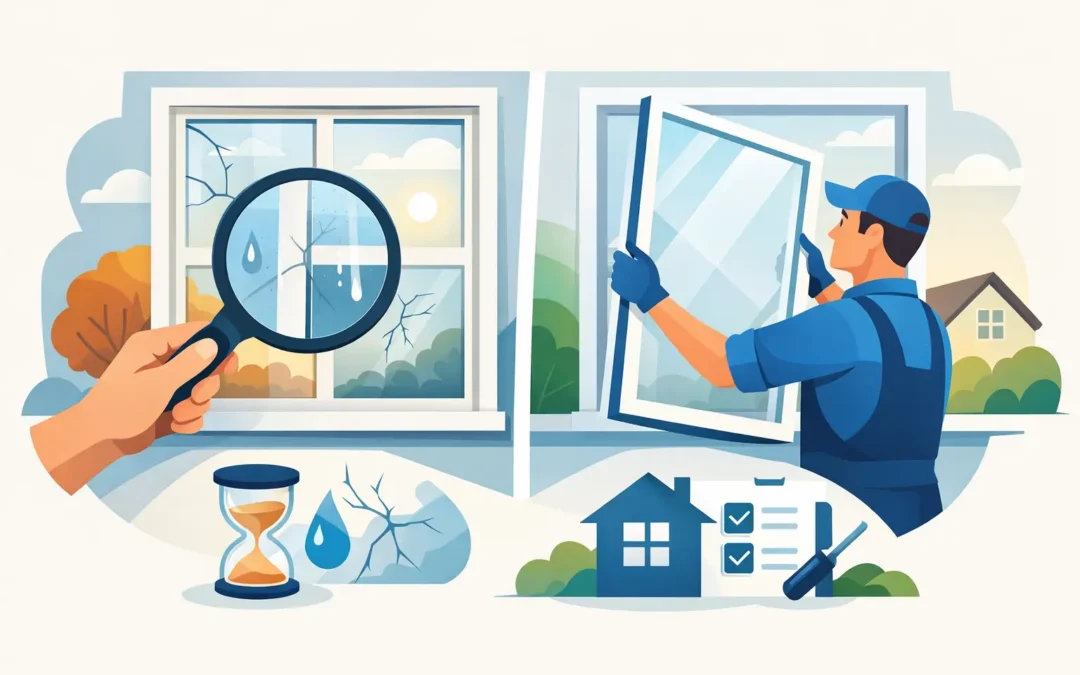
A window can look perfectly acceptable from the pavement while quietly making a room colder, noisier and less secure. So, when should double glazing be replaced? Usually, it is not simply about the age of the window. The right decision comes down to what has failed, whether it can be repaired properly, and whether the frame and fittings are still doing their job.
A misted pane does not always mean a whole new window is needed. Equally, repeatedly replacing small parts on a tired, draughty window can be false economy. A straightforward assessment should give you a clear answer without the hard sell.
When should double glazing be replaced?
Double glazing should be considered for replacement when the sealed units have failed alongside wider problems with the frames, opening mechanisms, locks or overall performance. If one part has worn out but the rest of the window is sound, a targeted repair or replacement glass unit may be the sensible option.
The useful question is not just, “Can this be fixed?” Almost anything can be patched up. It is, “Will the repair leave me with a reliable, secure and energy-efficient window?” If the answer is no, replacement is likely to offer better value over time.
Condensation between the panes
Moisture, mist or droplets inside the gap between two panes is one of the clearest signs of a failed double-glazed unit. The perimeter seal has broken down, allowing moisture into the cavity. Once this happens, the insulating performance is reduced and the glass can become permanently cloudy.
If the frame is in good condition, it may be possible to replace only the sealed glass unit. This is often a practical solution for uPVC, aluminium and timber windows where the hinges, handles, locks and frame remain sound. You do not necessarily need to replace an entire window because one pane has misted up.
However, if several units have failed, or the frames are warped, cracked or difficult to operate, a full replacement may be the more dependable choice.
Persistent draughts and cold rooms
A little cold around glass on a winter morning is not unusual. A noticeable draught from the edges of a closed window is different. You may feel it around the opening sash, hear rattling in windy weather, or find that one room never warms up as well as the others.
Draughts can be caused by worn seals, poorly adjusted hinges, damaged gaskets or a frame that has moved over time. These faults are sometimes repairable. Replacement should be considered where repairs will not restore a proper seal, or where old units and frames are consistently allowing heat to escape.
Pay attention to your heating habits as well. If you are regularly turning the thermostat up to compensate for cold spots near windows, your glazing may be contributing more to your bills than you realise.
Frames that are damaged or deteriorating
The condition of the frame matters just as much as the glass. Cracked uPVC, corroded aluminium, rotten timber and warped frames can all affect weather resistance, security and how smoothly a window opens and closes.
Some local damage can be repaired, particularly if it is caught early. But widespread deterioration is a strong reason to replace the window. A new sealed unit fitted into a compromised frame will not solve the underlying problem.
Look for discolouration, gaps at the joints, soft or crumbling timber, water marks around the inside of the reveal, and frames that visibly bow or sit unevenly. These are not purely cosmetic concerns. They can allow rainwater and cold air into the property.
Windows that will not open, close or lock properly
A window should shut firmly, lock securely and open safely when you need ventilation or an escape route. Stiff handles, dropped hinges and faulty mechanisms may be repairable with replacement parts or adjustment. In many cases, replacing a handle, lock or hinge is far more cost-effective than replacing the whole window.
The decision changes when the problem is part of a wider failure. For example, if the sash no longer lines up with the frame because the frame has distorted, fitting a new handle will not make the window secure. Windows that do not lock properly should be dealt with promptly, particularly on ground floors and easily accessible upper-floor windows.
Noticeably more outside noise
Double glazing can reduce outside noise, but it is not a complete sound barrier. If traffic, aircraft or neighbours seem much louder than they used to, check first for failed seals, gaps and poorly closing sashes. A repair may reduce the noise significantly.
Where your current windows are old, thin or poorly fitted, replacement can improve comfort. The right specification matters here. Different glass thicknesses, wider cavities and specialist acoustic glass can make a meaningful difference, especially for homes on busy roads in south east London and Kent. There is no benefit in paying for an upgrade that does not suit the noise issue you are trying to solve.
Repair, replacement glass or new windows?
There are three sensible routes, and each suits a different problem. A repair is usually appropriate for faulty handles, hinges, locks, letterplates, seals and minor adjustments. It preserves a sound existing window and deals with the specific fault.
Replacement glass is often suitable when condensation is trapped between the panes but the frame remains secure, stable and in good order. It can refresh the appearance and thermal performance of the window without the cost and disruption of changing the frame.
Full window replacement is more appropriate when problems are widespread. That may include multiple failed units, damaged frames, ongoing draughts, poor security, water ingress or windows that have reached the point where replacement parts are no longer a reliable answer. It can also be the right choice where you want to change the style, improve ventilation or upgrade the overall look of the property.
A proper survey should consider all of these factors rather than treating every misted pane as a new-window sale. The best outcome is the one that fixes the problem properly and makes financial sense.
How long does double glazing normally last?
There is no fixed expiry date for double glazing. Well-made, well-installed windows can perform well for many years, while exposure, maintenance, installation quality and the type of frame all influence their lifespan. Sealed units may fail before the frames do, which is why glass-only replacement is sometimes possible.
South-facing windows can experience more heat and UV exposure. Coastal or highly exposed properties may face harsher weather. Windows in kitchens and bathrooms also deal with more internal humidity. Age is useful context, but symptoms are more useful than a number on its own.
If your windows are around 15 to 20 years old and several issues are appearing at once, it is reasonable to investigate replacement. If they are the same age but still close neatly, lock well, remain draught-free and have clear units, there may be no reason to change them yet.
Do not confuse internal condensation with failed double glazing
Condensation on the room-facing side of the glass is commonly caused by moist air inside the home meeting a cold surface. Cooking, showering, drying clothes indoors and limited ventilation can all contribute. It does not automatically mean the double glazing has failed.
Condensation on the outside pane can also be normal. In fact, it can indicate that the glass is insulating well enough for the outer surface to stay cool. The key warning sign is moisture between the panes, where you cannot wipe it away from either side.
Before replacing windows because of internal condensation, consider ventilation. Using extractor fans, opening trickle vents where fitted, covering pans when cooking and allowing moisture to escape can make a real difference. If there are also draughts, mould around frames or water ingress, then the windows should be inspected as part of the picture.
What to expect from a replacement assessment
A useful glazing assessment should feel practical, not pressured. The person inspecting your windows should look at the glass, frames, seals, drainage channels, hinges, handles and locking points. They should also ask what you have noticed: cold rooms, noise, difficulty opening windows, security concerns or condensation.
Ask whether a repair is possible, whether the glass alone can be changed, and what will make replacement worthwhile in your particular case. Clear answers on the work required, likely disruption and price help you compare the options fairly.
Pearson Glazing takes this straightforward approach, with experienced fitters who also survey the work. That means the advice can focus on the condition of your existing glazing and the solution that is genuinely appropriate, whether that is a repair, replacement glass or a complete upgrade.
If a window is misted, draughty or no longer locking as it should, do not wait for the problem to become more expensive. A timely inspection can often show whether a small repair will keep it going or whether replacing the glazing will give your home the comfort and security it has been missing.
Recent Comments