
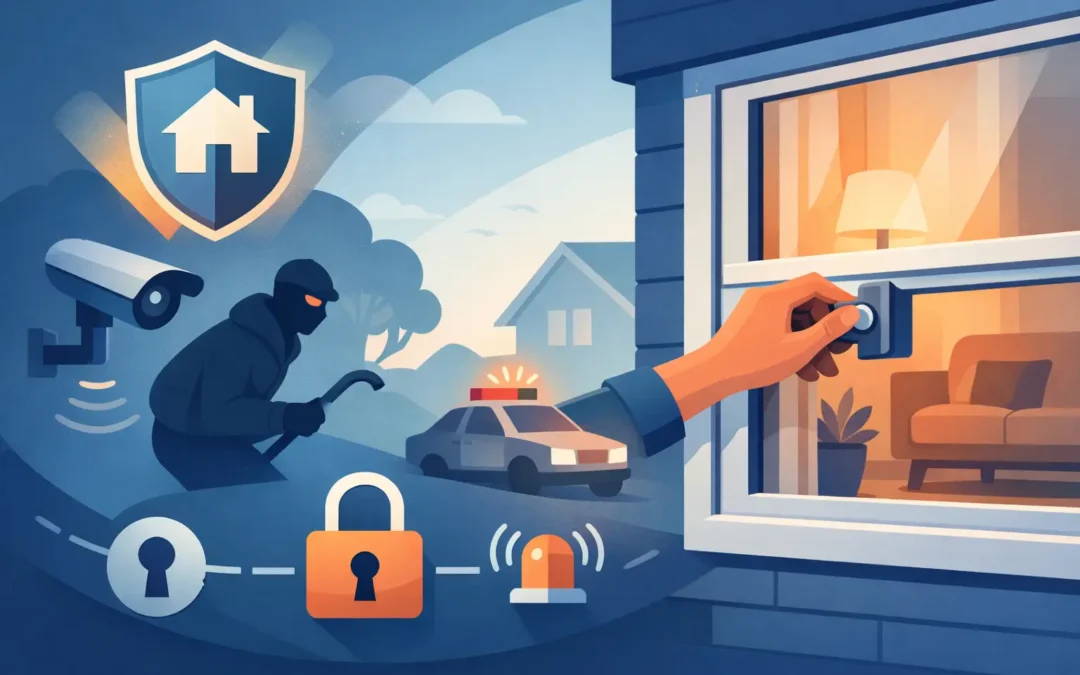
A window can look perfectly sound from inside the house while a worn lock, loose handle or damaged hinge leaves it far easier to force than it should be. Good window security is not about making your home feel like a fortress. It is about making sure every window closes properly, locks securely and gives an intruder no easy opportunity.
For many homeowners, the first sign of a problem is small: a key that sticks, a sash that drops when opened, a handle that turns too freely or a window that no longer sits squarely in its frame. These are worth dealing with promptly. Security depends on the whole window working together, not simply on whether there is a lock fitted.
Window security starts with the condition of the window
A modern window is a combination of glazing, frame, locking hardware, hinges and installation. If one part is failing, the security of the complete unit can be affected. A high-quality lock cannot do its job properly if the sash is misaligned, and toughened or laminated glass offers less reassurance if the frame is loose or the beading can be removed from outside.
Start by checking every accessible window, including those on upper floors that can be reached from a flat roof, extension or garage. Open and close each one. It should move without excessive force, sit evenly when shut and lock without needing to lift, push or pull it into position.
Look for visible gaps around the sash, cracked handles, missing keys, damaged seals and signs that the frame has moved. Timber, uPVC and aluminium windows all have different maintenance needs, but none should be ignored when their operation changes. Small adjustments and replacement parts can often restore a window’s performance without the cost of replacing the full unit.
The locks matter, but fitting matters too
Most current replacement windows use multi-point locking systems. When the handle is operated, several locking points engage around the sash rather than relying on one central catch. This makes it much harder to force the opening side of the window away from the frame.
Older windows may have simpler catches, separate locks or hardware that no longer meets current expectations. That does not automatically mean the windows must be replaced. In some cases, new handles, locking mechanisms or restrictors can provide a worthwhile improvement. The right option depends on the window style, its age and whether suitable replacement parts are available.
The key point is that locks need to engage fully. If a handle turns but the locking points do not line up, the window may appear locked when it is not properly secure. This is common where hinges have worn, the sash has dropped slightly or the frame has settled over time. A professional survey can identify whether the issue is adjustment, repair or replacement.
Keep keys secure, but accessible in an emergency
Where windows have key-operated handles, keep the keys somewhere safe and known to the household. Avoid leaving them permanently in the lock, particularly on ground-floor windows or beside a door. At the same time, make sure they can be found quickly if the window may be needed as an emergency escape route.
Bedroom windows are a good example of where security and safety need to be balanced. A window should not be left easy to open from outside, but occupants must be able to get out if there is a fire. If you are unsure whether your current arrangement is suitable, ask an experienced glazing professional to assess it rather than making assumptions.
Choose glazing for the location and risk
The glass itself is an important part of window security, especially on ground-floor windows, side access routes and areas hidden from the street. Standard double glazing provides a good everyday level of performance when combined with a secure frame and locks. However, some locations benefit from safety or security glass.
Toughened glass is designed to break into small, less dangerous pieces. It is commonly used where safety is a concern, such as in doors and low-level glazing. Laminated glass uses an interlayer that helps hold the pane together when broken. This can make forced entry more difficult and can be a sensible choice for vulnerable areas.
There is no need to specify the same glass throughout every property. A first-floor bathroom window that is difficult to reach may not need the same level of protection as a large rear window facing a secluded garden. A practical survey should consider access, visibility, the type of room and how the window is used, rather than pushing a one-size-fits-all upgrade.
Do not overlook hinges, restrictors and beading
Casement windows depend heavily on their hinges. Worn hinges can create a gap on the hinge side or prevent the sash from closing tightly against the seals. Aside from draughts and water ingress, this can affect the locking points and make the window easier to manipulate.
Restrictors are useful where a window needs to open for ventilation but should not open wide. They are particularly helpful in homes with young children, upper-floor rooms and windows near pathways or side access. A restrictor is not a substitute for a good lock, but it can limit how far the window opens when it is in use.
External beading also deserves attention. On many modern systems, the glazing beads are fitted internally to prevent the glass being removed from outside. If you have older windows with external beading, the condition and security of the beads should be checked. Loose, damaged or poorly fitted beads are a clear reason to arrange a repair or replacement assessment.
Everyday habits that support a secure home
Hardware and glass are only part of the picture. The way windows are used makes a real difference, particularly during warmer months when it is tempting to leave them open overnight or while popping out.
Keep ground-floor and easily accessible windows shut and locked whenever the property is empty. Do not leave keys in handles where they can be reached through a broken pane or opening. If ventilation is needed, use a lockable night-vent position where available, or fit suitable restrictors rather than leaving a window fully open.
Curtains, blinds and outdoor lighting can also reduce opportunity, but they should support physical security rather than replace it. A bright light may discourage someone from lingering around a side passage, yet it will not compensate for a window that does not lock properly.
It is also worth checking windows after decorators, builders or other trades have been working nearby. A window can be knocked out of adjustment, and handles or keys may be misplaced during larger home improvements. Taking five minutes to test them is far easier than finding a problem later.
When repair is enough and when replacement makes sense
Repair is often the sensible first step when a window is otherwise in good condition. Replacement handles, locks, hinges, sealed units and glass can address common faults and extend the life of an existing installation. This is especially useful where only one or two windows are causing concern.
Replacement may be the better long-term choice where frames are badly damaged, the locking system is obsolete, there is repeated water ingress or several parts are failing together. New uPVC or aluminium windows can improve security, warmth and everyday operation at the same time, but they should be chosen for the property and installed carefully. The best specification on paper will not perform as intended if the survey or fitting is poor.
A straightforward assessment should explain what has failed, what can be repaired and what the likely costs are before any work begins. At Pearson Glazing, that practical approach matters: the aim is to recommend the work your windows need, not to turn every faulty handle into a full-house sales pitch.
A sensible next step for safer windows
If a window feels loose, sticks when locking, has visible damage or simply has not been checked in years, arrange an inspection before the issue becomes more expensive. A secure home is usually built through ordinary details done properly – a correctly fitted sash, working hinges, suitable glazing and locks that engage every time.
Recent Comments