
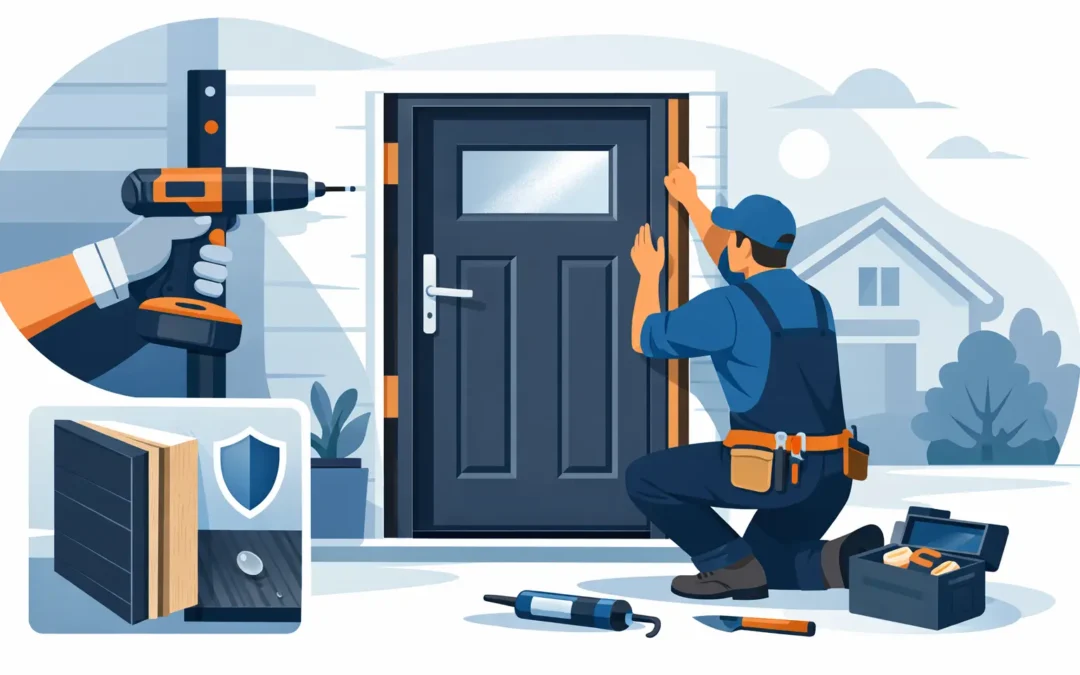
A front door can look solid enough from the outside and still be letting the house down. Draughts around the frame, a lock that sticks, swelling in damp weather, or a tired appearance all tend to show up long before most people are ready to deal with them. That is usually when composite front door installation moves from a nice upgrade to a sensible next step.
For many homeowners, the appeal is straightforward. A composite door is built to offer the look of a traditional entrance door with better stability, better weather resistance and a stronger overall feel than many older timber or basic PVC-u options. But the door itself is only half of the job. The quality of the installation has a direct effect on security, insulation, how the door operates, and how well it keeps performing over time.
Why composite front door installation matters
A good composite door should close cleanly, lock properly and sit square in the opening. That sounds obvious, but poor fitting can cause problems from day one. Even a high-quality door can underperform if the frame is not aligned correctly, the opening has not been prepared properly, or the finishing work is rushed.
This is why installation is not just about swapping one door for another. The fitter needs to assess the existing opening, check for any movement or damage around the frame, make accurate measurements and make sure the new door is suited to the property. Older homes in particular can be less forgiving, as brickwork may be uneven and previous installations may have hidden issues behind trims or sealant.
A properly installed composite front door should improve day-to-day use as much as appearance. You should notice a firmer close, less movement in the door slab, fewer draughts around the edges and a generally more secure feel every time you use it.
What to expect from composite front door installation
Most homeowners want to know one thing first – how disruptive is it? In most cases, replacing an existing front door is fairly manageable. The old door and frame are removed, the opening is checked and prepared, and the new frame and door are fitted, adjusted and sealed. If everything is straightforward, the work is often completed within a day.
That said, not every opening is straightforward. If the old frame has been fitted poorly, if there is damage to surrounding plaster or masonry, or if the threshold needs adjustment, the job can take longer. That is not a bad sign. In many cases, taking the time to correct those issues is exactly what leads to a better result.
You should also expect a proper survey before the installation date. This is where accurate measurements are taken and details such as door style, glazing design, hardware, threshold type and opening direction are confirmed. It is much better to sort those points early than to discover a problem when the new door arrives.
For a service-led company, the survey stage should feel practical rather than sales-focused. Clear advice matters here, especially if you are choosing between decorative glazing, privacy levels, sidelights or colour options. The right choice is not always the most expensive one. It depends on the house, the amount of light you want in the hallway and how much exposure the front entrance gets from weather and passing foot traffic.
The key stages on installation day
On the day itself, the process should be tidy and methodical. The existing door is removed first, followed by the old frame if it is a full replacement. The opening is then checked to make sure the new frame can be fixed securely and levelled correctly.
Once the frame is in place, the door leaf is hung and adjusted so the gaps are even and the locking system engages smoothly. That part matters more than many people realise. A door can technically shut, but if it needs to be forced into place or the handle feels tight, something is off. Final sealing, trims and making good come after the fit has been tested and checked.
A reliable installer should also talk you through the finished door before leaving. That includes showing you how the lock works, confirming the keys and hardware, and making sure everything feels right in use.
Choosing the right door for the property
Composite doors are popular because they offer a wide range of styles, but appearance should not be the only factor. The best option is usually the one that suits both the house and the way you use the entrance.
For example, a fully glazed top section can brighten a dark hallway, but privacy may become an issue if the front door opens straight into a main living area. A low threshold can make access easier, but it needs to be suitable for exposure to wind and rain. Darker colours often look smart and modern, though south-facing entrances can experience more heat and sun exposure than sheltered porches.
Security hardware is another point worth discussing properly. Multi-point locking systems are common on composite doors, but the overall security of the installation depends on more than the lock alone. Frame fixing, hinge quality, glazing specification and correct adjustment all play a part.
This is where practical guidance is more useful than a hard sell. If a homeowner is comparing options, they usually need honest advice on what will work well and last, not pressure to upgrade every feature.
Common concerns about composite front door installation
One of the most common worries is whether a new door will create mess or damage around the entrance. Some making good is normal, particularly when replacing an old frame, but it should be kept controlled and finished neatly. A careful installation team will protect surrounding areas, work cleanly and leave the property secure before they go.
Another concern is whether the new door will really make a noticeable difference. In most cases, yes – especially if the existing door is outdated, poorly fitted or worn. The improvement is often immediate in terms of how solid the entrance feels, how quietly the door closes and how much less outside air comes through.
Price is also a fair question. Composite doors generally cost more than basic alternatives, but they are often chosen because they offer a better balance of appearance, durability and performance over the longer term. The cheapest door is not always the best value if it needs earlier adjustment, repair or replacement.
Aftercare and long-term performance
A well-fitted composite door should not need constant attention, but a little aftercare helps. Keeping the frame and seals clean, checking moving parts occasionally and using the lock and handle correctly all support long-term performance.
You may need minor adjustments over time, particularly as a house settles or if seasonal temperature changes affect alignment slightly. That does not mean the installation was poor. Doors are working parts of the home, and like windows, hinges and locks can benefit from occasional servicing.
That is one reason many homeowners prefer a company that handles both installation and repairs. If a handle becomes stiff or a lock needs adjustment later on, it is reassuring to know support is available from people who understand the full job, not just the initial sale.
Getting the installation right first time
The best composite front door installation is the one you stop thinking about quite quickly. It opens and closes properly, it keeps the weather out, it feels secure, and it suits the house. There should be no need to wrestle with the handle, apologise for the appearance of the entrance, or keep adding draught excluders every winter.
If you are replacing a front door, it is worth focusing on the full process rather than the brochure image alone. The survey, the fitting standard and the aftercare all matter. A dependable installer will explain what is suitable, measure properly, fit it carefully and keep the experience straightforward. That is the sort of improvement that pays off every time you come home.
For homeowners in South East London and Kent, that practical, no-pressure approach is often what makes the decision easier. Pearson Glazing works in that way for a reason – because a new front door should feel like a sensible upgrade, not a drawn-out sales exercise.
A front door is something you use every day, so it is worth getting one that looks right, feels right and is fitted properly from the start.
Recent Comments