
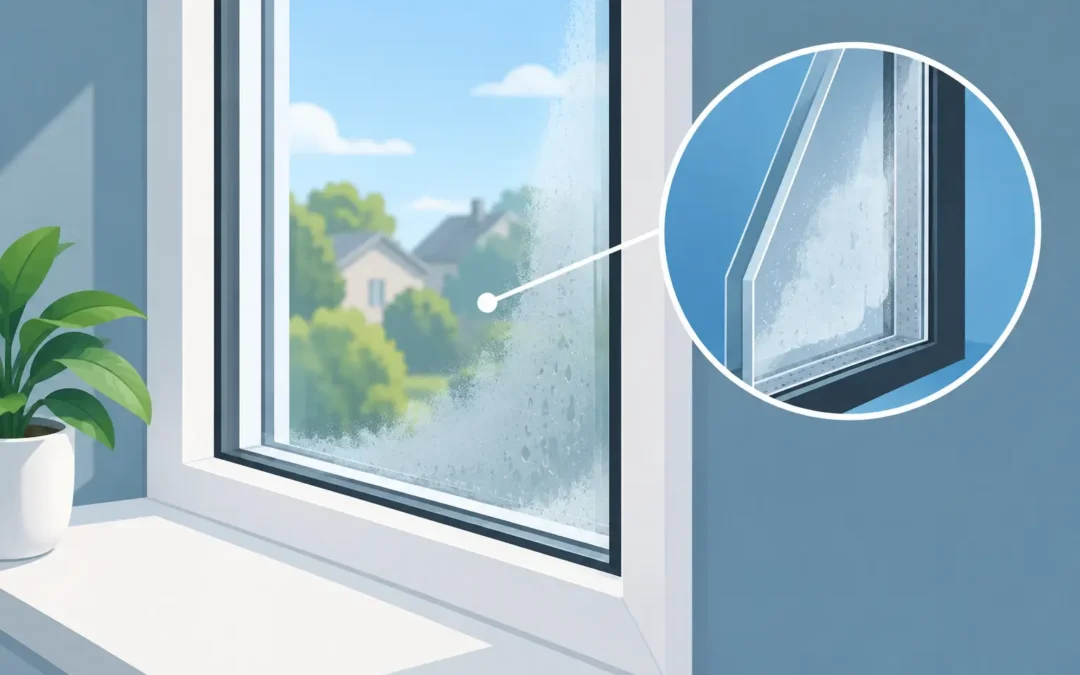
A clear view that turns milky on a cold morning is often the first sign something has changed inside your window. Knowing how to spot failed glazing can help you act before a small issue affects your comfort, heating bills or enjoyment of the room. The good news is that failed glazing does not always mean replacing the whole window.
What failed glazing actually means
Most modern double-glazed and triple-glazed windows are sealed units. They are made from two or three panes of glass, separated by a spacer bar and sealed around the edge. The gap is filled with air or insulating gas, while a drying material inside the spacer helps keep moisture out.
Glazing failure happens when that perimeter seal breaks down. Moist air can then enter the gap between the panes, causing condensation, misting or visible marks that cannot be wiped away from either side of the glass.
This is different from ordinary condensation on the room-facing side of a window. Surface condensation is usually caused by moisture in the home meeting cold glass. Failed glazing is trapped inside the unit itself. It is a problem with the sealed glass unit, not necessarily the frames, hinges or locks around it.
The clearest signs of failed glazing
Condensation between the panes
This is the most recognisable sign. If you can see droplets, cloudiness or mist trapped within the double glazing, the seal has almost certainly failed. Try cleaning both accessible surfaces of the glass first. If the mark remains, it is inside the unit.
It may look worse early in the morning, when temperatures are lower, then become less obvious later in the day. That does not mean the problem has gone away. The moisture is still inside the cavity and the seal will not repair itself.
A cloudy, hazy or dirty-looking pane
Not every failed unit has obvious beads of water. Some develop a permanent hazy appearance, often around the edges at first. Others show a grey film, white staining or small marks between the panes that make the glass look dirty however carefully you clean it.
In older units, you may also notice a slightly rainbow-like effect or mineral deposits inside the glass. These can appear after moisture has repeatedly formed and dried within the sealed space.
Draughts and cold patches near the window
Failed glazing reduces the insulation performance of the sealed unit. You might notice the room feels colder when sitting near the window, or that one pane feels noticeably cooler than another in the same room.
A cold spot alone does not prove the glazing has failed. It could be caused by a gap around the frame, a worn rubber gasket, poor adjustment or an opening sash that no longer closes tightly. However, if cold areas appear alongside misting between the panes, a failed unit is likely.
More outside noise than before
Double glazing helps reduce noise as well as heat loss. When a unit loses its seal, its performance can be affected, although the change is often gradual. If traffic, neighbours or rain sound more noticeable and the glass is also misted, it is worth having the unit checked.
Noise can also enter through gaps around a window or door, so this is another sign that needs to be assessed alongside the condition of the glass and frame.
Discolouration around the edge of the glass
Look closely at the perimeter of the pane, particularly in corners and along the bottom edge. Dark lines, staining near the spacer bar or deterioration of the sealant can indicate that the unit is ageing.
Some edge marks are purely cosmetic, while others point to a seal that is beginning to fail. A professional inspection can establish whether replacement is needed now or whether the window can continue to be monitored.
How to spot failed glazing rather than normal condensation
The location of the moisture gives the strongest clue. Condensation on the inside face of the glass can usually be wiped away. It is common in kitchens, bathrooms and bedrooms where there is more moisture in the air, particularly during colder months.
Condensation on the outside face of an energy-efficient window can also be normal. In fact, it can show that the inner pane is retaining warmth well enough that the outer pane stays cool. Outside condensation should disappear as the day warms up.
Moisture between the panes is different. You cannot reach it with a cloth, and it may leave permanent haze or marks. That is the hallmark of failed glazing.
If you are unsure, check the window at different times of day and in different weather conditions. Take a photograph when the misting is clear. This can be useful when arranging a survey, especially if the issue is intermittent.
Why sealed units fail
Even quality double glazing has a working life. Constant changes in temperature make glass and frames expand and contract, putting pressure on the edge seals over many years. Direct sun, exposed locations and poorly draining frames can all add to that wear.
A failed unit can also follow accidental damage, movement in the building, or an issue with the original installation. Windows in a conservatory may be under greater pressure from heat and sunlight, while glazed doors are more likely to experience everyday knocks and vibration.
The important point is not to assume you have done anything wrong. In many cases, sealed-unit failure is simply a maintenance issue that appears as the glazing ages.
Does failed glazing mean you need new windows?
Usually, no. If the uPVC, aluminium or timber frame is sound, opens and closes properly, and remains secure, the glass unit can often be replaced on its own. This can restore the appearance and insulation of the window without the cost and disruption of replacing the complete frame.
A replacement glass unit needs accurate measuring and specification. The thickness, spacer, toughened safety glass requirements, decorative pattern and coating all matter. Door glass and low-level glazing, for example, may need toughened glass, while a bathroom window may need obscure glass for privacy.
Full window replacement may be the better choice when there are several problems at once. Frames that are warped, damaged or badly discoloured, opening sashes that no longer operate correctly, persistent draughts around the frame, and obsolete single glazing can make a wider upgrade more sensible.
There is no benefit in being pushed into a full replacement when a glass-only repair will do the job. Equally, repeatedly replacing individual units in a window that is otherwise failing can become false economy. A proper survey should give you a clear explanation of both options.
What to do when you notice a problem
Start by checking whether the moisture is on the room side, outside, or between the panes. Clean the accessible glass, inspect the edges of the unit and look for other symptoms such as draughts, difficulty closing the window or damaged seals.
Avoid drilling into the glass or trying to remove moisture yourself. Products that claim to clear misted units may improve the appearance temporarily, but they do not recreate the factory seal or restore the original insulating performance. The reliable remedy is normally replacement of the failed sealed unit.
It is also worth checking your paperwork if the windows were installed relatively recently, as the glass may still be covered by a guarantee. Keep any photographs and note which rooms and panes are affected.
For homeowners in South East London and Kent, an experienced glazing survey can identify whether the issue is limited to the glass, related to the window hardware, or part of a wider problem. Pearson Glazing takes a practical approach: assess what is there, explain what needs doing and recommend the repair or replacement that makes sense for the property.
A small repair can make a noticeable difference
Misted panes are easy to put off because the window may still open and lock as normal. But failed glazing can leave a room colder, spoil the appearance of the home and gradually make condensation issues harder to manage.
If a window no longer looks clear, feels colder than it should or has moisture trapped inside the glass, it is worth getting it looked at. A straightforward assessment can give you a clear answer and, often, a simpler fix than you expected.
Recent Comments