
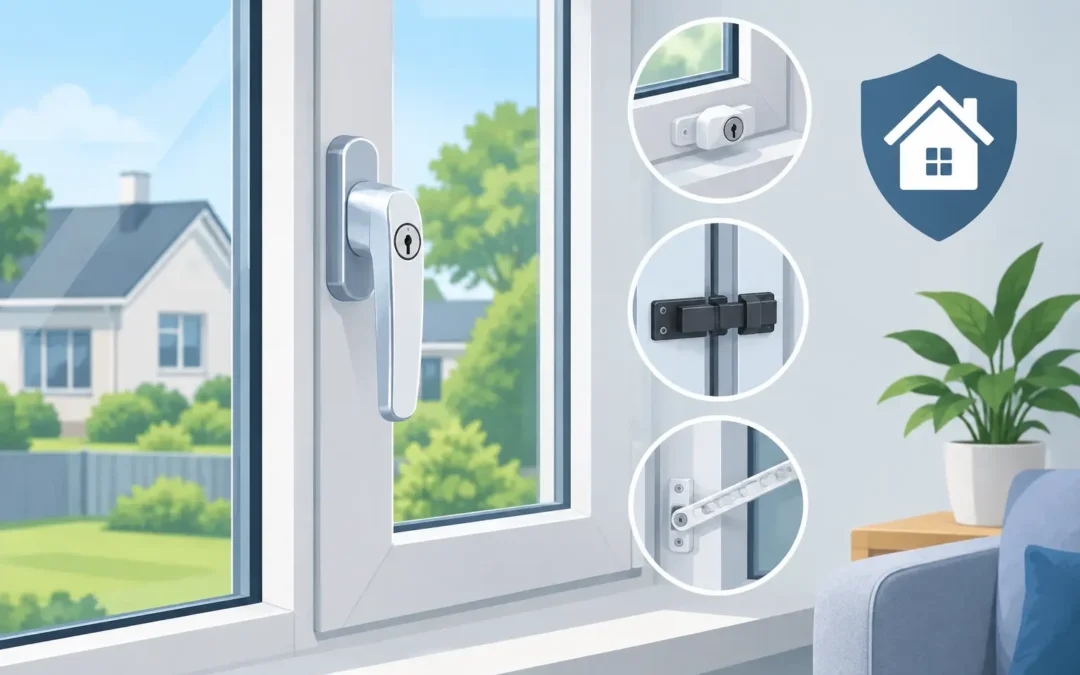
A window handle that turns without properly securing the sash can feel like a small irritation – until it leaves a ground-floor room vulnerable or lets in a draught. Well-fitted window locking systems are a key part of home security, but they also affect how easily your windows open, close and ventilate. The right answer is not always a complete replacement. Sometimes a professional adjustment, new handle or replacement lock is all that is needed.
How window locking systems work
Most modern uPVC and aluminium casement windows use a locking mechanism within the frame rather than relying on the handle alone. Turning the handle moves a concealed metal strip, often called an espagnolette or multipoint lock. This engages locking points around the edge of the opening sash and pulls it tightly against the frame.
The more accurately the sash meets the frame, the better the lock can do its job. A secure window should close smoothly, with no need to lift, push hard or force the handle. When it is locked, the sash should sit evenly against its seals, helping to keep out cold air, rain and outside noise as well as unwanted entry.
The handle is the part you see and use every day, but it is only one piece of the system. A key-locking handle can prevent the handle being operated from inside if glass is broken nearby, while the internal mechanism and locking points provide the main resistance when the window is shut. If the mechanism is worn, damaged or badly aligned, fitting a new key handle alone will not solve the underlying problem.
Common types of window locking systems
The lock fitted to your window depends on its style, age and material. Older windows often use different parts from modern replacements, so it is worth identifying the existing arrangement before ordering a repair.
Espagnolette and multipoint locks
These are widely used on modern uPVC and aluminium casement windows. The handle operates a gearbox, which moves locking points along a metal rail. Depending on the window, those points may be mushroom cams, rollers, bolts or hooks that engage with keeps fixed to the frame.
This arrangement offers strong, even closure across the sash. It also means that poor alignment can affect more than one point at once. A window that catches at the top, leaves a gap on the hinge side or needs a sharp lift before it locks may need its hinges, keeps or sash position adjusted.
Locking window handles
A locking handle is a familiar and useful feature, particularly on accessible windows. It normally has a small key cylinder at the base of the handle. The key should be kept somewhere safe but accessible to the adults in the household, rather than left in the handle all the time.
Handle styles and spindle lengths vary, especially on older uPVC windows. A handle that looks similar may not operate the mechanism correctly, so measuring and matching the part matters. This is one reason a repair visit can be more straightforward than trying several off-the-shelf options.
Sash locks and catch systems
Sliding sash and vertical slider windows commonly use sash fasteners or catches where the two sashes meet. These are designed to hold the window closed, and some versions include a key-operated feature. They can be highly effective when fitted correctly, but they need to be paired with sound frames, well-maintained cords or balances, and a sash that closes squarely.
Restrictors and ventilation catches
Window restrictors limit how far a window opens. They are particularly helpful in upper-floor rooms, homes with young children, and properties where a wide opening creates a safety concern. A restrictor is not a replacement for a main lock, but it can provide useful control when ventilation is needed.
Some windows also have a night-vent position, allowing a small gap while the sash remains partly engaged. Whether this is suitable depends on the location of the window. It may be practical on an upper floor, but it is rarely a sensible security choice for an easily reached ground-floor window.
Security is not just about the number of locks
It is easy to assume that more locking points automatically mean better security. In practice, the whole installation matters. Strong locking hardware is only as effective as the frame, glazing, hinges and fitting around it.
For example, a window with a good multipoint lock can still be compromised if the sash is loose, the hinges are worn or the frame has moved over time. Similarly, double glazing improves comfort and efficiency, but the glass specification and its installation are separate considerations from the lock itself.
For replacement windows, homeowners may wish to ask about security testing and specifications appropriate to their property. A reputable installer should explain the options plainly, including what is included as standard and where an upgrade would offer a genuine benefit. There is no need to pay for features that do not suit the window position or how you use the room.
Signs your window locks need repair
Locks rarely fail without warning. Paying attention to small changes can prevent a window becoming stuck open, difficult to secure or damaged by repeated forcing.
Common warning signs include a stiff handle, a handle that spins freely, a key that will not turn, scraping when the window closes, or locking points that do not engage. You may also notice draughts around one side of the sash, even when the handle is fully down. This can point to alignment issues rather than a failed lock.
Avoid forcing the handle. Excess pressure can break the internal gearbox, strip the handle spindle or damage the keeps on the frame, turning a manageable adjustment into a larger repair. If the window will not lock, close it as securely as possible, avoid leaving the property unattended where practical, and arrange for it to be inspected.
Condensation and general wear can also affect older mechanisms. Dirt in the tracks, paint on moving parts, tired hinges and lack of lubrication all make a lock work harder than it should. A professional can identify whether the mechanism can be adjusted and serviced, or whether a replacement part is the safer long-term option.
When to repair and when to replace
A repair is often the sensible choice when the frames and glass are in good condition. Replacing a faulty handle, gearbox, lock rail, hinge or set of keeps can restore secure operation without the disruption and cost of replacing the full window.
Replacement becomes more worth considering when problems are repeated, frames are distorted, double-glazed units have failed, or the windows no longer provide the comfort, appearance or security you need. If several windows are the same age and have similar faults, comparing the cost of individual repairs with a planned upgrade can help you make a clearer decision.
For older properties, the style of the window matters too. A repair may preserve the character of traditional sash windows, while a carefully chosen replacement can improve thermal performance and everyday ease of use. There is no one-size-fits-all answer – the right route depends on the condition of the existing windows and what you want from them.
Simple care that helps locks last
Window locks benefit from light, regular attention. Keep the frame channels and locking points free from grit, especially after building work or windy weather. Clean the moving metal parts with a soft cloth and use a suitable light lubricant sparingly where recommended. Avoid heavy oils that attract dirt or products that may affect uPVC surfaces and seals.
Open and close each window occasionally, including those in less-used rooms. This helps you spot changes early and makes sure the key, handle and mechanism still operate as expected. If a key is difficult to turn, do not keep trying with force. The issue may be the cylinder, the handle or pressure from a misaligned sash.
Get the lock and the fitting right
Security upgrades work best when they are chosen around the individual window, not picked from a generic shelf. The window type, its location, the age of the frame and the condition of the hinges all affect the suitable repair or replacement.
A proper survey should look beyond the visible handle. At Pearson Glazing, the aim is to give straightforward advice on whether a window can be repaired, adjusted or replaced, without pressure to choose more work than is necessary. For homeowners in south-east London and Kent, this can mean a practical route back to windows that close cleanly, lock properly and give reassurance every time you leave the house.
If a window is stiff, loose or no longer secure, dealing with it early is usually simpler than waiting for the lock to fail completely. A clear assessment from an experienced glazing professional can turn an everyday worry into a straightforward repair decision.
Recent Comments