
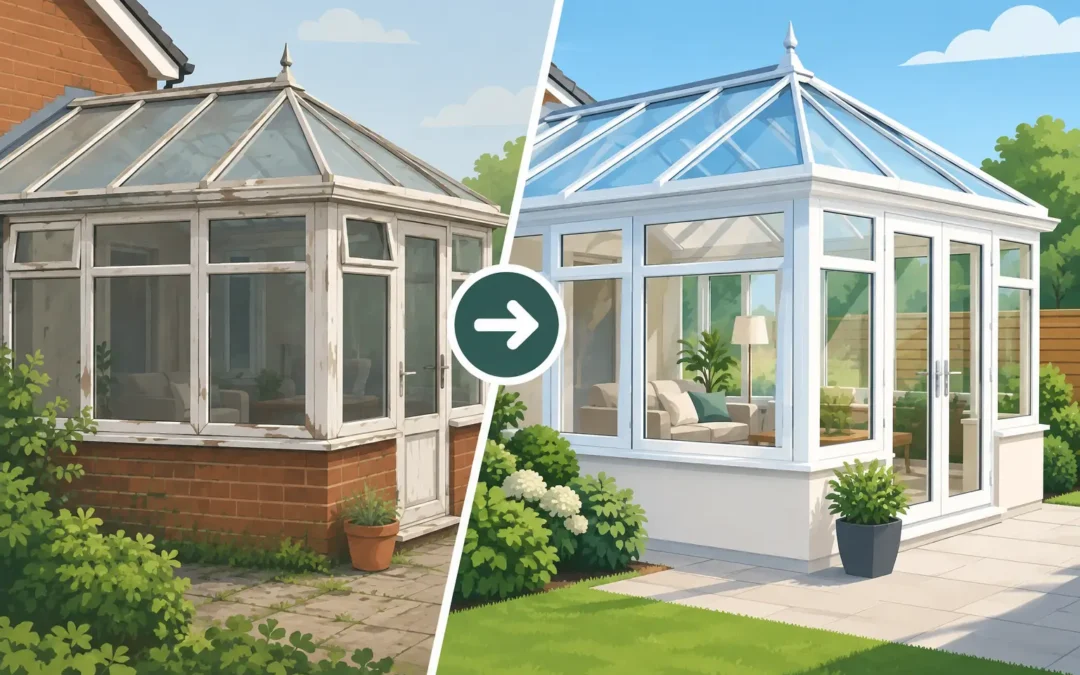
A conservatory should be the room you look forward to using, not the one you avoid in January and close off during a heatwave. If you are wondering how to upgrade an old conservatory, start by looking at what is actually letting it down. It may be the roof, misted glazing, tired doors, poor ventilation or several smaller issues working together.
A full replacement is not always necessary. Many older conservatories have a sound base and structure, which means carefully chosen upgrades can make a noticeable difference to warmth, security, appearance and day-to-day comfort. The right answer depends on the condition of the existing frames and what you want the room to do for your household.
Start with a practical condition check
Before choosing new glass or a replacement roof, assess the conservatory as a whole. Look for failed double-glazed units, draughts around opening windows and doors, discoloured or cracked frames, leaking seals and difficult locks or handles. Water marks on internal finishes can point to roof leaks, blocked guttering or worn joints.
Pay attention to movement too. Doors that catch, gaps appearing around frames or uneven flooring may suggest a structural issue rather than a simple glazing problem. A professional survey is useful here because it separates the upgrades that will genuinely improve the room from cosmetic work that only hides the cause.
The base and dwarf walls are particularly worth checking. If they are dry, stable and well built, retaining them can make an upgrade far more cost-effective than starting again. If there are signs of significant settlement or persistent damp, those problems should be addressed first.
Improve the roof before anything else
For many homeowners, the roof is the biggest reason an old conservatory feels uncomfortable. Traditional polycarbonate roofs are lightweight and affordable, but they can be noisy in rain and offer limited insulation compared with newer options. An ageing glazed roof can also lose heat quickly and allow strong sun into the room.
A replacement roof can transform how the space feels, but there is no single best choice for every property.
A tiled roof for year-round comfort
A lightweight tiled conservatory roof is often chosen by households that want the room to feel more like a proper extension. It can reduce overheating and heat loss, as well as soften the sound of rainfall. The trade-off is that it reduces the amount of overhead light, so it suits conservatories with good side glazing or rooms that already receive plenty of daylight.
A modern glass roof for brightness
Modern performance glass can retain the bright, open character that made conservatories popular in the first place. Solar-control glass helps limit glare and excessive heat while improving insulation compared with older units. It is a strong option where light is the priority, although it will usually cost more than polycarbonate.
Polycarbonate as a budget-conscious replacement
New multiwall polycarbonate is a step up from older sheets and remains a sensible option when budget matters. It is light, practical and can be fitted in a range of tints. It may not provide the same thermal performance or quietness as a tiled or glazed roof, but it can be the right choice for a conservatory used mainly in milder weather.
Changing the roof may require building regulations approval, particularly when replacing a translucent roof with a solid one. A competent installer can explain what applies to your project before work begins.
Replace failed glazing and tired frames
Misted units are not simply an appearance issue. When condensation is trapped between the panes, the sealed unit has failed and its insulating performance is reduced. Replacing the glass can restore clarity and help make the room easier to heat.
If the frames remain in good condition, replacement sealed units may be all that is needed. This is often a practical way to update an older conservatory without replacing every frame. Modern double glazing can offer improved thermal performance, while specialist glass can reduce glare, reflect solar heat or provide more privacy.
Where frames are brittle, warped, heavily faded or no longer secure, replacement windows and doors are likely to be better value over time. uPVC remains a popular low-maintenance choice, while aluminium offers slimmer sightlines and a contemporary finish. The best material is usually the one that suits the style of the house, the condition of the existing conservatory and the available budget.
Upgrade doors to improve access and security
Old conservatory doors can be a source of draughts, rattles and frustration. A sliding patio door that no longer runs smoothly or French doors with worn hinges can make the whole room feel neglected, even if the glazing is otherwise sound.
Replacing them can improve security as well as usability. Modern doors are fitted with stronger locking systems, better seals and more reliable hardware. French doors work well for a traditional garden connection, patio doors can suit tighter spaces, and bi-fold doors create a wider opening where there is room for the panels to stack back.
Do not choose on appearance alone. Think about how you use the garden, whether furniture blocks the opening, and how much clear space you have outside. A wide opening is appealing, but only if it works comfortably with the layout of the room.
Deal with ventilation, shading and heating together
A warmer roof and better glazing reduce heat loss, but a conservatory still needs ventilation. Opening roof vents, trickle vents and opening windows help release warm air and reduce condensation. If the room becomes stuffy in summer, consider whether existing ventilation is adequate before relying solely on blinds or fans.
Blinds are useful for controlling glare and adding privacy, particularly on south-facing or west-facing elevations. They work best as part of a wider solution. If the roof and glazing allow excessive solar gain, blinds alone may not prevent the room becoming uncomfortably hot.
Heating needs a sensible approach too. Electric radiators, underfloor heating and carefully positioned heating systems can all work, depending on the room and its insulation. First improve the building fabric where possible. Heating a draughty conservatory costs more and rarely delivers consistent comfort.
How to upgrade an old conservatory in stages
Not every project needs to happen at once. If the roof is sound but a few glazed units are misted and the doors are difficult to lock, begin with repairs and replacement glass. If the room is unusable for much of the year, prioritise the roof and glazing before spending money on furnishings or decoration.
A sensible staged plan might start with repairs to leaks, seals, locks and guttering. The next step could be replacement glazing or doors, followed by a roof upgrade when budget allows. This approach can spread the cost, provided each stage is planned so that later work does not undo earlier improvements.
Be cautious of quick fixes such as applying temporary films over failing units or sealing obvious gaps without finding the source of a leak. They may help briefly, but they can also delay the repair that is actually needed.
Choose an installer who surveys the whole room
An upgrade should begin with a straightforward conversation about the conservatory you have, rather than a push towards the most expensive option. Ask whether the existing frames can be retained, what work is covered by the quote, whether building regulations are relevant and how any repairs will be handled.
For homeowners in south east London and Kent, Pearson Glazing can assess conservatory glazing, doors, roofs and repair requirements as part of a practical, no-pressure process. Having the work looked at properly makes it easier to compare options on value, not just the first price.
The most successful conservatory upgrades are not always the most dramatic. A well-planned combination of sound repairs, better glazing, secure doors and effective temperature control can give an overlooked room a proper place in everyday life again.
Recent Comments