
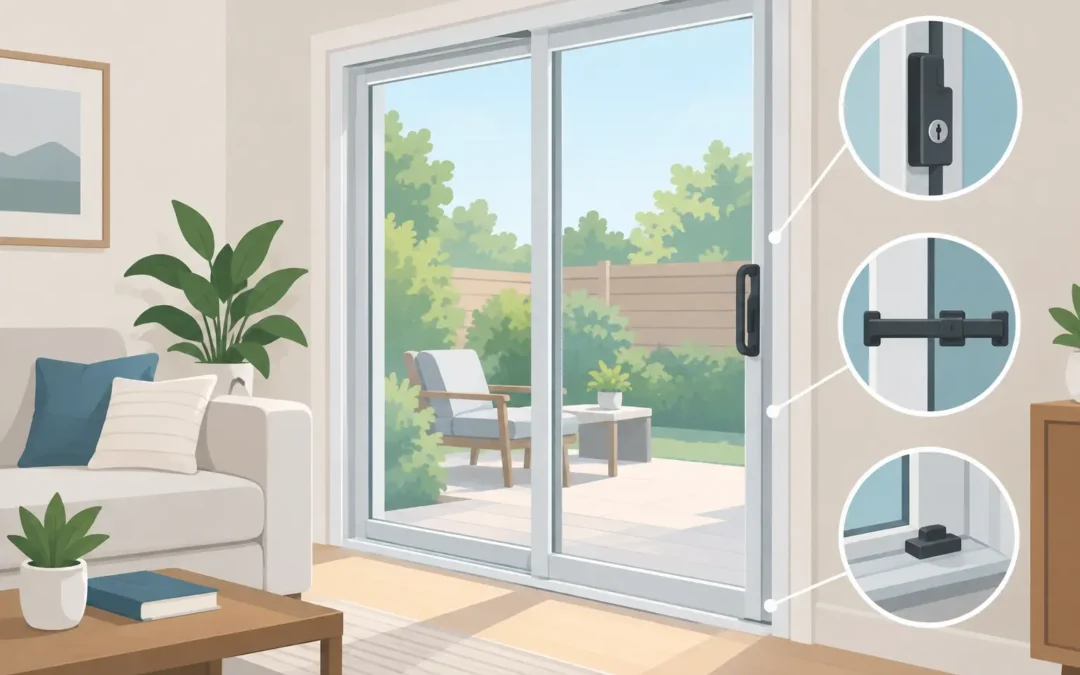
A patio door should make the garden feel like part of your home, not leave you wondering whether it is the weakest point in the house. Knowing how to secure patio doors starts with understanding how your particular door opens, locks and sits within its frame. The right answer is rarely one dramatic add-on. It is usually a combination of a sound door, a correctly fitted lock and a few sensible checks that become part of your routine.
Sliding patio doors, French doors and bi-fold doors have different mechanisms, but the aim is the same: make forced entry difficult, visible and noisy, while keeping the door straightforward to use every day.
Start with the door, frame and fitting
Security hardware can only do so much if the door is damaged, poorly aligned or loose in the frame. Close the door and look at the gaps around it. They should be even, with no obvious movement when the door is locked. A door that catches, drags along its track or needs lifting to lock deserves attention, even if it still appears to work.
On a sliding patio door, worn rollers and a dirty track can stop the sash from closing properly against the frame. On hinged patio or French doors, check that the hinges, keeps and handle sit firmly and that the locking points engage without force. Do not ignore a key that turns stiffly or a handle that feels floppy. These are often early signs of wear or misalignment, and putting them right promptly is usually simpler than waiting for a complete failure.
The glass matters too. Modern sealed units and correctly installed glazing beads contribute to the overall strength of the door. If you have cracked panes, misted units, loose beads or visible damage around the frame, arrange an inspection rather than relying on a temporary fix.
How to secure patio doors with better locks
The lock is the first place most homeowners look, and for good reason. Your patio door should lock positively every time, ideally with several locking points engaging around the door rather than one small central latch alone.
For sliding doors, a key-operated lock that firmly secures the moving panel to the frame is preferable to a simple internal catch. Many newer doors use hook bolts or shootbolts that engage more securely when the handle is lifted or turned. If the lock is original and the door is older, a replacement lock or handle set may be available without replacing the whole door. Compatibility depends on the door profile, mechanism and condition, so it is worth having it assessed rather than buying a part that may not fit.
For French doors, check both leaves. The inactive leaf should have secure bolts at the top and bottom, and the main opening leaf should lock into it properly. A faulty slave-door mechanism can leave a gap or prevent the full lock from engaging, even when the handle looks as though it has been turned.
Avoid leaving a key in the inside of the cylinder if it can be reached through a broken or partially opened pane. The best approach varies with the door design and household needs. If children or anyone else needs to leave quickly in an emergency, do not introduce a security measure that makes safe exit unnecessarily difficult. A professional can recommend a setup that balances security with practical access.
Prevent lifting and forcing on sliding doors
Sliding patio doors operate on tracks, which is why they need a little extra attention. A properly fitted modern door is designed to resist being lifted from its track, but worn components, poor adjustment or older designs may need upgrading.
An anti-lift device can limit upward movement of the opening panel, making it harder to force the door out of the frame. Some systems use dedicated blocks or brackets, while others have adjustments built into the rollers and frame. This is not a job for guesswork: a device fitted too tightly can make the door difficult to slide, while one fitted in the wrong place may achieve very little.
A secondary patio-door security bar can provide additional reassurance when the door is closed, particularly on an older door with a basic lock. It should be treated as a supplement, not a substitute for a properly working main lock and a secure frame. You will also need to remove it whenever the door is used, which can be inconvenient for doors opened frequently for children, pets or garden access.
Never use a loose stick or piece of timber in the track as your only security measure. It may limit movement, but it can shift, split or be forgotten. It also does nothing to resolve a damaged lock or a door that no longer sits correctly in the frame.
Make glass and visibility work in your favour
Patio doors bring valuable natural light into a room, and there is no need to sacrifice that benefit to improve security. Instead, think about visibility around the door. Overgrown shrubs, tall fencing and poorly lit side paths can give someone cover while they work at a lock or frame. Trimming planting back and adding sensible external lighting can make the area more overlooked without turning the garden into a floodlit space.
Internal blinds and curtains are useful for privacy, particularly in the evening, but avoid leaving valuable items clearly visible near the door. Keys, handbags, electronics and car keys placed on a table beside the glass create an unnecessary temptation.
Security film and replacement safety glass are sometimes considered after damage or a break-in attempt. These can have a role, but they are not identical products and will not suit every existing unit. Replacement glass must be specified and fitted correctly for the door system. If the issue is an older, weak or failed door overall, investing in several small add-ons may be less worthwhile than replacing it with a modern, secure patio door.
Do not overlook the surrounding security
A secure patio door is part of a wider picture. Keep gates locked where appropriate, store ladders and garden tools away, and make sure side access is not an easy route to the rear of the property. A visible alarm system or door contact sensor can add a useful layer of deterrence and alert you if the door is opened unexpectedly.
Cameras and smart door sensors can be helpful, but they work best alongside physical security. A notification on your mobile phone does not prevent a weak lock from being forced. Likewise, a high-quality lock cannot make up for a door that is left open on a warm night or only pulled shut without being fully locked.
Build a quick check into your last-person-out routine: close the patio door fully, lift or turn the handle as required, lock it with the key, and check that it will not slide or open. It takes seconds and removes the uncertainty that often comes with large glazed doors.
When repair is enough and when to upgrade
Not every security concern calls for a replacement door. A stiff mechanism, damaged handle, failed cylinder, worn rollers or misaligned sash can often be repaired or adjusted. This can restore smooth operation and allow the existing multipoint locking system to do its job as intended.
Replacement becomes the more sensible option where the frame is badly damaged, the door has persistent alignment issues, the locking arrangement is outdated, or the system cannot accept suitable replacement parts. It can also make sense if the glass units have failed and the door is draughty as well as insecure. Modern patio doors can improve security, insulation and ease of use at the same time, but the best choice depends on the opening, the style of the property and how you use the space.
If you are unsure whether a repair or replacement is appropriate, ask for a clear explanation of the fault and the available options. A good survey should identify what is actually wrong rather than pushing you towards work you do not need. Pearson Glazing can assess existing patio doors, locks and glass, then provide practical advice on the work that will make a meaningful difference.
A patio door should close smoothly, lock with confidence and let you enjoy the view without a second thought. If yours does not, arranging a professional check now is a straightforward way to protect both your home and your peace of mind.
Recent Comments