
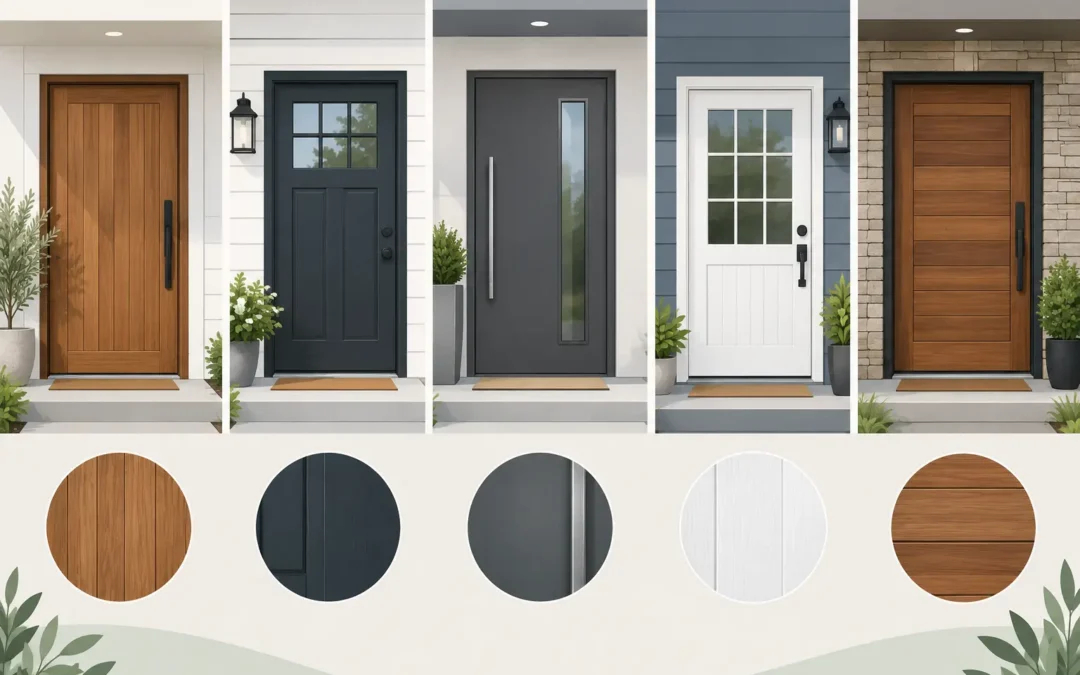
A front door has a demanding job. It needs to look right from the pavement, keep out draughts and rain, feel secure when you lock up at night, and cope with daily use from children, visitors, deliveries and pets. That is why choosing between front door materials is not simply a matter of picking a colour you like.
For most homes, the best choice comes down to four things: the character of the property, the level of insulation and security you expect, how much maintenance you are happy to take on, and your budget. There is no single right answer, but there is usually a sensible one once those priorities are clear.
Front door materials at a glance
The main options for replacement entrance doors are uPVC, composite, timber and aluminium. Each has a different balance of price, appearance, strength and upkeep. The door itself matters, but so do the frame, glazing, locking system and installation. A well-made door fitted properly will perform far better than a premium product that has been measured or installed poorly.
uPVC front doors
A uPVC door is often the most cost-effective route to a warmer, more secure entrance. Modern designs are a long way from the plain white doors many people remember. There are now woodgrain finishes, coloured options, decorative panels and glazed sections that can suit everything from a compact terrace to a newer family home.
The practical appeal is easy to see. uPVC does not rot, needs very little maintenance and is simple to clean with mild soapy water. It also provides good thermal performance when paired with quality seals and double glazing. For homeowners replacing an old, draughty door on a sensible budget, it can be a very good fit.
There are trade-offs. uPVC is generally less rigid than aluminium and may not give quite the same substantial feel as a quality composite or timber door. The range of finer architectural details can also be more limited. That does not make it a poor option – it simply means the specification needs to suit the property and your expectations.
Composite front doors
Composite doors are popular because they combine the look of timber with the lower-maintenance benefits of modern materials. Rather than being made from one material throughout, they are built from several layers, often including a solid or insulated core, reinforced elements and a durable outer skin.
This construction gives a composite door a reassuringly solid feel. It can offer excellent insulation, strong resistance to everyday knocks and good security when matched with suitable hinges, a reinforced frame and a quality multi-point lock. The broad choice of colours, panel designs, glazing and furniture makes it easier to create a traditional or contemporary look.
Composite is usually more expensive than a basic uPVC door, but many homeowners feel the added weight, appearance and performance justify the difference. Check the details rather than relying on the word composite alone. Core construction, thickness, locking hardware, finish quality and guarantees all vary between products.
Timber front doors
Timber has a character that other materials work hard to imitate. It is especially well suited to period properties, cottages and homes where original details matter. Painted timber can be given almost any colour, while stained finishes allow the natural grain to show through.
A properly engineered timber door can be strong, warm and long-lasting. It can also be repaired more readily than some alternatives if it is damaged. For a conservation area or a property with traditional joinery, timber may be the most appropriate visual choice.
Its main consideration is maintenance. Paint or stain needs checking and renewing at intervals, particularly on an exposed entrance. South-facing doors can receive plenty of sun, while wind-driven rain can take its toll on less protected doorways. The quality of the timber, finish and installation makes a real difference, so this is not an area where cutting corners tends to pay.
Aluminium front doors
Aluminium is a strong choice for modern homes, large entrance doors and properties with a clean, contemporary style. It is slim, rigid and highly durable, allowing for crisp lines and larger glazed areas without the bulkier frames some other materials require.
Powder-coated aluminium comes in a wide range of colours and has a finish designed to stand up well to the weather. It will not rot or swell, and maintenance is generally limited to cleaning the surface and checking moving parts. With a thermally broken frame and the right glazing, it can also provide very good insulation.
The higher initial price is the main limitation. Aluminium is not always necessary for a standard-sized entrance door, especially where a good composite door would achieve the look and performance you want for less. It comes into its own where design, slender sightlines and long-term durability are high on the list.
How to compare front door materials properly
It is tempting to compare doors by their headline price or by a photograph in a brochure. A more useful approach is to think about how the entrance works in real life. Is the doorway exposed to rain? Do you need more daylight in a dark hall? Is your home traditional, contemporary or somewhere in between? Do you want minimal upkeep, or are you happy to maintain a painted finish?
Security should be assessed as a complete system. A strong door slab is only part of the picture. Ask about the frame, hinges, cylinder, handle, letterplate and locking points, as well as whether any glazed panels use suitable toughened or laminated glass. A professional survey helps ensure the door and frame are correctly matched to the opening, with no gaps that undermine weather resistance or security.
Energy efficiency matters too, particularly if your existing door feels cold around the edges or lets in draughts. Look beyond the material itself. Insulated cores, weather seals, threshold design and glazing all affect performance. A solid-looking door with poor fitting can still lose heat, while a carefully specified glazed door can keep an entrance bright without making it feel chilly.
Appearance should be considered in context. A black aluminium door may look striking on a modern extension but out of place on a Victorian façade with painted timber sash windows. Equally, a traditional composite door can give a newer house more warmth and definition. Bring together the door colour, glazing pattern, handles, house number and nearby windows so the entrance feels considered rather than pieced together.
Glazing, colour and hardware can change the result
The material is the starting point, not the finished decision. A small glazed panel can make a hallway noticeably lighter, while obscure or patterned glass can preserve privacy. If security is a concern, the glass specification and its installation are as important as the style.
Colour also affects maintenance and appearance. Dark shades can look smart and suit many brickwork colours, but they may show dust, fingerprints or marks more readily on a busy entrance. A lighter finish can be more forgiving, while a woodgrain effect can soften the look of uPVC or composite doors. Choose a shade that works with the window frames and roofline as well as the front elevation.
Do not leave the furniture until last. Handles, knockers, letterplates and numbers are small details, yet they have a major effect on the finished look. They should also be practical. A letterplate, for example, needs to work with the door construction and should not compromise insulation or security.
Getting the installation right
Even the best door will disappoint if it is fitted badly. Accurate surveying is essential because older homes rarely have perfectly square openings. The installer needs to assess the brickwork, existing frame, threshold level, drainage and any surrounding glazing before recommending the right product.
A good installation should leave the door opening and closing smoothly, locking cleanly and sealing evenly all the way round. The finish around the frame matters too. Internal trims, external sealant and making good should look tidy while protecting the opening from water ingress.
At Pearson Glazing, the aim is to make this decision straightforward: clear advice, a proper survey and no pressure to choose more than your home needs. If you are comparing options, it is reasonable to ask for the strengths and limitations of each material, not just the sales points.
The right front door should feel like part of the home from the first day. Whether that means a practical uPVC replacement, a solid composite design, traditional timber or sleek aluminium, choose the option that suits your property, your routine and the level of care you want to give it over the years.
Recent Comments