
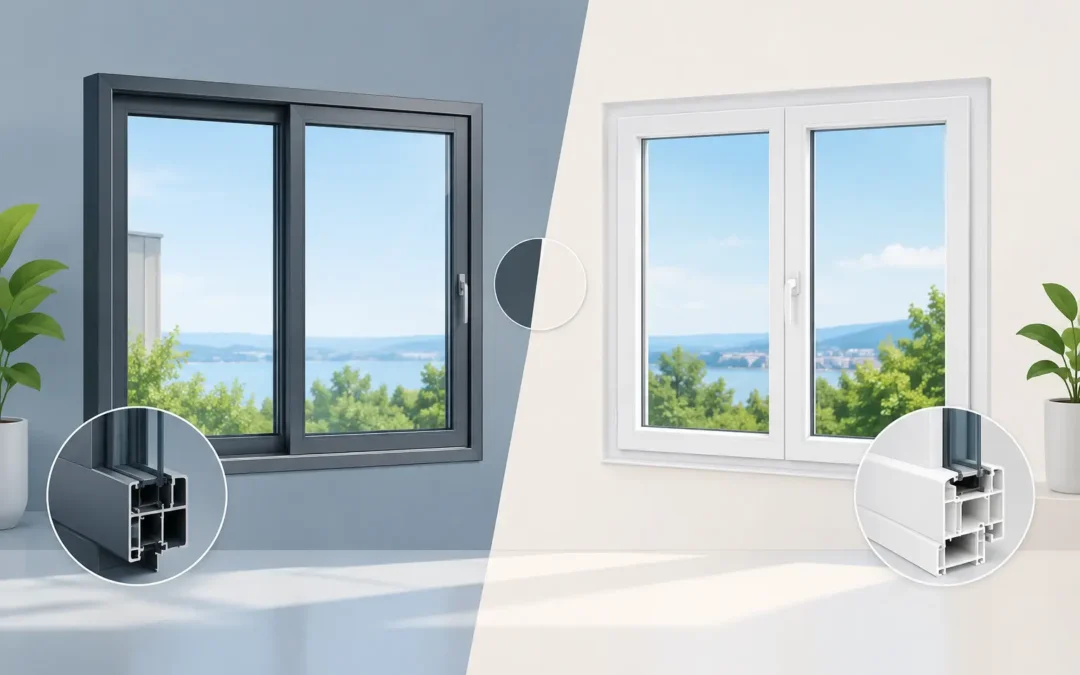
A new window should make your home feel warmer, quieter and more secure without creating a maintenance job for years to come. When comparing aluminium windows vs uPVC, the right answer is rarely about which material is universally best. It is about the style of your property, the openings you are replacing, your budget and what you want the finished result to look like.
Both are excellent choices for modern replacement windows when specified and fitted properly. uPVC remains a popular, good-value option for many homes across South East London and Kent. Aluminium brings slim sightlines and a premium architectural look, particularly where you have large panes of glass or want a darker frame colour. Here is how to make a clear, no-pressure choice.
Aluminium Windows vs uPVC: the main difference
The most obvious difference is in the frame itself. uPVC is a durable plastic material made with internal chambers that help reduce heat loss. Aluminium is a strong metal, so its frames can be much slimmer while still supporting larger, heavier glazed units.
That difference affects appearance, price and the types of window each material suits best. It does not mean one is automatically warmer, safer or longer-lasting than the other. Modern systems in both materials can provide strong security, double or triple glazing options and very good energy performance.
The details matter: frame profile, glass specification, opening style, ventilation, locks and, crucially, the quality of the survey and installation.
Appearance and sightlines
Aluminium is often chosen for its clean, contemporary appearance. Because it is strong, less frame is needed around the glass. This creates narrow sightlines and can let more daylight into a room, which is especially useful for wide windows, bays, stairwells and modern extensions.
Anthracite grey, black and other darker shades tend to look particularly sharp in aluminium. The powder-coated finish is durable and available in a wide choice of colours, including different colours inside and out if required. For homeowners aiming for a more architectural finish, aluminium can be well worth the extra cost.
uPVC has also moved on considerably. It is no longer limited to bright white, chunky frames. Modern uPVC windows are available in grey, black, cream and realistic wood-effect finishes, with profiles that suit contemporary houses as well as more traditional properties. Casement windows, flush sash styles and vertical sliders can all give a smart, well-proportioned result.
For period homes, the question is often less about aluminium or uPVC and more about getting the proportions right. A frame that is too bulky, the wrong glazing bar arrangement or an unsuitable colour can change the character of a property. In conservation areas or listed buildings, planning requirements may also affect your options.
Thermal performance: do not judge by the frame alone
People sometimes assume uPVC must always be warmer because plastic does not conduct heat like metal. There is some truth in that, but modern aluminium windows use a thermal break within the frame. This insulating section separates the inner and outer parts of the aluminium, helping to limit heat transfer.
As a result, quality aluminium systems can achieve strong energy ratings. Quality uPVC systems can do the same, often at a lower initial price. The glass makes a major contribution too. Low-emissivity coatings, argon-filled units, warm-edge spacers and the right pane thickness can all improve performance.
Rather than choosing purely on material, ask about the whole window’s U-value and energy rating. These measures give a more useful indication of how the completed unit performs. A poorly fitted high-specification window can still allow draughts and heat loss around the frame, so installation should never be treated as an afterthought.
Triple glazing can be worthwhile in some homes, particularly where you are tackling noise or replacing older, inefficient windows. However, it is heavier and costs more, and it is not always necessary for every room. A good survey should consider the building, the orientation of the room and the result you are trying to achieve.
Cost and long-term value
uPVC is generally the more affordable option to buy and install. For a straightforward replacement project, it can offer excellent energy efficiency, security and appearance without stretching the budget. That makes it a sensible choice for many whole-house window replacements.
Aluminium usually costs more because of the material, manufacturing process and the type of system involved. The extra investment can make sense when slim frames are a priority, when windows are unusually large, or when you are matching aluminium bi-fold doors, patio doors or roof glazing elsewhere in the home.
Price should include more than the frame. Check what has been allowed for surveying, removal and disposal of existing windows, trims, making good, glazing, locks, trickle vents where needed and the installation itself. A low starting figure can look less attractive once essential items are added.
Long-term value also depends on how long you plan to stay in the property and what matters most to you. If a better-looking rear extension is a key part of your home, aluminium may be the finish you will appreciate every day. If you want reliable replacement windows with a lower upfront cost, uPVC may be the better fit.
Security and durability
Both materials can provide excellent security when fitted with appropriate multi-point locking, reinforced sections and toughened or laminated glass where suitable. The handle, locking mechanism, hinges and fitting standard are just as important as the frame material.
Aluminium is inherently rigid and resists warping, which makes it particularly useful for wider openings. It does not rust in the way untreated steel can, and its powder-coated surface is designed to withstand normal weather exposure.
uPVC is also built for British weather and does not rot, peel or require painting. Quality uPVC frames are reinforced where needed and can give many years of dependable service. Very cheap systems may be more prone to discolouration or less refined operation over time, which is another reason to look beyond the headline quote.
Whichever material you choose, good drainage, accurate fitting and properly adjusted hinges are vital. Windows should open, close and lock smoothly from day one.
Maintenance and everyday living
Neither aluminium nor uPVC needs regular painting. Both normally need only a wipe with warm, soapy water and a soft cloth, alongside occasional cleaning of the tracks, drainage channels and moving parts.
Avoid abrasive cleaners, scouring pads and harsh solvents, as these can damage finishes and seals. It is also worth checking handles, hinges and locks periodically, especially on frequently used windows and doors. Small adjustments made early can prevent a minor issue becoming an avoidable repair.
In terms of colour, aluminium finishes are generally very stable, particularly in darker shades. Modern coloured uPVC is also reliable, but it is sensible to choose a proven system and finish rather than basing the decision solely on a sample in a showroom.
Noise, ventilation and glazing choices
If traffic, trains or busy neighbours are a concern, glazing specification can make more difference than choosing aluminium over uPVC. Acoustic glass, different glass thicknesses and a well-sealed installation can all help reduce outside noise. For the best results, the window needs to be designed as a complete system rather than simply fitted with thicker glass.
Ventilation matters too. Trickle vents may be required depending on the project and existing ventilation arrangements. They help provide background airflow, which can reduce condensation and improve indoor air quality. If ventilation is a concern, discuss it before ordering rather than trying to solve it after installation.
Which windows should you choose?
Choose uPVC if you want a cost-effective, low-maintenance replacement that performs well across most traditional and modern homes. It is a practical choice for standard-sized windows and can suit a wide range of styles when the right profile and colour are selected.
Choose aluminium if slim frames, larger glass areas and a contemporary finish are high on your list. It is particularly well suited to extensions, feature windows and properties where the windows need to complement aluminium doors.
There is no rule saying every opening must use the same material. Some homeowners use aluminium for large rear-facing openings and uPVC for standard windows elsewhere, balancing budget with the look they want. The key is making sure the colours, proportions and glazing choices work together.
A proper survey should leave you clearer, not pressured. Take the time to compare like-for-like specifications, ask what is included and choose the window that suits your home rather than the one a salesperson is most determined to sell. The best result is a window that looks right, works properly and gives you confidence every time you close it.
Recent Comments