
A lock that needs a hard shove, a lifted handle or several attempts with the key is more than an everyday annoyance. It can leave a door difficult to secure and, in some cases, difficult to open when you need it. The good news is that many homeowners can fix sticking locks with a few careful checks. The key is to establish whether the problem is in the lock itself, the key, the handle or the way the door or window is sitting in its frame.
Do not force a stiff key or lean your full weight on a handle. A little resistance can quickly become a snapped key, damaged cylinder or broken multi-point locking mechanism. Start gently, and arrange a repair if the lock feels close to failing.
First, work out when the lock sticks
The timing of the problem tells you a great deal. If the key turns easily while the door is open but sticks once the door is shut, the lock is often sound and the door is out of alignment. This is common with uPVC doors, composite doors and patio doors, particularly after a change in temperature or following years of regular use.
If the key is difficult to insert or turn whether the door is open or closed, look first at the key and cylinder. A worn key, dirt inside the keyway or a tired cylinder may be the cause. If you have a spare key, try it. A spare that works smoothly usually means the everyday key is worn and should be copied before it gets worse.
For doors with a lift-to-lock handle, notice whether the handle becomes difficult to lift before you turn the key. That points towards the keeps, hinges or door alignment rather than the euro cylinder. On a window, a stiff handle may indicate that the espagnolette mechanism is binding, or that the sash is not closing squarely against the frame.
How to fix sticking locks safely
Begin with the least invasive checks. Wipe the key clean with a dry cloth and inspect it for bent teeth, cracks or obvious wear. Never use a bent key in a lock. It may turn once, then break inside the cylinder.
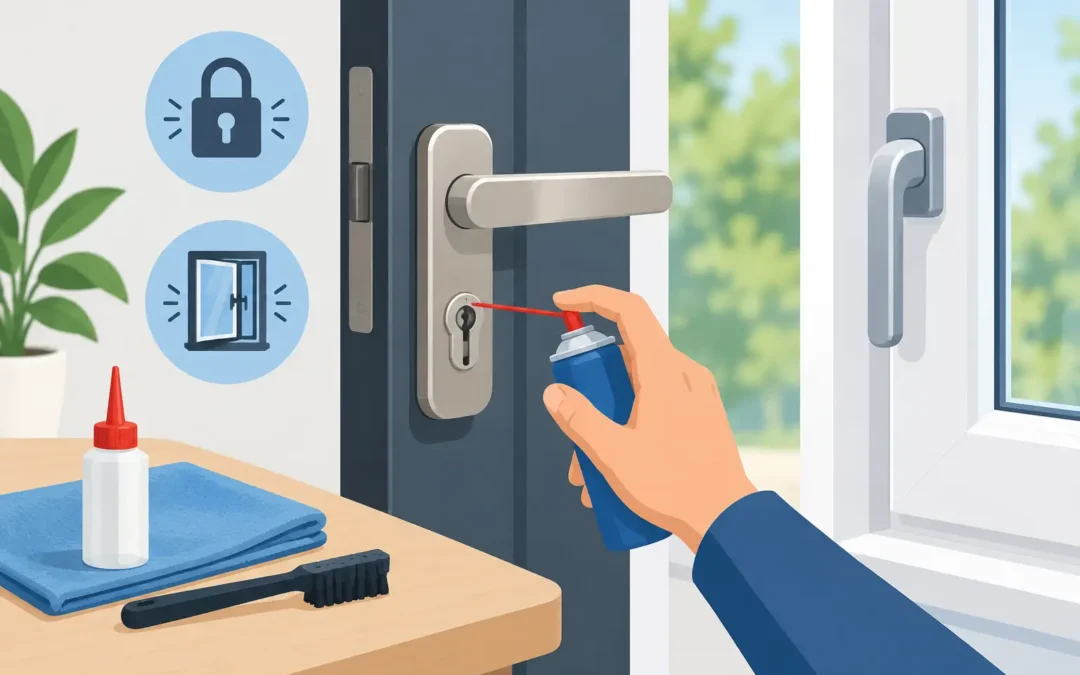
Next, use a lock lubricant made for cylinders. A dry PTFE lubricant or graphite-based product is usually a sensible choice. Apply a small amount into the keyway, insert the key and turn it gently a few times. Wipe away any excess. Avoid cooking oil, grease and household oils. They can feel helpful at first but attract dust and grit, leaving the lock stickier over time.
If the handle or moving parts are stiff, use a light silicone or PTFE lubricant on the accessible moving points of the mechanism. Keep lubricant away from painted finishes and clean any drips promptly. On older timber doors, check that paint has not built up around the lock edge, latch or strike plate.
After lubricating, test the lock slowly with the door open. Lift the handle where required, turn the key, release it and repeat. If it now works freely open but catches when closed, stop focusing on the cylinder. The next step is to check alignment.
Check the door and frame alignment
Close the door without locking it and look at the gaps around the edges. An uneven gap, a door that rubs on the frame, or a latch that does not meet its keep cleanly can all create resistance. You may also notice that lifting the door slightly by the handle makes the key turn. That is a strong sign that the door has dropped or shifted.
Changes in weather can make this more noticeable. uPVC and composite doors expand slightly in warmer conditions, while timber can swell in damp weather. A minor seasonal adjustment may be all that is needed. However, recurring sticking should not be ignored, especially on an external door that protects your home.
Some modern hinges have adjustment points, but the correct adjustment depends on the hinge type and the door system. Small alterations can make a real difference; incorrect ones can worsen the fit or affect weather seals. If you are unsure, it is safer to have the door assessed rather than repeatedly adjusting screws at random.
With multi-point locking doors, the keeps on the frame may also need adjustment. These are the parts that receive the hooks, rollers or bolts when you lift the handle. If the locking points are scraping or failing to engage cleanly, forcing the handle can damage the gearbox inside the door.
Look for signs of a failing lock mechanism
A sticky lock is not always a lubrication or alignment issue. Be alert for a loose or floppy handle, grinding noises, a key that spins without operating the lock, or a handle that will not return to its normal position. These can indicate a worn gearbox, faulty spring cassette, damaged cylinder or failing multi-point mechanism.
If the door will lock only after repeated attempts, arrange a repair soon. Waiting until it will not lock at all can create a security issue, while waiting until it will not open can leave you locked out. In many cases, a professional can replace the affected part without replacing the whole door.
The same principle applies to windows. If a casement window handle will not turn, do not force it. The internal locking strip may be jammed, the handle spindle may be worn, or the window may have dropped slightly. A repair can often restore safe operation and security without the cost or disruption of a new window.
Common mistakes that make sticking locks worse
It is tempting to spray a generous amount of general-purpose oil into a lock and hope for the best. This may provide a brief improvement, but it is rarely a long-term fix. Thick or oily products hold dirt inside the cylinder and can leave the keyway clogged.
Another common mistake is continuing to use a key that has started to bend or catch. Keys wear gradually, so the change can be easy to miss. Replacing a worn key early is simpler than dealing with a broken one inside the lock.
Finally, avoid removing the cylinder or dismantling a multi-point mechanism unless you know exactly what you are doing. On a locked or closed door, this can make access more difficult. It can also leave the property unsecured if the replacement part is not the correct size or specification.
When to call for a lock repair
A professional repair is the sensible option if lubrication has not helped, the door needs lifting to lock, the handle is loose, or the key is showing signs of sticking and catching. It is also worth arranging an inspection after a break-in attempt, if the lock is visibly damaged, or if you are worried about the security of an older cylinder.
For homeowners in South East London and Kent, Pearson Glazing can assess problems with door and window locks, handles and mechanisms as part of a straightforward repair service. A proper inspection identifies whether the issue is a simple adjustment, a replacement cylinder, a handle repair or a fault within the locking mechanism. That means you pay for the work that is needed, rather than being pushed towards a replacement door.
Keep testing the lock gently after any adjustment or repair, both open and closed. A secure door should close without a fight, the handle should operate smoothly and the key should turn without excessive pressure. Addressing small changes early is one of the easiest ways to protect your home and avoid a lock failing at the most inconvenient moment.
Recent Comments