
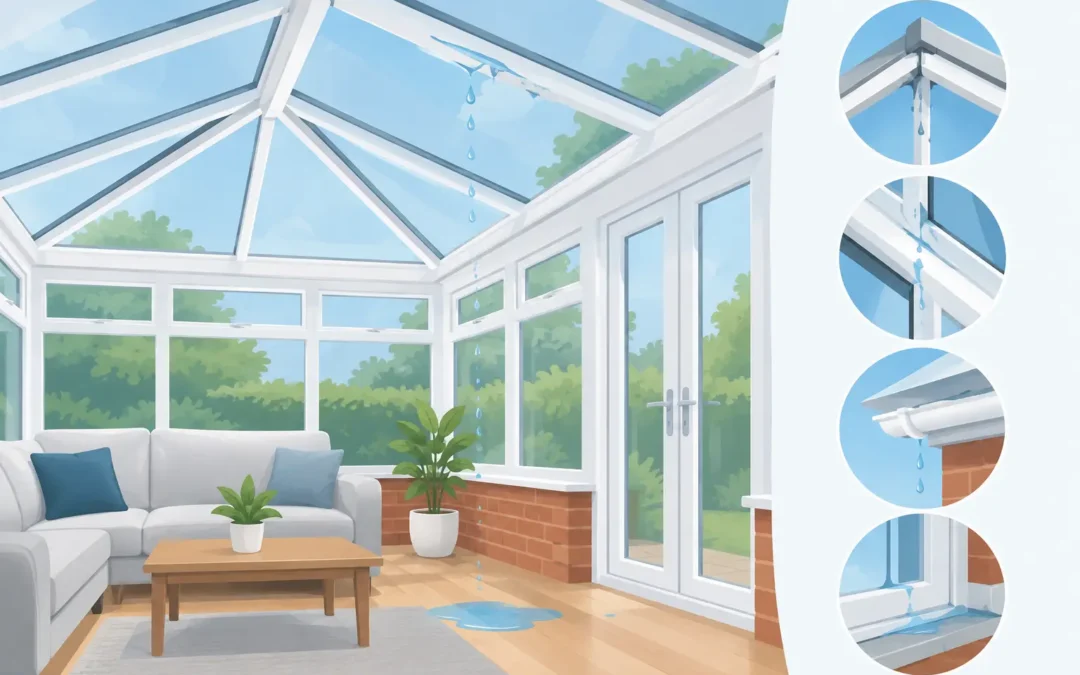
A conservatory leak rarely starts as a dramatic stream of water. More often, it is a damp patch by a frame, a drip that appears only in wind-driven rain, or a musty smell that was not there last winter. Understanding what causes conservatory leaks can help you act before moisture damages plaster, flooring, furnishings or the structure itself.
The visible drip is not always directly below the fault. Water can track along roof bars, guttering, wall flashings and internal trims before finding a way through. That is why a careful inspection matters more than simply applying sealant where the water appears.
What Causes Conservatory Leaks Most Often?
Most leaks come down to one of three areas: the roof, the junction between the conservatory and the house, or the drainage around it. Age can play a part, but a relatively new conservatory can leak too if a component has moved, been damaged or was not fitted correctly.
Worn or failed seals
Rubber gaskets and silicone seals keep water out at the edges of glazing panels, around roof bars and where frames meet. Over time, sunlight, temperature changes and general weathering can make these materials shrink, crack or lose their grip.
A failed seal may leave a small gap that only lets in water during heavy rain. It can be tempting to cover the area with more silicone, but this is not always the right repair. If the original seal has failed because a roof panel has slipped or a frame has moved, new sealant alone will only hide the problem for a while.
Slipped roof panels or loose roof caps
Conservatory roof panels expand and contract as the temperature changes. If they are not held securely, or if the fixings and caps have deteriorated, a panel can move slightly from its original position. Even a small gap can allow rainwater to pass beneath the roof bar.
You may notice staining or drips along a particular roof bar, especially after prolonged rain. A professional can check whether the panel needs repositioning, whether the glazing system needs new gaskets, or whether damaged caps and fixings should be replaced.
Blocked gutters, downpipes and valley channels
Leaves, moss and debris can stop rainwater from draining away properly. Instead, water builds up in gutters or valley channels and may overflow towards the conservatory roof edge, wall or door frame. This is particularly common beneath trees and after autumn weather.
A blockage does not always mean the conservatory itself is at fault, but it should not be ignored. Overflowing water can expose weak seals and create staining that looks like a roof leak. Clearing accessible gutters safely and regularly is useful maintenance, but a damaged or poorly aligned gutter should be repaired rather than repeatedly cleaned.
Defective flashing where the conservatory meets the house
Flashing is the weatherproof material that seals the join between the conservatory roof and the brickwork of your home. If it has lifted, cracked, split or been sealed poorly, rain can get behind it and travel down the adjoining wall.
Signs can include damp near the top of the conservatory, water running down the inside wall, or marks that worsen after wind from one direction. Flashing repairs need to deal with the full junction, including the condition of the masonry and any previous sealant. A quick surface patch may not withstand another season of rain.
Cracked glazing, damaged roof sheets or failed units
A crack in a glass panel, polycarbonate sheet or roof component can let water through. Cracks are sometimes obvious after impact from a falling branch or storm debris, but finer damage can be harder to see from ground level.
Condensation between the panes of a double-glazed unit is different from a rainwater leak, although both can leave the conservatory feeling damp and uncomfortable. Moisture inside a sealed unit usually points to a failed glass unit, while water arriving after rainfall suggests a problem with the roof, frame, seals or drainage.
Frame movement and ageing components
Conservatories are exposed to changing temperatures throughout the year. Minor movement is normal, but older installations can develop gaps as frames, roof systems, fixings and seals age at different rates. Movement may also occur if the base has settled or if doors and windows have become difficult to open and close.
This is where diagnosis matters. Replacing a seal may be enough for a localised issue. If several leaks, draughts and sticking openings are appearing together, the conservatory may need more extensive repair work or an upgrade to key components.
How to Find the Source of a Conservatory Leak
Start by noting when and where the leak appears. Does it happen only during heavy rain, or when rain is blown against a particular side? Is the water coming from the roof, a corner, the wall connection, or around a window or door? These details help narrow down the likely cause.
Look for obvious signs from inside first. Water marks, bubbling paint, mould, warped window boards and damp patches around roof bars can all point towards the route water is taking. Check whether the problem is worse after rain than after cold weather, as this helps distinguish a leak from ordinary condensation.
From outside, only inspect what you can reach safely from ground level. Look for overflowing gutters, visible debris, slipped caps, cracked panels or gaps at the wall junction. Do not climb onto a conservatory roof. It is not designed to take a person’s weight and a fall or damaged panel can turn a manageable repair into a much bigger problem.
A controlled water test can sometimes identify the entry point, but it must be done carefully and one section at a time. Flooding the roof with a hose can force water into areas that would not leak in normal rainfall, making the result misleading. For persistent or unclear leaks, a survey by an experienced conservatory repair specialist is usually the quickest route to the right answer.
When a Simple Repair Is Enough
A conservatory does not necessarily need replacing because it leaks. Many issues are repairable, particularly where the structure is sound and the fault is limited to a gasket, roof panel, gutter, flashing section, glass unit or hardware component.
A straightforward repair is more likely to be suitable when the leak is confined to one area and there are no signs of significant frame movement or widespread deterioration. Replacing perished seals, refitting a slipped panel or repairing a localised flashing fault can often restore weatherproofing without unnecessary work.
The trade-off is that a local repair will not resolve unrelated ageing elsewhere. If several roof bars are leaking, multiple glazed units have failed, and the conservatory is difficult to heat, it may be worth discussing whether an upgrade would offer better long-term value. The right choice depends on the condition of the existing structure, not on a one-size-fits-all answer.
What You Can Do While Waiting for a Repair
Move furniture and electrical items away from the affected area, then place a container beneath active drips. Dry standing water promptly and ventilate the room once the weather allows, as trapped moisture encourages mould.
Avoid pushing sealant into every visible gap or drilling into roof bars. These actions can block designed drainage routes, damage hidden components or make a later repair more difficult. If a gutter is safely accessible from ground level and clearly full of leaves, removing loose debris may reduce overflow, but do not lean ladders against the conservatory roof or frames.
Take a few photographs during the leak and again when the area is dry. Showing where water appears, along with any external staining or gutter overflow, gives a surveyor useful evidence and can make the visit more efficient.
A Leak Is Usually Repairable When It Is Properly Diagnosed
Conservatory leaks can be frustrating, particularly when they return with every spell of heavy rain. The good news is that the source is often a specific, repairable issue rather than a reason to write off the whole room. A careful inspection of the roof, seals, flashings, frames and drainage will identify what has failed and what work is genuinely needed.
For homeowners in South East London and Kent, Pearson Glazing can assess conservatory leaks without pressure, explain the practical options clearly and carry out the repair work needed to help keep your conservatory dry and usable.
Recent Comments